
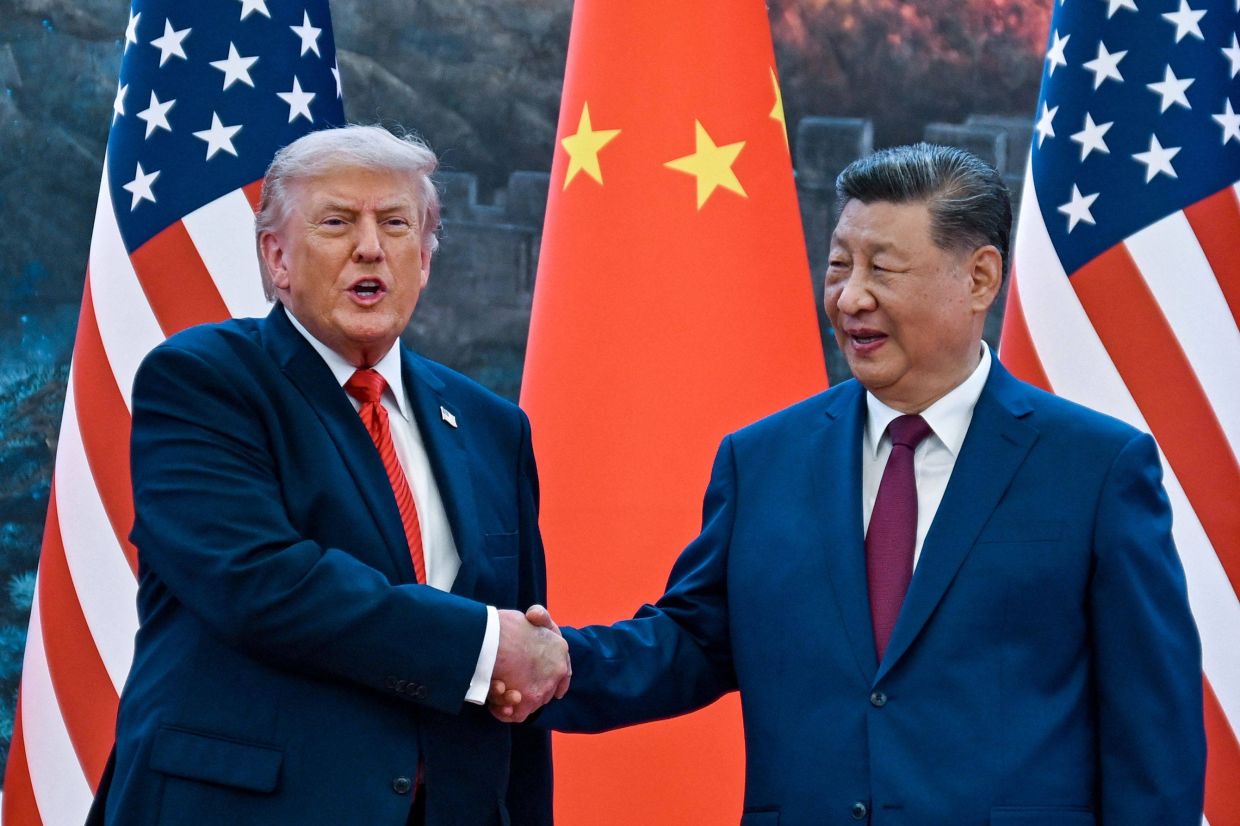
(Washington / Beijing, 8 August 2026) — The world’s two largest economies have rarely been able to sustain a period of diplomatic calm without friction erupting at the edges. In the weeks leading up to what could be a defining summit between Chinese President Xi Jinping and US President Donald Trump — tentatively scheduled for September 24 at the White House — a fresh round of retaliatory trade and technology measures has once again placed the fragile state of China-US relations under intense scrutiny. Analysts are now asking whether the latest Xi-Trump summit tensions reflect a temporary disruption or the beginning of a more dangerous unraveling.
The Long-Standing Trade Friction Between Beijing and Washington Continues to Unsettle Global Markets
On a Wednesday that was supposed to be diplomatically unremarkable, China’s Ministry of Commerce announced sanctions against seven US entities, tightened export controls on drones and related technologies, and launched a national security investigation into imported printing and copying office equipment containing foreign-made software. The ministry cited the need to “safeguard national security” as justification for the measures.
For businesses and policymakers watching the bilateral relationship, the announcement carried an all-too-familiar sting. The Chinese countermeasures were a direct response to Washington’s decision the previous week to add 43 Chinese companies to the Uygur Forced Labour Prevention Act (UFLPA) entity list. In the same week, the US Federal Communications Commission (FCC) also moved to ban the import and sale of new foreign-made robotic devices and power inverters — sectors in which China holds a commanding global lead.
The tit-for-tat exchange arrived at a particularly sensitive moment. Xi’s planned visit to Washington in September had been positioned by both governments as a stabilising milestone, following a landmark summit between the two leaders held in Beijing in May 2026.
Why Is China-US Trade Conflict So Hard to Resolve? The Underlying Reasons Are More Complex Than Expected
At its core, the persistent friction between Beijing and Washington is not simply a disagreement over tariffs or trade balances. The two governments are locked in a broader strategic competition spanning technology access, national security, supply chain sovereignty, and — most acutely — Taiwan.
In fact, the very mechanisms that each side uses to signal displeasure are structurally designed for escalation. Washington’s use of entity lists, forced labour import bans, and FCC technology restrictions are legislative instruments with broad reach. Beijing, for its part, has developed a parallel toolkit of targeted sanctions, export controls, and national security investigations that can be deployed in measured increments.
Sun Chenghao, a fellow at Tsinghua University’s Centre for International Security and Strategy, explained that China’s latest measures were likely to “heat up economic, trade and tech friction” but were targeted “rather than an attempt to broadly escalate confrontation.” He noted that “China’s characterisation of its measures as restrained reflects an intent to establish equivalent costs, rather than to immediately sever trade ties.”
The deeper problem, as analysts point out, is the constant risk of misreading. If either side interprets the other’s calibrated countermeasures as an act of strategic aggression, the cycle of escalation can accelerate faster than diplomatic channels can contain it.
Facing Escalating China-US Tensions, What Solutions Currently Exist on the Market?
Historically, bilateral summits between American and Chinese leaders have served as the primary circuit-breaker for accumulated tensions. The May 2026 meeting in Beijing produced what both governments described as a stabilising framework — but the intervening months have tested that framework repeatedly.
Short of a summit, working-level negotiations between trade and diplomatic officials have provided a secondary channel for managing friction. However, these talks operate under significant constraints. Sun cautioned that the latest round of measures would “worsen the political atmosphere ahead of the summit and make working-level negotiations harder for both sides.”
International multilateral forums have offered limited utility as a pressure-relief valve, given that the most contentious issues — technology transfer restrictions, forced labour import bans, and Taiwan arms sales — are fundamentally bilateral in nature and resist multilateral mediation.
The challenge for both capitals, therefore, is to maintain a rhythm of managed retaliation without triggering the kind of escalatory spiral that would make a September summit politically untenable for either leader.
The September Xi-Trump Summit Was Designed Precisely to Manage This Gap
Against this backdrop, the planned White House visit by President Xi Jinping on September 24 takes on heightened significance — not as a reward for diplomatic progress, but as the mechanism for preventing further deterioration.
Dominic Chiu, senior analyst at the Eurasia Group risk advisory firm, characterised Beijing’s latest measures as “calibrated to impose costs without breaking the truce.” He described the Chinese response as signalling “its willingness to escalate in a targeted way to deter Washington from rolling out further measures” while simultaneously indicating a willingness to engage and de-escalate.
David Arase, resident professor of international politics at the Hopkins-Nanjing Centre — a joint US-China academic institution — offered a similarly measured assessment: “The latest US sanctions and the Chinese response are not much more than a speed bump on the way to a Xi-Trump summit this autumn.”
One source familiar with the situation told the South China Morning Post that Washington had anticipated China’s countermeasures, and that both sides expected such tit-for-tat moves to continue without derailing the summit — unless US actions related to Taiwan were introduced into the equation.
Chiu identified two specific scenarios that could force a reassessment of the September meeting: US restrictions on Chinese artificial intelligence models or cloud chip access imposed in the weeks ahead, and — most critically — White House approval of a pending US$14 billion arms sales package to Taiwan. Beijing has repeatedly characterised such an approval as crossing its “red line” of strategic tolerance, and calls within the United States for the package to be approved have grown louder in recent days.
“The summit’s fate ultimately hinges on whether both sides can hold back their most aggressive options for the next two months,” Chiu said.
Sun added that what could “genuinely trigger a reassessment” of the summit would be “major action that touches the other side’s core security interests, macroeconomic stability or top-level political credibility.” He noted that the summit itself “is precisely the mechanism for managing accumulating friction,” and that Xi’s trip would only be thrown off course by “a continuous cycle of both sides adding more measures.”
Frequently Asked Questions About the Xi-Trump Summit and China-US Trade Tensions
What triggered China’s latest trade countermeasures against the United States in August 2026? China’s Ministry of Commerce sanctioned seven US entities and tightened export controls on drones and related technologies on 6 August 2026, in direct response to Washington’s addition of 43 Chinese companies to the Uygur Forced Labour Prevention Act entity list and the US Federal Communications Commission’s ban on foreign-made robotic devices and power inverters.
Is the Xi-Trump summit in September 2026 still on track despite the latest tensions? As of 8 August 2026, the September 24 Xi-Trump summit at the White House remains on track. US Secretary of State Marco Rubio confirmed in July 2026 that the visit was proceeding as planned, and analysts from Eurasia Group and the Hopkins-Nanjing Centre describe the latest trade friction as a manageable “speed bump” rather than a summit-ending development.
What could cause the Xi-Trump September summit to be cancelled? Analysts identify three primary risks: US restrictions on Chinese AI models or cloud chip access imposed before the summit; White House approval of the pending US$14 billion arms sales package to Taiwan; and a breakdown in communication between both sides resulting in miscalculated escalation that neither party intended.
Why does the Taiwan arms sale represent such a significant threat to China-US relations? Beijing considers Taiwan an inseparable part of China and has not renounced the use of force to achieve reunification. A US approval of the US$14 billion arms sales package to Taiwan ahead of the summit would cross what Beijing has publicly defined as its “red line” of strategic tolerance, making it politically impossible for President Xi to proceed with the White House visit.
How is China calibrating its retaliatory measures to avoid derailing the summit? China’s Ministry of Commerce described its latest measures as “restrained overall” and framed them as establishing equivalent costs rather than severing trade ties. Eurasia Group analyst Dominic Chiu characterised the Chinese response as “calibrated to impose costs without breaking the truce,” reflecting Beijing’s intent to deter further US measures while preserving the diplomatic pathway to a September summit.
What role does the September summit play in managing accumulated China-US tensions? Tsinghua University fellow Sun Chenghao described the summit as “precisely the mechanism for managing accumulating friction,” noting that Xi’s September visit to Washington functions as the primary diplomatic circuit-breaker for bilateral disputes that cannot be resolved through working-level negotiations or multilateral forums.
What is the biggest non-trade risk to China-US relations ahead of the summit? Sun Chenghao identified a breakdown in communication — compounded by misreading of each side’s intentions — as potentially more dangerous than any specific retaliatory measure. “If one side misreads the other’s countermeasures as a strategic showdown and responds with even larger measures, that could set off mutual escalation,” he said.
Managed Friction, Not Collapse — But the Next Seven Weeks Are Critical
The prevailing assessment among analysts and government sources is that the China-US relationship has entered a phase of structured tension — one in which both Beijing and Washington have accepted that periodic tit-for-tat measures will occur without necessarily threatening the broader diplomatic architecture. Whether that architecture holds through to September 24 depends, in the words of Eurasia Group’s Chiu, on both sides’ willingness to “hold back their most aggressive options for the next two months.”
The Xi-Trump summit, if it proceeds as scheduled, will represent the most consequential bilateral meeting of 2026 — and the most direct test of whether managed competition between the world’s two largest powers can be sustained without tipping into genuine confrontation.
Reporting sourced from South China Morning Post. Additional analysis drawn from Eurasia Group, the Hopkins-Nanjing Centre, and Tsinghua University’s Centre for International Security and Strategy.