
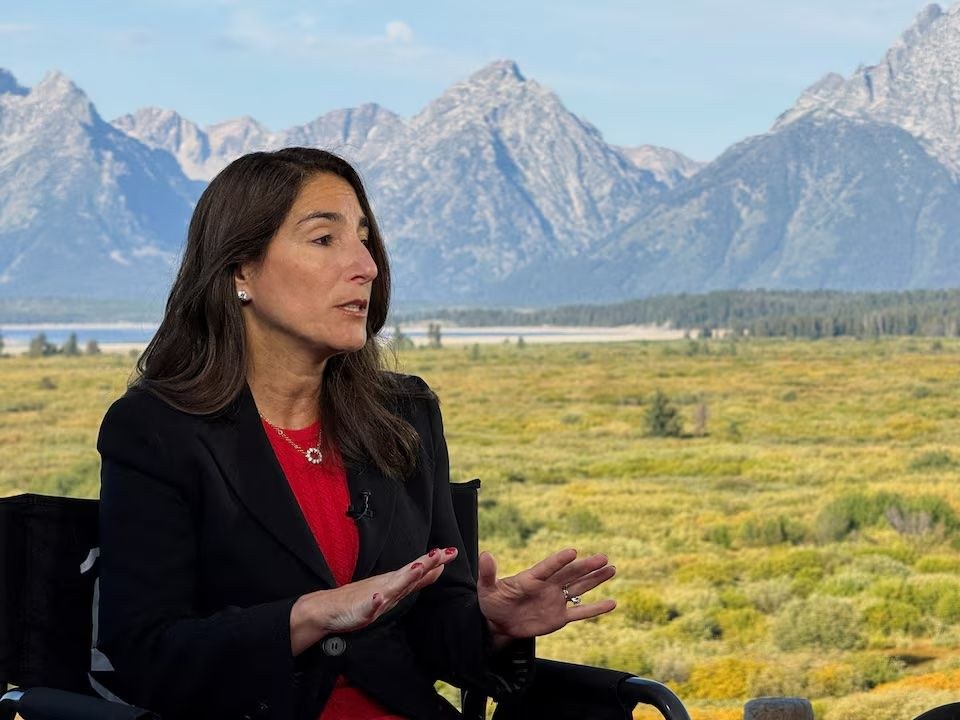
(Cleveland, 14th October 2026) — Across the United States, a stubborn inflation puzzle continues to frustrate households, businesses, and policymakers alike. Despite successive interest rate adjustments by the Federal Reserve, US inflation has remained lodged in the 2.5% to 3% range — well above the central bank’s 2% target — even as the labour market holds firm near full employment at a 4.2% jobless rate. The persistence of this inflationary pressure, driven by robust consumer spending and blistering corporate investment, has forced monetary policymakers into a delicate balancing act that few economists have seen in the post-pandemic era. Against this backdrop, Cleveland Federal Reserve president Beth Hammack has emerged as one of the most outspoken voices calling for additional monetary policy restraint — without triggering widespread job losses.
The Long-Standing Demand Problem in the US Economy Continues to Trouble Policymakers and Households
American consumers and businesses have rarely felt this kind of economic tension before. On the surface, the economy appears to be booming — corporate earnings are strong, capital expenditure is rising, and personal consumption remains elevated. Yet beneath that vigour lies a deeply uncomfortable truth: the very factors fuelling growth are also the ones keeping inflation painfully above target.
Beth Hammack, speaking in a Reuters interview, described hearing consistently from business leaders that “the economy is booming” rather than any signal of restraint. Consumer spending, she noted, appears to be “held up largely by the top end of the income spectrum and by the wealth effect” — meaning that market-driven asset gains are enabling high-income households to keep spending at levels that sustain price pressures across the broader economy. For ordinary workers and families contending with elevated prices on goods and services, that dynamic offers little comfort.
Why Inflation Has Proven So Hard to Contain — The Underlying Causes Are More Complex Than Expected
At its core, the difficulty in taming US inflation stems from two reinforcing engines of demand: surging corporate capital expenditure — particularly from artificial intelligence hyperscalers — and wealth-effect-driven consumer spending. In fact, Hammack expressed concern that inflationary psychology may already be taking root among companies competing for resources in an environment where AI infrastructure investment has become relentless, making cost essentially no object for the largest technology firms.
She observed that executives are actively planning for inflation to remain elevated, and are anticipating price increases beyond the pace at which their own input costs are rising. That forward-looking inflationary expectation, once embedded in corporate pricing behaviour, becomes self-reinforcing and extraordinarily difficult to dislodge through conventional monetary policy channels. As Hammack put it, what may have “started with the data centres” is now beginning to impact the broader economy more widely.
The problem is compounded by the fact that the Federal Reserve is, as Hammack described, “only being challenged on one side of the mandate” — inflation is elevated, but the labour market remains stable around full employment. That means policymakers cannot simply wait for rising unemployment to generate the economic slack that would naturally ease demand and price pressures.
Facing Stubborn Inflation, What Solutions Currently Exist in the US Monetary Policy Toolkit?
The conventional response to persistent inflation is straightforward: raise interest rates to make borrowing more expensive, slow spending, and reduce demand until price pressures ease. The Federal Reserve has pursued this path, and Hammack herself dissented in favour of a rate hike in July, reinforcing her view that rates need to move higher.
However, the traditional assumption that higher interest rates would simultaneously cool both inflation and the labour market has been complicated by post-pandemic economic dynamics. Some policymakers have argued that monetary policy could work through an expectations channel — anchoring inflation expectations so firmly that businesses and households voluntarily restrain their own price and wage demands, avoiding the need for significant unemployment to rise. Others contend that fiscal dynamics and wealth inequality are structural forces beyond the reach of interest rate adjustments alone.
Meanwhile, investors currently expect the Federal Reserve to hold rates steady at its scheduled October 27 and 28 policy meeting, reflecting uncertainty about the pace and magnitude of additional tightening needed.
The Federal Reserve’s Targeted Approach Was Developed to Address Precisely This Gap
Against this backdrop, Hammack has articulated a more nuanced strategy. Rather than relying on broad economic damage — specifically, rising unemployment — to bring inflation to heel, she is focused on identifying whether monetary tightening can selectively cool the capital expenditure and wealth-driven consumption channels that are most responsible for sustaining price pressures.
“If we can curb it on the capital expenditure side, then maybe it doesn’t have to hit as much on the consumption side,” Hammack stated directly. She acknowledged uncertainty about precisely which channel restrictive policy would affect first, but affirmed that “seeing some amount of pullback in activity on either side would be beneficial.”
Her position is notable for its explicit acknowledgement that the Federal Reserve has, as she described it, “one blunt instrument to use” — interest rates — and that deploying it judiciously, “in the right amount, at the right speed,” is essential to avoiding unnecessary labour market deterioration. Hammack confirmed she will attend the October 27–28 Federal Open Market Committee meeting with an “open mind” regarding whether the Fed should implement another rate hike at that session.
Frequently Asked Questions About the Federal Reserve’s Inflation Strategy
What is Beth Hammack’s current position on US interest rates? Beth Hammack, president of the Cleveland Federal Reserve and a voting member of the Federal Open Market Committee in 2026, believes interest rates need to move higher to restrain demand and bring US inflation back toward the 2% target, though she has stated she will attend the October 27–28 meeting with an open mind about the timing of the next hike.
What is keeping US inflation elevated above target? US inflation has remained in the 2.5% to 3% range, sustained by two primary demand drivers: surging corporate capital expenditure — particularly from artificial intelligence data centre investment — and wealth-effect-driven consumer spending concentrated among high-income households.
What does the “wealth effect” mean in the context of US inflation? The wealth effect refers to the phenomenon whereby rising asset prices — such as stock market gains — increase household net worth, leading consumers, particularly those at the top of the income spectrum, to spend more freely. Hammack has identified this as a key factor sustaining personal consumption and, by extension, inflationary pressure.
What is the risk of raising interest rates to fight inflation? The primary risk of raising interest rates is that it may weaken the labour market by slowing economic activity broadly, leading to rising unemployment. Hammack’s stated goal is to use restrictive monetary policy judiciously to cool demand — specifically through capital expenditure and wealth-driven consumption — without pushing unemployment beyond its current 4.2% rate.
How is AI investment contributing to US inflation? Hammack has indicated that relentless capital investment by artificial intelligence hyperscalers — companies building large-scale data centres and infrastructure — has created an environment where cost is effectively no object for those firms. This has driven broad competition for resources and labour, and executives are now pricing in continued inflation, which risks becoming a self-fulfilling cycle.
Did Beth Hammack support the Federal Reserve’s September rate hike? Hammack dissented in favour of a rate hike at the Federal Reserve’s July meeting, signalling her preference for tighter monetary policy. The Fed implemented a rate hike in September 2026. Hammack has indicated she remains open-minded regarding whether another hike should follow at the October 27–28 meeting.
What is the Federal Reserve’s dual mandate and how does it apply here? The Federal Reserve’s dual mandate requires it to pursue both maximum employment and price stability. Hammack has noted that the Fed is currently “only being challenged on one side of the mandate” — inflation is above target, but the labour market remains near full employment — meaning the focus for now is squarely on reducing inflationary pressure without unnecessarily sacrificing jobs.
As the Federal Reserve prepares for its October 27–28 policy meeting, Hammack’s remarks represent some of the most explicit guidance from a sitting Fed official about the need to deliberately cool both corporate investment and consumer spending through restrictive monetary policy. Her framework — seeking targeted demand moderation rather than broad economic contraction — reflects the ongoing complexity of navigating post-pandemic inflation in a labour market that has so far defied historical precedent.
This article is based on reporting by Reuters. All statements attributed to Beth Hammack were sourced from a Reuters interview published on 14 October 2026.