
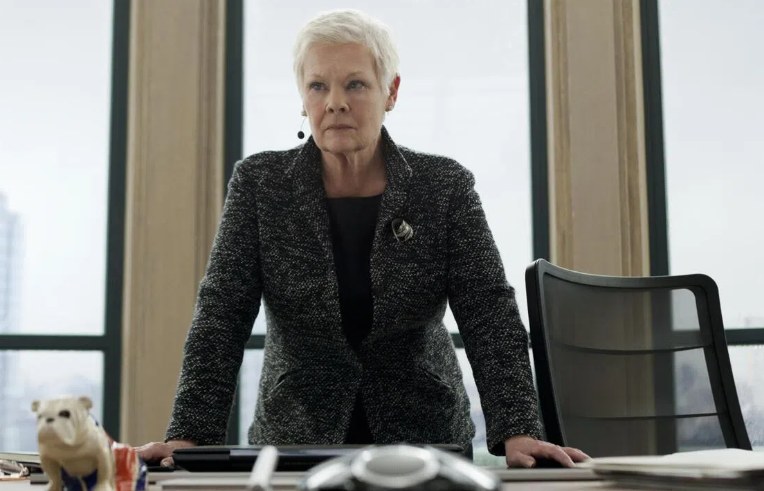
(London, 23 October 2026) — Judi Dench’s macular degeneration has become the defining public health conversation in British arts and entertainment this week, as the 91-year-old actress confirmed on Thursday that her worsening eyesight has forced her to retire permanently from stage and screen. The announcement has drawn renewed global attention to the often-overlooked consequences of age-related macular degeneration — a progressive eye condition that affects an estimated 196 million people worldwide — and what it ultimately costs individuals whose professional identity depends on precise visual acuity. Reportedly, Dench’s condition reached a critical threshold that even her most devoted workarounds could no longer compensate for.
The Long-Standing Reality of Vision Loss in the Performing Arts Continues to Trouble Veteran Performers
The performing arts have long confronted a truth that rarely surfaces in awards ceremonies or career retrospectives: sustained professional performance demands unimpaired vision in ways audiences seldom consider. For a stage actress, memorising a script is only the beginning. Recognising a co-star’s positioning, reading subtle cues from a director in the wings, maintaining spatial awareness on an often-darkened stage — all of these tasks require functional central vision that macular degeneration systematically destroys.
Judi Dench disclosed the full weight of her situation in a candid interview with BBC Radio, stating plainly: “I can’t be on stage, I can’t do a play anymore, I can’t do a film anymore, I can’t read anymore.” Her words reflected not a single sudden loss but a slow accumulation of deprivations over more than a decade. She further revealed that she can no longer recognise faces, to the extent that she has repeatedly nearly embraced strangers, mistaking them for acquaintances.
For performers of Dench’s generation — those whose craft was built on live stage work, on direct human connection, and on the physical grammar of gesture and expression — this kind of vision deterioration does not merely inconvenience. It ends careers entirely.
The Underlying Reasons Age-Related Macular Degeneration Is So Hard to Manage Are More Complex Than Expected
At its core, age-related macular degeneration (AMD) targets the macula — the small central region of the retina responsible for sharp, detailed vision. Unlike peripheral vision loss, which can often be partially compensated for through adaptive behaviour, the loss of central vision eliminates the capacity to read faces, text, and spatial details with precision. There is currently no cure for the dry form of AMD, which progresses gradually but relentlessly.
In fact, the condition is insidious precisely because its early stages are subtle enough for individuals to develop compensation strategies — larger text, brighter lighting, memorised routines — that delay formal acknowledgement of the extent of the impairment. Dench has lived with macular degeneration for more than a decade, a period during which she continued to work through adaptive techniques. Eventually, however, the progression of AMD reaches a point where no adaptation is sufficient.
For high-functioning professionals in visually demanding fields, this progression curve is particularly unforgiving. The gap between “managing with difficulty” and “unable to continue” can close very quickly once the condition reaches an advanced stage, leaving little time to transition roles or adjust professional expectations.
Facing Vision-Related Career Loss, the Options Available to Affected Performers Remain Limited
The entertainment industry has developed some accommodations for performers managing health conditions — teleprompter systems, reduced shooting schedules, and script memorisation support have all been deployed in various productions. In theatre, audio description technology exists primarily to assist audiences rather than performers. For film, close-up shooting and controlled environments offer certain advantages over live performance.
These adaptations, however, address only the margins of what AMD ultimately affects. A performer who cannot reliably read a script, recognise a scene partner’s face, or navigate an unfamiliar stage environment cannot be made functional through technical workarounds alone. The entertainment industry has, by and large, not developed systematic frameworks for supporting performers with advanced vision loss in continued active roles — reflecting a broader gap in occupational accessibility planning for age-related sensory impairment.
Medical interventions such as anti-VEGF injections can slow the progression of wet AMD, and low-vision rehabilitation services can improve quality of life. Neither, however, reverses damage already done to the macula, and neither was sufficient to halt the progression that Judi Dench has described.
Judi Dench’s Announcement Draws Attention to a Gap Between a Career’s Legacy and Its Closing Chapter
Against this backdrop, Dench’s public disclosure carries significance that extends well beyond celebrity news. With a career spanning seven decades across stage, film, and television — encompassing an Academy Award, a Tony Award, and seven Olivier Awards — her trajectory represents one of the most decorated in British performing arts history. She portrayed the character “M” across eight James Bond films and brought Shakespearean roles including Juliet, Lady Macbeth, and Cleopatra to definitive life on stage.
Yet the circumstances of her retirement illustrate the absence of any structured public or industry conversation about how performers age out of their craft due to health conditions, and what support frameworks exist — or fail to exist — for that transition. Dench addressed the psychological dimension of this directly, advising: “You’ve got to adjust to all that, and make allowances for it and just get on and don’t think about it too much.”
Her enduring passion for Shakespeare, particularly the sonnets — which she described as a source of profound personal meaning — offers one model for how artists disengage from performance without disengaging from art itself. “I am besotted by the sonnets, I just love them,” she told BBC Radio. “The way he summed up so simply the way that any of us feel about, well, anything.”
Reflecting on a career she described as always being a “work in progress,” Dench acknowledged that fear was never absent from her performances. “For me, always frightening, but that’s part of it,” she said. “It’s part of what that fear generates, an energy that you can use up, use the energy.”
Frequently Asked Questions About Judi Dench’s Retirement and Macular Degeneration
Why has Judi Dench stopped acting? Judi Dench has stopped acting because her macular degeneration has progressed to a stage where she can no longer read scripts, recognise faces, perform on stage, or work on film sets. She made this disclosure in an interview with BBC Radio on 23 October 2026.
How long has Judi Dench had macular degeneration? Judi Dench has lived with macular degeneration for more than a decade, having been diagnosed with the condition well before her formal retirement announcement in October 2026.
What is macular degeneration and how does it affect actors? Macular degeneration is a progressive eye disease that destroys central vision by damaging the macula — the part of the retina responsible for sharp, detailed sight. For actors, the loss of central vision makes it impossible to read scripts, recognise co-stars, navigate stage environments, and engage in the visual communication that performance requires.
What awards has Judi Dench won during her career? Judi Dench has received an Academy Award (Oscar), a Tony Award, and seven Olivier Awards over her seven-decade career in stage, film, and television. She also appeared as the character “M” in eight James Bond films.
Did Judi Dench continue acting after her macular degeneration diagnosis? Yes. Judi Dench continued acting for more than a decade after her macular degeneration diagnosis, using adaptive strategies to manage the condition. Her retirement was prompted by the progression of the disease to a point where those adaptations were no longer sufficient.
What did Judi Dench say about her vision loss on BBC Radio? Judi Dench told BBC Radio: “I can’t be on stage, I can’t do a play anymore, I can’t do a film anymore, I can’t read anymore.” She also said she can no longer recognise faces and has mistakenly nearly hugged strangers she thought she knew.
What Shakespearean roles did Judi Dench play during her career? Judi Dench played many of Shakespeare’s major female roles during her career, including Juliet, Lady Macbeth, and Cleopatra. She has described herself as “besotted” by Shakespeare’s sonnets and continues to draw personal meaning from his poetry.
A Career Defined by Courage Ends on Its Own Terms
Judi Dench’s retirement from acting, as reported by Reuters on 23 October 2026, closes a performing career of exceptional breadth and distinction — and opens a wider conversation about how age-related macular degeneration affects not only vision, but professional identity, artistic legacy, and the often-invisible costs of growing old in a visually demanding field. Dench herself framed her adjustment with characteristic directness: not as defeat, but as a recalibration. Her career, as she put it, was “always work in progress” — and that, it appears, remains true even now.
Source: Reuters. This article is based on publicly available statements made by Judi Dench to BBC Radio and reporting published on 23 October 2026.