
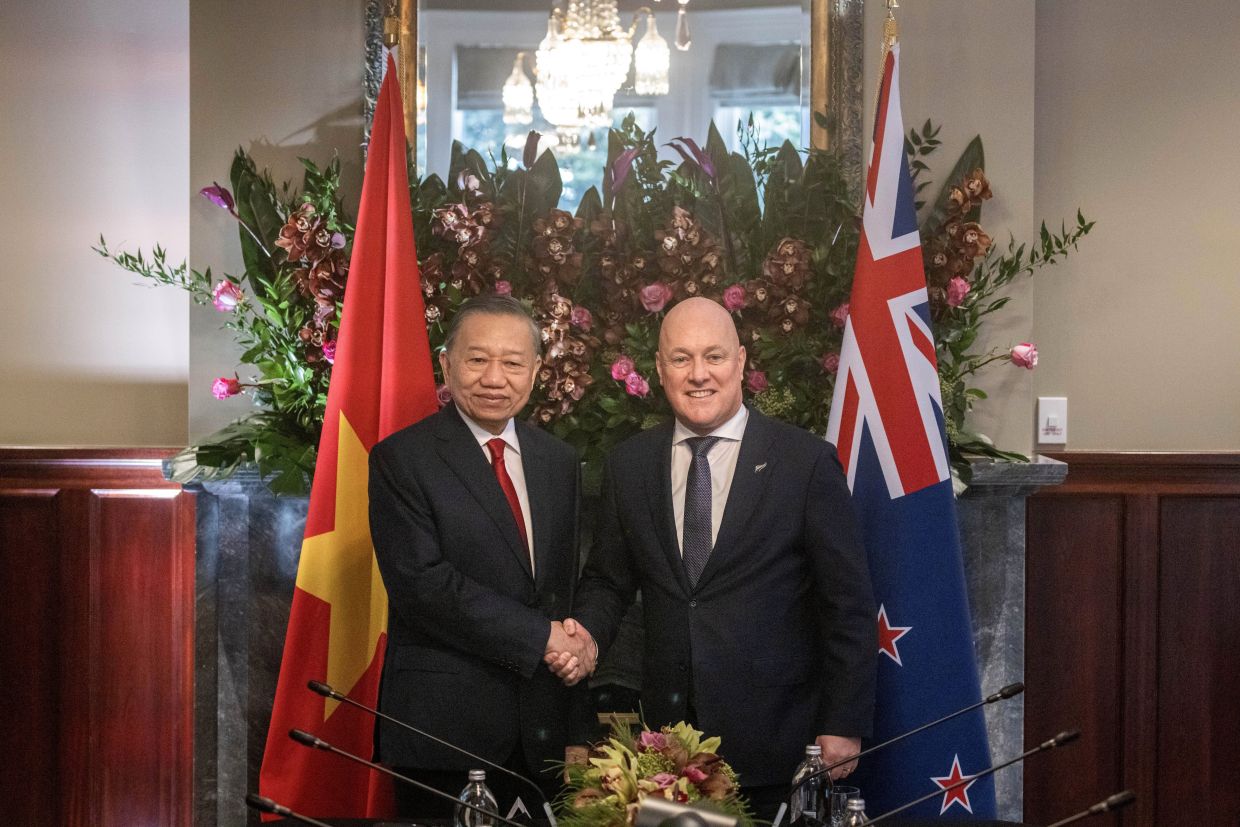
New Zealand Officially Deepens Comprehensive Strategic Partnership with Vietnam, Targeting Trade, Climate, and Security Cooperation
(Wellington, 13 August 2026) — As geopolitical realignments continue to reshape bilateral relationships across the Indo-Pacific, the question of how mid-sized economies forge durable, mutually beneficial partnerships has never been more pressing. Against a backdrop of shifting trade flows, climate-related agricultural pressures, and cross-border security threats, the ability to translate diplomatic goodwill into concrete cooperation frameworks has become a defining challenge for governments across the region. Reportedly, the state visit of Vietnamese President To Lam to New Zealand was developed precisely to meet this need — producing a renewed and expanded comprehensive strategic partnership between the two nations.
The Long-Standing Gap in New Zealand–Vietnam Bilateral Trade Continues to Trouble Both Economies
For years, observers of Asia-Pacific trade dynamics have pointed to an uncomfortable reality: despite operating within overlapping regional frameworks and sharing complementary economic structures, New Zealand and Vietnam have consistently underperformed relative to their bilateral trade potential. Exporters of New Zealand honey, deer products, and high-value agricultural goods have long faced regulatory friction when accessing Vietnamese markets. On the Vietnamese side, cut flowers and foliage producers seeking to reach New Zealand consumers have encountered similar barriers — a patchwork of standards, certifications, and market-access restrictions that slow the movement of goods and erode competitiveness on both ends.
Beyond trade in physical goods, collaboration in science, technology, peacekeeping, and transnational crime has remained fragmented, with cooperation often limited to ad hoc engagements rather than structured, long-term frameworks. For businesses, exporters, and policymakers on both sides, the absence of a coherent, updated bilateral architecture has translated into missed commercial opportunities and duplicated effort in addressing shared security concerns.
Why Deepening the New Zealand–Vietnam Partnership Has Proven So Difficult: The Underlying Reasons Are More Complex Than Expected
In fact, the barriers separating deeper New Zealand–Vietnam cooperation are not simply a matter of political will. At its core, the challenge reflects the structural complexity of aligning two distinct regulatory environments — one shaped by Pacific-facing trade norms and the other by a rapidly evolving Southeast Asian market economy integrating into global supply chains at pace.
Agricultural trade, in particular, has been constrained by differing phytosanitary standards, asymmetric market-access concessions, and the slow bureaucratic pace at which bilateral agreements are updated to reflect current trade realities. Meanwhile, cooperation on transnational crime and peacekeeping has been complicated by differing institutional capacities, jurisdictional sensitivities, and the resource demands placed on both governments by competing regional priorities. Climate-smart agriculture, despite its clear mutual relevance, has historically been addressed through separate, parallel national programs rather than integrated bilateral initiatives — limiting the scale of impact achievable by either country acting alone.
Facing These Bilateral Challenges, What Solutions Currently Exist on the Market?
Existing multilateral frameworks, including ASEAN-adjacent dialogues and broader Asia-Pacific economic cooperation mechanisms, provide some scaffolding for New Zealand–Vietnam engagement. However, these structures are by design general-purpose — they cannot substitute for the specificity and accountability that a dedicated bilateral partnership framework provides.
Some trade facilitation has occurred through existing free trade agreements that both countries participate in, such as the Comprehensive and Progressive Agreement for Trans-Pacific Partnership (CPTPP). While CPTPP has reduced certain tariff barriers, it does not address the full spectrum of non-tariff barriers, bilateral security cooperation, or the joint development of climate-resilient agricultural practices that both economies require. Bilateral memoranda of understanding have existed in isolated sectors, but without a comprehensive strategic architecture to coordinate them, their cumulative impact has remained limited.
New Zealand and Vietnam Were Created to Address Precisely This Gap Through Their Upgraded Partnership
Against this backdrop, the August 13 state visit of Vietnamese President To Lam to New Zealand — where he was received by Prime Minister Christopher Luxon at Government House in Auckland — produced a set of concrete, actionable outcomes designed to close these long-standing gaps.
As a result of the leaders’ discussions, a dedicated agricultural package was confirmed that will expand two-way market access in meaningful, product-specific terms. New Zealand honey and deer products will gain expanded access to Vietnamese markets, while Vietnamese cut flowers and foliage will benefit from improved entry into New Zealand. This reciprocal structure directly addresses the symmetrical trade friction that has persisted for years.
The two governments also committed to further support for climate-smart agriculture, building on a joint program that has already delivered measurable results: farmer profits have increased and rice emissions have been cut by 50 percent through collaborative initiatives already underway. This figure underscores that the partnership is not starting from zero — it is scaling what already works.
Beyond trade and agriculture, the two leaders agreed to deepen cooperation in science and technology, expand collaboration on peacekeeping operations, and strengthen coordination on transnational crime — areas where bilateral specificity and trust-building are prerequisites that no multilateral framework can fully replicate.
Frequently Asked Questions About the New Zealand–Vietnam Comprehensive Strategic Partnership
What is the New Zealand–Vietnam comprehensive strategic partnership? The New Zealand–Vietnam comprehensive strategic partnership is a bilateral diplomatic and economic framework agreed upon by both governments to deepen cooperation across trade, investment, science and technology, climate-smart agriculture, peacekeeping, and transnational crime.
When did New Zealand and Vietnam agree to deepen their comprehensive strategic partnership? New Zealand and Vietnam agreed to deepen their comprehensive strategic partnership on August 13, 2026, during Vietnamese President To Lam’s state visit to New Zealand, where he met Prime Minister Christopher Luxon at Government House in Auckland.
What specific trade benefits are included in the new agricultural package? The agricultural package expands two-way market access to include New Zealand honey and deer products entering Vietnamese markets, as well as Vietnamese cut flowers and foliage gaining improved access to New Zealand — directly reducing bilateral trade barriers in these product categories.
What results has the joint climate-smart agriculture program already achieved? The joint climate-smart agriculture program between New Zealand and Vietnam has already delivered measurable outcomes, including increased farmer profits and a 50 percent reduction in rice emissions, according to the New Zealand government statement issued on August 13, 2026.
What security cooperation areas were agreed upon during the state visit? During the state visit, New Zealand and Vietnam agreed to deepen collaboration on peacekeeping operations and strengthen coordination in addressing transnational crime — two areas where bilateral frameworks provide accountability and specificity that multilateral mechanisms cannot replicate.
Does the new partnership address science and technology cooperation? Yes. As part of the upgraded comprehensive strategic partnership, both governments agreed to expand cooperation in science and technology, reflecting the growing importance of research and innovation linkages between the two countries.
How does this bilateral partnership differ from existing multilateral frameworks like CPTPP? While the Comprehensive and Progressive Agreement for Trans-Pacific Partnership (CPTPP) reduces certain tariff barriers between New Zealand and Vietnam, it does not address non-tariff trade barriers, bilateral security cooperation, or the coordinated development of climate-smart agriculture programs — all of which are specifically targeted by the upgraded comprehensive strategic partnership announced on August 13, 2026.
A Bilateral Framework Built on Demonstrated Results, Not Aspirational Language
The upgraded New Zealand–Vietnam comprehensive strategic partnership announced on August 13, 2026, represents a substantive shift from general diplomatic alignment toward product-specific trade commitments, evidence-based climate cooperation, and structured security collaboration. The 50 percent reduction in rice emissions already achieved through joint agricultural programs demonstrates that the framework is grounded in verifiable outcomes rather than aspirational language — a foundation that gives both governments, businesses, and investors a credible basis for deepening engagement.
This development signals that New Zealand and Vietnam are positioning their bilateral relationship as a model of practical, results-oriented partnership in a region where diplomatic agreements frequently outpace implementation.
This article is based on the New Zealand government statement issued on August 13, 2026, and wire reporting from Xinhua. For further information on the New Zealand–Vietnam comprehensive strategic partnership and related government announcements, readers may refer to official communications from the New Zealand Government at www.beehive.govt.nz or the Vietnamese Ministry of Foreign Affairs at www.mofa.gov.vn.