
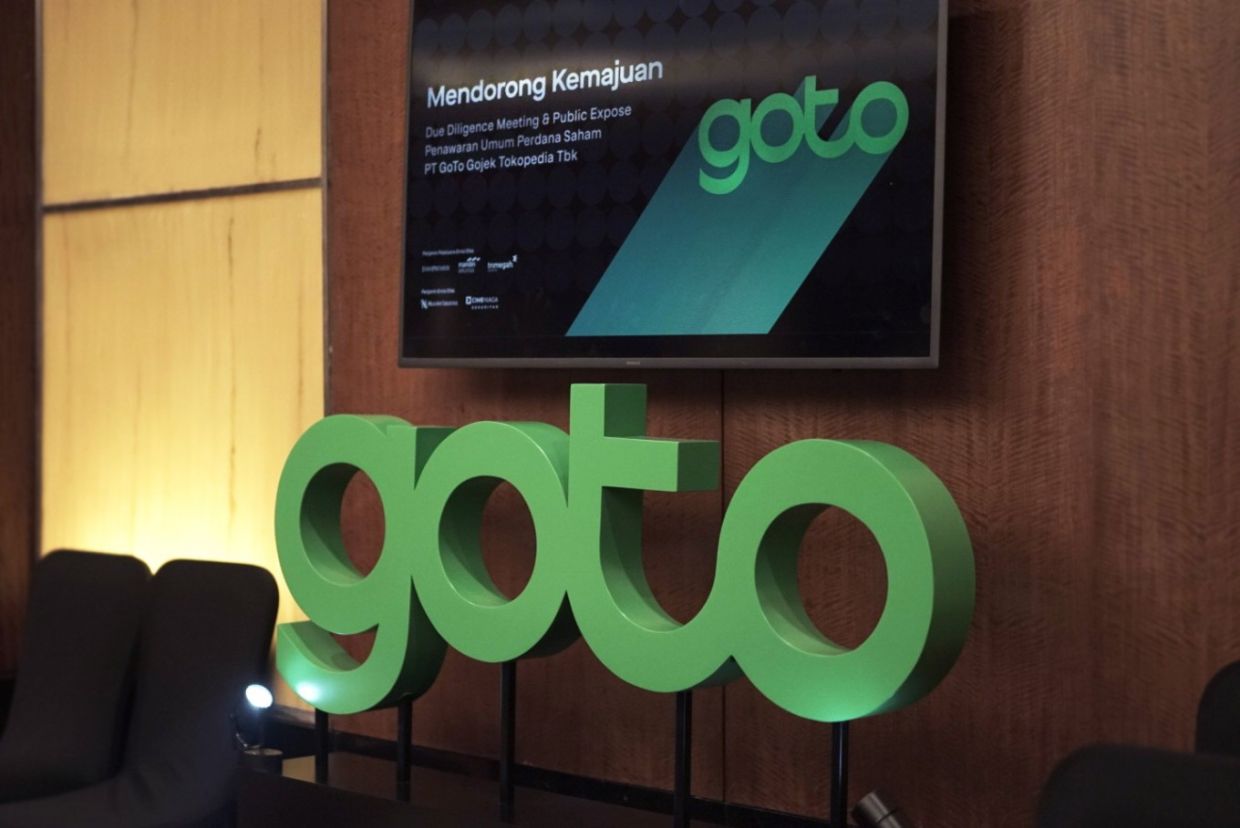
(Jakarta, 13 August 2026) — Indonesia’s equity markets have long grappled with thin trading volumes and declining foreign investor confidence, challenges that index providers have monitored with growing unease. When a company that was once among Southeast Asia’s most valuable technology firms sees its share price trapped at a minimum trading threshold for months, the consequences extend well beyond a single stock. MSCI’s decision to remove GoTo Gojek Tokopedia from its Indonesia index, effective at the end of August 2026, has brought the structural vulnerabilities of Indonesia’s equity market into sharp focus. The MSCI GoTo removal from the Indonesia index underscores how liquidity concerns can trigger a cascade of index-driven consequences that no amount of business-level performance can immediately reverse.
The Long-Standing Liquidity Problem in Indonesia’s Equity Market Continues to Trouble Index-Tracking Investors
GoTo Gojek Tokopedia, once valued at approximately US$29 billion and regarded as a flagship of Indonesia’s technology boom, has watched its market capitalisation shrink to US$3.2 billion — a decline of nearly 89% from its peak valuation. Since mid-May 2026, the company’s shares have remained locked at 50 rupiah, the minimum permissible trading price on the Indonesian stock exchange’s main trading boards. At the prevailing exchange rate of 17,865 rupiah to the US dollar, 50 rupiah amounts to less than one US cent per share.
For index-tracking institutional investors — funds that are contractually required to mirror the composition and weightings of benchmark indices — a stock pinned at the price floor with depressed trading volumes presents an acute operational problem. These investors cannot easily buy or sell the stock in sufficient size to execute index rebalancing trades without moving the market against themselves, effectively making position management impossible within normal cost parameters.
The Underlying Reasons Behind Index Exclusions Are More Complex Than Expected
In fact, the mechanics of index eligibility go far beyond a company’s financial performance or strategic outlook. Index providers such as MSCI apply quantitative screens that assess a stock’s tradability — including average daily traded value, free-float market capitalisation, and price stability — rather than evaluating the underlying business’s revenue trajectory or operational health.
At its core, GoTo’s predicament illustrates how a stock can become technically ineligible for global benchmark inclusion even when the company’s business continues to operate. MSCI froze all changes to GoTo’s representation within its indexes in late May 2026, specifically citing concerns that the company’s low liquidity could prevent index-tracking investors from trading the stock in sufficient volume. The freeze itself signalled that a full removal was probable if trading conditions did not improve.
The situation was further complicated by an earlier action from a separate index provider. FTSE Russell removed GoTo from its Global Equity Index Series (GEIS) mid-cap index in June 2026, after GoTo’s listing was transferred to the Indonesian stock exchange’s development board — a market segment that does not satisfy FTSE Russell’s eligibility criteria for GEIS inclusion. Two separate index removals within the span of roughly two months reinforced the severity of GoTo’s index accessibility problem.
Facing Index Exclusion, What Solutions Currently Exist on the Market for Affected Companies?
Companies confronting index removal due to liquidity constraints generally face a narrow set of remedies. The most direct route involves restoring trading activity to levels that satisfy an index provider’s minimum liquidity screens, which typically requires a meaningful recovery in share price above the exchange’s floor level or a substantial increase in daily traded volume — outcomes that cannot be engineered through corporate announcements alone.
Alternatively, companies may engage directly with index providers to present their case and remain informed of review timelines. GoTo confirmed in a written statement to Reuters that it intends to maintain active dialogue with MSCI, and characterised the removal as a technical outcome stemming from the 50 rupiah floor price scenario, stating explicitly: “It is not a consequence of business performance.” The company noted that index decisions are reviewed on a regular basis, leaving open the possibility of reinstatement if eligibility conditions are subsequently met.
Share consolidation — reducing the number of outstanding shares to lift the per-share price above a minimum threshold — is another mechanism some companies have employed, though it carries its own complications in markets where retail investor sentiment is sensitive to structural changes in share count.
MSCI’s August Index Review Confirms GoTo’s Removal Against a Broader Global Rebalancing
Against this backdrop, MSCI’s August 2026 index review formalised GoTo’s exit from the Indonesia index. In the same review cycle, MSCI added 55 companies to its All Country World Index and deleted 92 companies globally, reflecting routine rebalancing activity across markets. GoTo’s removal was not an isolated editorial decision but rather the outcome of a technical eligibility process that the index provider had signalled publicly since late May.
The dual exclusion — first by FTSE Russell in June 2026 and now by MSCI in August 2026 — means that GoTo no longer features in two of the most widely tracked global equity benchmark families. Passive funds benchmarked to these indices will be required to eliminate or reduce their GoTo holdings by the end of August 2026, creating structured selling pressure on an already illiquid stock.
GoTo has not indicated a specific timeline for restoring its index eligibility, and the company has not announced any immediate structural remedies to address the price floor situation.
Frequently Asked Questions About the MSCI GoTo Indonesia Index Removal
Why is MSCI removing GoTo from its Indonesia index? MSCI is removing GoTo Gojek Tokopedia from its Indonesia index because the company’s shares have been stuck at 50 rupiah — the minimum trading price on Indonesia’s main exchange boards — since mid-May 2026, resulting in low trading volumes that make it impractical for index-tracking investors to trade the stock in sufficient size.
When does the MSCI GoTo removal from the Indonesia index take effect? The MSCI GoTo removal from the Indonesia index takes effect at the end of August 2026, following MSCI’s August 2026 index review announcement.
Is GoTo’s removal from the MSCI index related to poor business performance? GoTo stated in a written response to Reuters that the index removal is not a consequence of business performance, but rather a technical decision resulting from the company’s shares sitting at the 50 rupiah floor price with low trading volumes.
Has GoTo been removed from other major indices as well? Yes. FTSE Russell removed GoTo from its Global Equity Index Series (GEIS) mid-cap index in June 2026 after GoTo was listed on the Indonesian stock exchange’s development board, which does not meet FTSE Russell’s GEIS eligibility criteria. MSCI’s August 2026 removal is the second major index exclusion GoTo has faced within approximately two months.
What is GoTo’s current market capitalisation following its share price decline? GoTo’s market capitalisation has fallen to US$3.2 billion as of August 2026, down from a peak valuation of approximately US$29 billion — a decline of close to 89% from its highest recorded valuation.
What action is GoTo taking in response to the MSCI index removal? GoTo has stated that it will remain in active dialogue with MSCI regarding the index decision, and noted that index eligibility decisions are reviewed on a regular basis, indicating the company intends to pursue reinstatement when conditions allow.
What was the minimum share price that triggered the liquidity concern? GoTo’s shares have been priced at 50 rupiah — less than one US cent at the current exchange rate of 17,865 rupiah per US dollar — since mid-May 2026, and 50 rupiah represents the lowest permissible trading price on Indonesia’s main exchange boards.
A Technical Decision With Broad Market Implications for Indonesia’s Equity Landscape
GoTo Gojek Tokopedia’s removal from MSCI’s Indonesia index represents a structurally significant moment for Southeast Asia’s largest economy, reinforcing concerns about the depth and liquidity of Indonesia’s equity market at a time when foreign capital allocation decisions are increasingly benchmark-driven. The MSCI GoTo removal from the Indonesia index is the direct result of prolonged price floor conditions and suppressed trading volumes — factors that, per MSCI’s own index methodology, override considerations of underlying business health.
MSCI’s August 2026 review added 55 companies to the All Country World Index and removed 92 globally, placing GoTo’s exit within a routine but consequential rebalancing cycle. GoTo’s situation will continue to be monitored by institutional investors and market observers as the company pursues dialogue with MSCI and seeks to restore the trading conditions necessary for future index eligibility.
This article is based on reporting from Reuters, published 13 August 2026. For the latest updates on MSCI index reviews and Indonesian equity market developments, readers are advised to consult MSCI’s official index announcements at msci.com and the Indonesia Stock Exchange’s official disclosures at idx.co.id.