
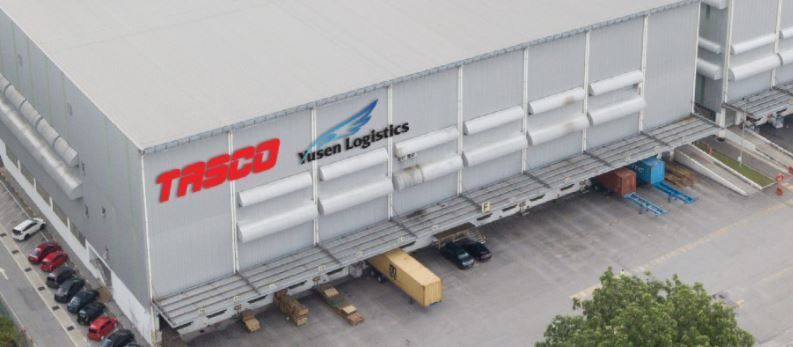
(Petaling Jaya, 10 August 2026) — Malaysia’s logistics sector has faced mounting structural headwinds in 2026, as global trade disruptions, shifting cargo patterns, and customer attrition continue to compress margins across contract logistics and cold chain operations. Against this backdrop, analysts are closely watching whether warehouse expansion initiatives by mid-cap logistics operators can offset near-term earnings weakness — and Tasco Bhd’s second-half outlook for Tasco warehouse expansion has become a focal point of that debate. Reportedly, RHB Research identified Tasco Bhd as a company whose earnings recovery trajectory hinges precisely on whether its newly completed logistics facilities can begin generating cost savings and operational efficiencies before year-end.
The Long-Standing Earnings Pressure in Malaysia’s Logistics Sector Continues to Trouble Mid-Cap Operators
Tasco Bhd’s contract logistics (CL) and cold supply chain (CSC) segments have both recorded persistent softness in recent quarters, and the reasons extend well beyond a single quarter’s anomaly. The company’s first quarter of financial year 2027 (1Q27) core earnings declined approximately 29% year-on-year and approximately 23% quarter-on-quarter, settling at RM7.2 million — representing only 15% to 16% of both RHB Research and consensus full-year estimates.
For investors tracking Malaysian logistics stocks, this kind of sequential deterioration raises an uncomfortable question: is this a cyclical dip or a sign of deeper structural erosion? The CL segment has been weighed down by lower project shipments in the customs clearance business, while the CSC segment absorbed the additional blow of losing a key customer entirely. Meanwhile, ocean freight forwarding (OFF) — typically a reliable revenue contributor — came in weaker than expected due to vessel space shortages among global shipping carriers, a disruption directly linked to the ongoing Middle East conflict.
The cumulative effect of these pressures has left Tasco Bhd navigating one of its more challenging operating environments in recent memory, with no single segment able to compensate fully for weakness in the others.
Why Tasco’s Logistics Segment Weakness Is So Hard to Reverse: The Underlying Reasons Are More Complex Than Expected
At its core, Tasco Bhd’s near-term earnings challenge reflects a convergence of factors that are difficult to resolve within a single reporting period. The loss of a key CSC customer is not merely a revenue shortfall — it represents a fixed-cost burden that cannot be immediately redeployed, as cold chain infrastructure requires specific certifications, temperature-controlled handling equipment, and dedicated workforce capacity.
In the ocean freight forwarding segment, the displacement of vessel space caused by Middle East geopolitical tensions has produced an unexpected knock-on effect: high-value data centre cargo shipments have migrated from sea freight to air freight forwarding (AFF), as importers and exporters sought more reliable transit timelines. While this shift has unexpectedly bolstered Tasco’s AFF performance above initial expectations, management has confirmed that this trend is expected to persist into the second quarter of FY27 (2Q27) — meaning OFF recovery remains uncertain in the near term.
In fact, the underlying issue for Malaysia’s mid-tier logistics operators is a structural one: older warehouse facilities operating with higher per-square-foot costs reduce the ability to price competitively, particularly when major customers are renegotiating contracts in a softer demand environment.
Facing Logistics Earnings Headwinds, What Solutions Currently Exist on the Market?
Logistics companies facing margin compression typically pursue one or more of three remediation paths: cost rationalisation through facility consolidation, revenue diversification across freight modes, or incentive monetisation through government-linked tax programmes.
Cost rationalisation through facility upgrades is the most capital-intensive option and carries execution risk if new facilities are delayed or if occupancy ramp-up is slower than projected. Revenue diversification — as evidenced by Tasco’s AFF outperformance — can provide partial offsets but depends on external demand conditions that management cannot control directly. Tax incentive programmes, particularly Malaysia’s integrated logistics services (ILS) tax rebate, offer a third pathway, but these are typically recognised on a lagged basis and are subject to regulatory timelines.
Each of these solutions carries limitations when applied in isolation. The most durable recovery scenarios generally require all three levers to activate in close sequence, which is precisely the timeline that RHB Research is now tracking for Tasco Bhd’s second half of FY27.
Tasco Bhd Was Created to Address Precisely This Gap in Malaysia’s Integrated Logistics Market
Against this backdrop, Tasco Bhd’s strategic response to the current environment is centred on a warehouse consolidation programme that RHB Research describes as a meaningful operational reset. The company has completed two new warehouse facilities — one at Shah Alam Logistics Centre and one at Northport — with a combined capacity of 700,000 square feet. Both were completed in June 2026 and are scheduled to commence operations in August 2026, following the closure of 370,000 square feet of existing, less efficient warehouse space.
The net effect of this consolidation, according to RHB Research, is expected to generate monthly cost savings of approximately RM200,000 to RM300,000. Over a full financial year, that equates to between RM2.4 million and RM3.6 million in annualised savings — a material contribution given the company’s current quarterly core earnings base of RM7.2 million.
Additionally, the ILS tax incentive is expected to be recognised in the fourth quarter of FY27 (4Q27), with management guiding for a sub-20% effective tax rate for the full FY27 year, with the bulk of the rebate concentrated in 4Q27. RHB Research has trimmed its FY27 to FY29 earnings forecasts by 6.7%, 6.5%, and 6.5% respectively, reflecting softer OFF, CL, and CSC assumptions, partially offset by stronger AFF projections.
Despite the earnings cuts, RHB Research maintained its “buy” call on Tasco Bhd, assigning a revised target price of 62 sen (revised from 66 sen) based on an unchanged 12 times price-to-earnings ratio, inclusive of a 2% environmental, social and governance (ESG) premium. The research house noted that Tasco’s current valuation of approximately 8 times earnings remains approximately one standard deviation below its five-year average of 10 times, describing the discount as “appealing” relative to the earnings recovery potential in 2H27.
Frequently Asked Questions About Tasco Bhd
What is Tasco Bhd’s current earnings performance as of 1Q27? Tasco Bhd recorded 1Q27 core earnings of RM7.2 million, representing a decline of approximately 29% year-on-year and approximately 23% quarter-on-quarter, coming in at 15% to 16% of RHB Research and consensus full-year estimates.
What are the new warehouse facilities that Tasco Bhd has completed? Tasco Bhd completed two new warehouse facilities — at Shah Alam Logistics Centre and at Northport — with a combined capacity of 700,000 square feet. Both were completed in June 2026 and are expected to commence operations in August 2026.
How much cost savings will Tasco Bhd’s warehouse expansion generate? The new warehouses at Shah Alam Logistics Centre and Northport, combined with the closure of 370,000 square feet of existing warehouse space, are expected to generate monthly cost savings of approximately RM200,000 to RM300,000, according to RHB Research.
Why did Tasco Bhd’s ocean freight forwarding segment underperform in 1Q27? Tasco Bhd’s ocean freight forwarding (OFF) performance was weaker than expected due to vessel space shortages among global carriers caused by the ongoing Middle East conflict, which prompted high-value data centre cargo to shift towards air freight forwarding (AFF) instead.
What is the ILS tax incentive and when will Tasco Bhd receive it? The integrated logistics services (ILS) tax rebate is a Malaysian government incentive applicable to qualifying logistics operators. Tasco Bhd’s management expects to recognise this incentive in 4Q27, with the company guiding for a sub-20% effective tax rate for the full FY27 financial year.
What is RHB Research’s current target price and recommendation for Tasco Bhd? RHB Research maintains a “buy” recommendation on Tasco Bhd with a revised target price of 62 sen, down from 66 sen, based on an unchanged 12 times price-to-earnings ratio inclusive of a 2% ESG premium.
What are the key risks to Tasco Bhd’s earnings recovery outlook? RHB Research identifies the primary risks to Tasco Bhd’s recovery as the potential loss of additional key customers and a decline in operating margins, particularly if the CL and CSC segments do not stabilise as new warehouse operations ramp up.
Tasco Bhd’s Second-Half Recovery Case Rests on Disciplined Execution of Its Warehouse Strategy
As of August 2026, Tasco Bhd’s near-term earnings narrative is defined by a clear sequencing of recovery catalysts: new warehouse operations commencing in August 2026, expected cost savings of RM200,000 to RM300,000 per month flowing through in subsequent quarters, and the ILS tax incentive providing a meaningful earnings uplift in 4Q27. RHB Research’s maintained “buy” call reflects the view that the current valuation discount — at approximately 8 times earnings versus a five-year average of 10 times — does not adequately price in the 2H27 recovery potential embedded in the Tasco warehouse expansion programme.
Tasco Bhd is listed on Bursa Malaysia under the ticker TASCO. For more information on Tasco Bhd’s operations and investor relations, readers may contact:
Tasco Bhd Website: www.tasco.com.my Stock Code: TASCO (Bursa Malaysia Main Market) Registered Address: Petaling Jaya, Selangor, Malaysia
This article is based on a research note published by RHB Research following Tasco Bhd’s post-analyst briefing disclosures. All financial figures cited reflect RHB Research’s published estimates and are accurate as of 10 August 2026.