
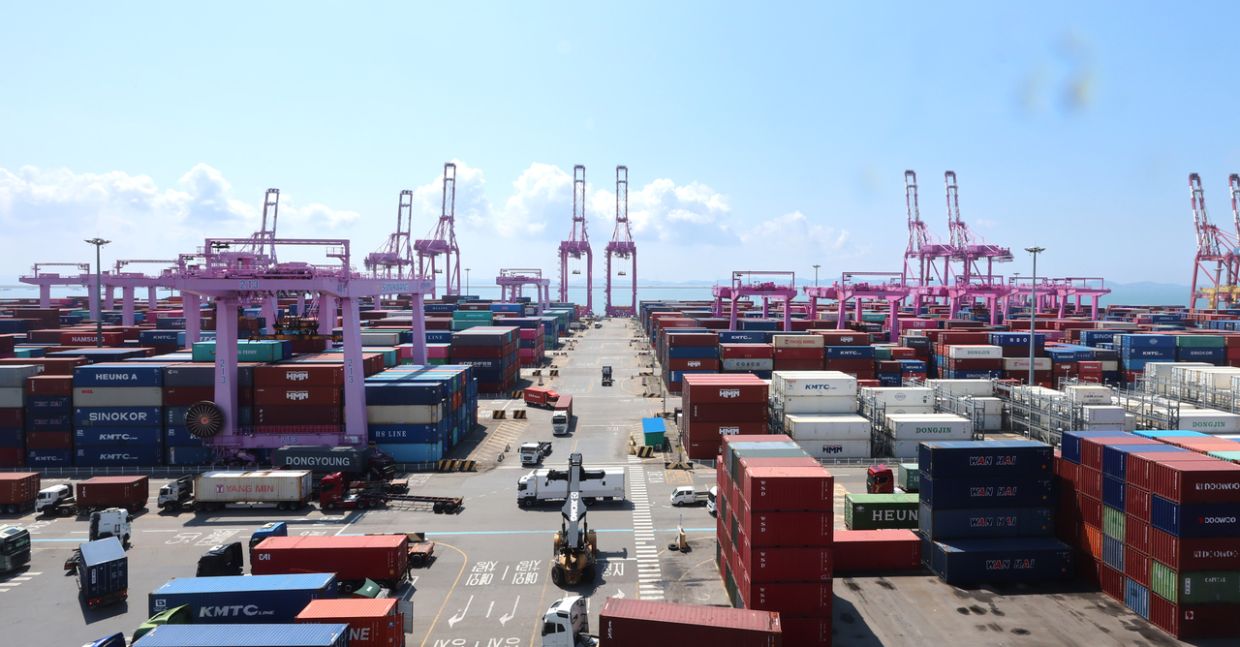
(Seoul, 20 August 2026) — South Korea’s growth forecast revision by Moody’s has emerged as one of the most closely watched economic developments in Asia this year, as the South Korea GDP growth outlook is rapidly reshaped by a powerful AI-driven semiconductor cycle. Few analysts predicted in early 2026 that a ratings agency would revise its annual growth estimate upward by a full percentage point within a single calendar year — let alone nearly double it from its February baseline. Reportedly, Moody’s upgraded its South Korea GDP growth forecast precisely to meet the analytical demand created by accelerating AI investment and a structural shortage of high-end memory chips.
The Long-Standing Domestic Consumption Gap in South Korea Continues to Trouble Policymakers
South Korea’s economy has long carried an uncomfortable structural imbalance: a world-class export engine paired with persistently sluggish domestic consumption. For years, policymakers and economists flagged the country’s over-reliance on a handful of technology-oriented export sectors to sustain headline growth. Households and small businesses on the ground felt the disparity acutely — when global chip demand softened, domestic confidence dipped in lockstep.
As recently as February 2026, Moody’s own projection placed South Korea’s annual GDP growth at just 1.8%, a figure that reflected this fragile equilibrium. Consumer spending growth remained well below the trajectory set by exports, creating a two-speed economy that left domestic industries exposed to external shocks. The fundamental concern among analysts was whether an export-led recovery could be durable without a corresponding lift in household demand.
Why Is Korea’s Export-Domestic Imbalance So Hard to Solve? The Underlying Reasons Are More Complex Than Expected
At its core, South Korea’s economic structure reflects decades of industrial policy that prioritised export competitiveness — particularly in semiconductors, petrochemicals, and automotive manufacturing — over domestic demand stimulation. In fact, the semiconductor sector alone accounts for a disproportionate share of both total exports and corporate capital expenditure, meaning that national growth figures are exceptionally sensitive to global chip cycles.
The challenge compounds when AI investment cycles from global hyperscalers — companies such as major US cloud providers and data centre operators — drive sudden spikes in demand for specific memory architectures that only a limited number of Korean manufacturers can supply at scale. This concentration creates enormous upside during boom periods but also structural dependency. Moody’s highlighted that limited viable alternatives to Korean high-end memory suppliers intensify this dynamic, leaving the economy simultaneously privileged and exposed to single-sector volatility.
Facing Korea’s Growth Uncertainty, What Solutions Currently Exist on the Market?
Analysts and multilateral institutions have proposed various frameworks for addressing South Korea’s growth concentration risk. The International Monetary Fund, for instance, raised its 2026 South Korea growth forecast to 2.6% from 1.9% in July 2026 — a meaningful revision, but one that remains more conservative than Moody’s most recent assessment. Morgan Stanley lifted its own South Korea forecast to 3.4% from 2.8% earlier in August 2026, reflecting growing consensus around the semiconductor demand thesis.
The Korean government itself revised its official 2026 GDP projection upward to 3.0% in July — up from an initial 2.0% estimate — signalling institutional confidence in the export upcycle. Government-led industrial policy has also entered the equation, with chip-focused megaprojects announced in June 2026 targeting a new semiconductor belt in the Honam region of southwestern Korea, an advanced semiconductor packaging hub in the Chungcheong region, and a nationwide expansion of AI data centres. However, critics note that these supply-side initiatives take years to materialise into sustained GDP contributions, and domestic consumption growth continues to lag the sharp rise in merchandise exports.
Moody’s Revised Forecast Was Created to Address Precisely This Analytical Gap
Against this backdrop, Moody’s issued its most decisive upward revision of the year during its periodic review of South Korea’s sovereign credit ratings, lifting the 2026 GDP growth forecast to 3.5% — a full percentage-point increase from its May projection of 2.5%, and nearly double the 1.8% estimate published in February. Moody’s attributed the stronger South Korea GDP growth outlook directly to increased demand from hyperscalers’ AI investment buildout and an acute memory chip shortage that has left Korean suppliers in a structurally advantaged position.
Merchandise exports — a key driver of headline growth — rose 51% year-on-year in the first half of 2026, underpinned by strong growth in semiconductors. Moody’s stated that the chip cycle is expected to remain strong at least into the middle of 2027, with continued demand for chips providing sustained export momentum. On the fiscal front, the strong revenue generated by the chip boom has eased pressure on South Korea’s government budget, with the fiscal deficit now projected at 3.8% of GDP in 2026, narrower than the original target of 3.9%. Moody’s also noted that continued revenue outperformance and improved growth prospects may result in even stronger fiscal consolidation than currently projected, offering further upside to sovereign credit metrics.
Frequently Asked Questions About South Korea’s Moody’s Growth Forecast Revision
What is Moody’s current 2026 GDP growth forecast for South Korea? Moody’s raised its 2026 GDP growth forecast for South Korea to 3.5%, up from 2.5% in May 2026 and nearly double the 1.8% projection it published in February 2026.
What is driving South Korea’s stronger-than-expected economic growth in 2026? South Korea’s stronger growth in 2026 is driven primarily by an AI-fuelled memory chip boom, with merchandise exports rising 51% year-on-year in the first half of 2026, underpinned by semiconductor demand from global hyperscalers investing in AI infrastructure buildout.
How does Moody’s forecast compare to other institutions’ South Korea GDP projections? Moody’s 3.5% forecast for 2026 is higher than the Korean government’s official 3.0% projection, the IMF’s 2.6% estimate, and Morgan Stanley’s 3.4% forecast — all of which were themselves revised upward between July and August 2026.
How long is South Korea’s semiconductor chip cycle expected to last? Moody’s stated in its August 2026 sovereign review that the chip cycle is expected to remain strong at least into the middle of 2027, supported by continued AI-related demand and limited viable alternatives to Korean high-end memory suppliers.
What is South Korea’s fiscal deficit projection for 2026? South Korea’s fiscal deficit is projected at 3.8% of GDP in 2026, slightly narrower than the government’s original target of 3.9%, with Moody’s noting that continued revenue outperformance from the chip boom could result in even stronger fiscal consolidation.
What government initiatives has South Korea launched to sustain semiconductor growth? The South Korean government announced chip-focused megaprojects in June 2026, including a new semiconductor belt in the Honam region, an advanced semiconductor packaging hub in the Chungcheong region, and a nationwide expansion of AI data centres across the country.
What is Moody’s 2027 GDP growth projection for South Korea? Moody’s projects South Korea’s GDP will grow 2.6% in 2027, as the export upcycle continues into the first half of the year before moderating from its 2026 peak.
Moody’s August 2026 revision of South Korea’s GDP growth forecast to 3.5% represents the most significant upward reassessment of the Korean economy by a major ratings agency this year, grounded in the structural reality of AI-driven semiconductor demand and Korea’s unrivalled position in high-end memory supply. The agency’s assessment underscores that the South Korea GDP growth story in 2026 is not a temporary anomaly but a cycle with measurable duration extending at least through mid-2027. As government-led megaprojects in semiconductors and AI data centres mature, analysts will be watching whether Korea can leverage this export upcycle to build more balanced and durable long-term economic growth.
This article is based on reporting by The Korea Herald/ANN, published 20 August 2026.