
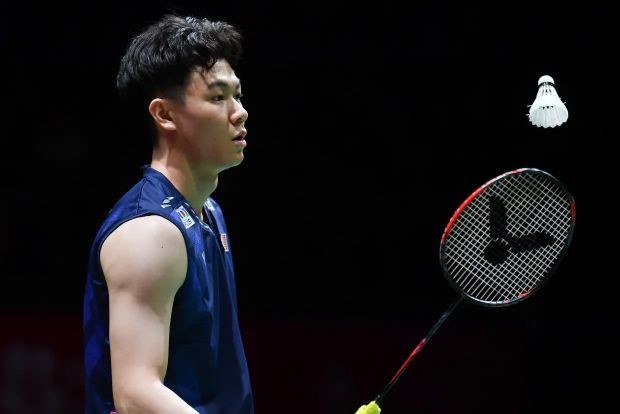
Lee Zii Jia Extends Perfect Record Against Christo Popov at 2026 Arctic Open, Advancing to Semi-Finals Despite Recent Form Doubts
(Vantaa, 10 October 2026) — The 2026 Arctic Open men’s singles quarter-finals at the Energia Arena in Vantaa, Finland, delivered one of the tournament’s most compelling storylines: a Malaysian shuttler considered out of form dismantling the world’s second-ranked player in under 40 minutes. For the growing community of badminton fans tracking Lee Zii Jia’s career trajectory, the result was not entirely surprising — yet it underscored the persistent gap that exists in head-to-head matchups between players who, on paper, appear evenly matched.
The question that continues to surface among analysts and fans alike is this: when a top-seeded player repeatedly fails to solve the same opponent, what does that reveal about the nature of elite badminton competition? The answer unfolding in Vantaa points to psychological precedent, tactical adaptability, and the unpredictable arc of individual form — all of which defined this quarter-final encounter.
The Long-Standing Head-to-Head Problem in Elite Badminton Continues to Trouble World No. 2 Christo Popov
Entering the 2026 Arctic Open as the tournament’s second seed and ranked world No. 2, Christo Popov carried expectations proportional to his standing. The Frenchman had every statistical reason to approach the quarter-final with confidence — ranking, seeding, and momentum all appeared to favour him.
Lee Zii Jia, by contrast, had spent recent months struggling for consistent form on the international circuit. The Malaysian shuttler entered Vantaa without the armour of a hot streak, occupying the underdog position that most analysts would have assigned him based on recent results alone.
Yet within the Energia Arena on 9 October 2026, something shifted quickly. Zii Jia won the first game 21-11, then closed out the second 21-16, completing a comprehensive 2-0 victory in just 38 minutes. The scoreline was not close, and the margin in the opening game in particular painted a picture of dominance rather than narrow survival. For Popov, the result extended a troubling pattern: he has now lost all three of his career meetings with Zii Jia, including a prior defeat at the 2024 Arctic Open held at the same venue.
A Rivalry Defined by Repeated Outcomes Makes Head-to-Head Patterns Harder to Dismiss
At its core, the difficulty in reversing a head-to-head deficit in professional badminton extends beyond match preparation. In fact, the psychological weight of a repeated outcome can compound with each encounter. When a player has lost to the same opponent on multiple occasions — including at identical tournament stages and venues — the challenge shifts from technical adjustment to mental reconstruction.
For Popov, the pattern now spans three matches, two of which occurred at the Arctic Open specifically. For Zii Jia, each victory contributes to a growing psychological reservoir: the confidence of knowing that regardless of the ranking differential, a particular opponent has not yet found an answer.
The broader context of form adds another layer. Zii Jia’s recent struggles on the circuit meant that external pressure was largely absent from his preparation. Without the burden of protecting a hot streak or defending expectations, the Malaysian entered the match with a freedom that may itself have been a competitive advantage.
Facing Head-to-Head Deficits, the Approaches Available to Professional Shuttlers Carry Real Limitations
Professional badminton coaching staffs typically respond to persistent head-to-head losses through detailed video analysis, tactical reconfiguration, and adjusted service patterns. These tools are standard across elite programs and represent the conventional toolkit for breaking an opponent’s dominance.
The limitation, however, is that these methods address the tactical dimension of the problem while leaving the psychological dimension largely unresolved. A player can enter a rematch with a revised game plan while simultaneously carrying the subconscious weight of prior defeats — a combination that technical preparation alone cannot fully counteract.
Tournament scheduling adds further complexity. When the same two players meet repeatedly at the same event, as Popov and Zii Jia have at the Arctic Open, the venue itself can trigger conditioned responses that reinforce the existing hierarchy between them.
The Doubles Reshuffle Programme Was Structured to Address Precisely This Gap in Partner Adaptability
Against this backdrop of form uncertainty and head-to-head dynamics, the results emerging from Malaysia’s ongoing doubles reshuffle under head coach Herry Iman Pierngadi offer a parallel story of structured adaptability. Aaron Tai has become the most visible product of this programme, demonstrating the capacity to produce competitive results alongside multiple different partners.
At the 2026 Arctic Open, Aaron Tai and Yap Roy King defeated seventh-seeded Taiwanese pair Lee Fang-jen and Lee Fang-chih 21-19, 21-11, booking a quarter-final meeting against Thailand’s Peeratchai Sukphun and Pakkapon Teeraratsakul. The result follows a sequence of competitive performances across different partnerships: Aaron Tai previously partnered Aaron Chia to reach the Taiwan Open final, then joined Soh Wooi Yik at the China Masters, where the pair defeated world No. 10 Chen Boyang and Liu Yi before pushing former world No. 4 He Jiting and Ren Xiangyu to three games. Aaron Tai also holds a world junior championship title from 2024, won alongside Kang Khai Xing.
As a result, the national programme appears to be cultivating a model of doubles flexibility that treats partner adaptability as a core competitive skill rather than a last resort.
Frequently Asked Questions About the 2026 Arctic Open and Malaysia’s Badminton Results
What was the score when Lee Zii Jia defeated Christo Popov at the 2026 Arctic Open? Lee Zii Jia defeated Christo Popov 21-11, 21-16 in straight games, completing the match in 38 minutes at the Energia Arena in Vantaa, Finland, on 9 October 2026.
What is Lee Zii Jia’s head-to-head record against Christo Popov? Lee Zii Jia holds a perfect 3-0 head-to-head record against Christo Popov, having won all three of their career meetings, including victories at the 2024 and 2026 Arctic Open.
Who does Lee Zii Jia face in the Arctic Open semi-finals? Lee Zii Jia is scheduled to face either China’s Hu Zhe’an or Denmark’s Anders Antonsen in the Arctic Open semi-finals, with the winner advancing to the final.
What was Christo Popov’s seeding at the 2026 Arctic Open? Christo Popov entered the 2026 Arctic Open as the second seed and ranked world No. 2 on the international circuit.
How has Aaron Tai performed across different doubles partnerships in 2026? Aaron Tai has produced competitive results with multiple partners in 2026: he reached the Taiwan Open final with Aaron Chia, defeated world No. 10 Chen Boyang and Liu Yi at the China Masters with Soh Wooi Yik, and advanced to the Arctic Open quarter-finals alongside Yap Roy King.
Who coaches Malaysia’s doubles programme and what is the reshuffle strategy? Malaysia’s doubles programme is overseen by head coach Herry Iman Pierngadi, with the reshuffle strategy designed to identify players capable of performing competitively with multiple partners rather than fixed pairings.
What doubles title did Aaron Tai win in 2024? Aaron Tai won the world junior doubles title in 2024 alongside Kang Khai Xing.
A Quarter-Final That Confirmed Precedent as a Competitive Force in Elite Badminton
The 2026 Arctic Open quarter-final between Lee Zii Jia and Christo Popov reinforces a principle that statistical rankings alone cannot capture: accumulated head-to-head history shapes competition outcomes in ways that extend beyond current form. Zii Jia, entering as the lower-ranked and out-of-form player, produced a performance defined by authority — winning the first game by a margin of 10 points and completing the match inside 40 minutes against the tournament’s second seed.
Meanwhile, the Malaysian doubles programme continues to demonstrate the value of flexibility, with Aaron Tai emerging as the clearest example of a player whose competitive worth is not anchored to a single partnership. Both narratives — Zii Jia’s singles dominance over Popov and Aaron Tai’s doubles versatility — reflect a national programme actively managing the unpredictability of elite sport.
The Arctic Open semi-finals will determine whether Zii Jia’s momentum against lower-ranked opponents translates against the calibre of Hu Zhe’an or Anders Antonsen, two players who present a markedly different challenge than the one Popov offered in the quarter-finals.