
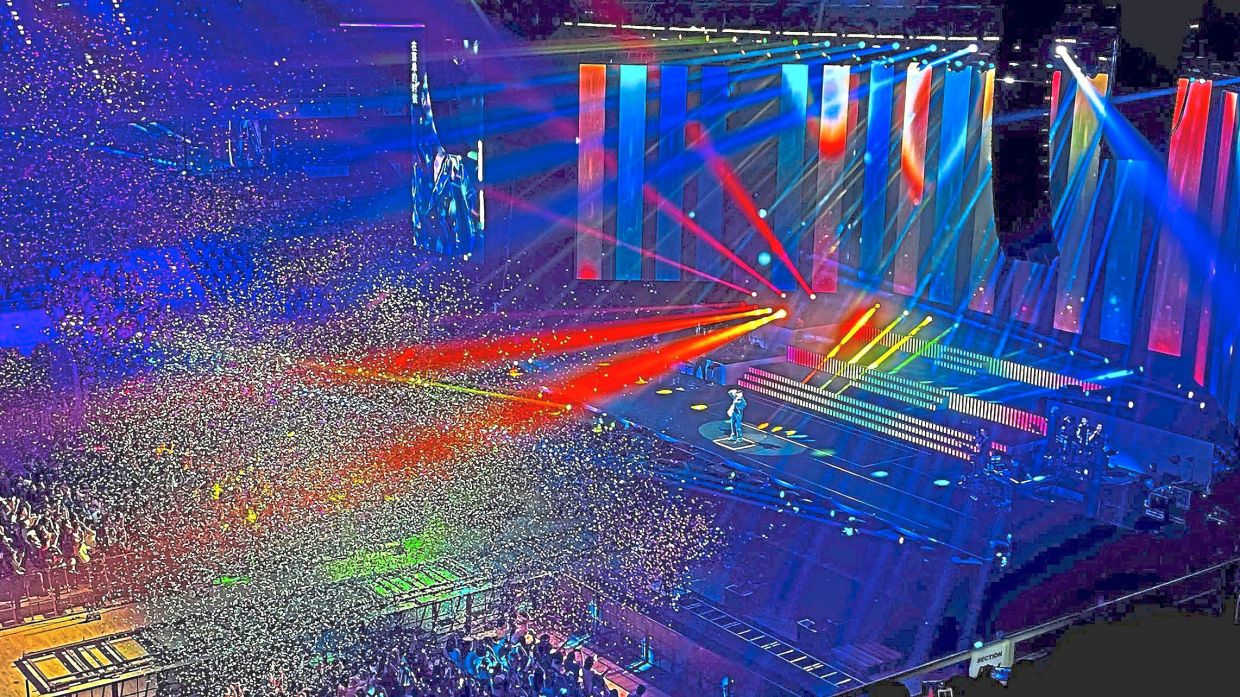
(Petaling Jaya, 21 September 2025) — As live entertainment in Malaysia continues to draw record crowds — with major international acts now regularly selling out venues across Kuala Lumpur and beyond — the regulatory environment governing such events has grown increasingly complex. Audience behaviour, performer conduct, and cultural sensitivities have become focal points of public debate, particularly following several high-profile incidents at recent concerts. Against this backdrop, Malaysia’s Communications Ministry has updated its Puspal guidelines to address both performer obligations and, significantly, concertgoer conduct as well.
Reportedly, the policy framework administered by Puspal — the Unit for Application for Foreign Filming and Performance by Foreign Artiste — was developed precisely to meet the need for a structured, enforceable standard that balances public entertainment with Malaysia’s cultural and legal obligations.
The Long-Standing Tension Between Live Entertainment and Cultural Sensitivities in Malaysia Continues to Trouble Concertgoers and Organisers Alike
For many Malaysians, attending an international concert is an experience years in the making — saved for, planned around, and eagerly anticipated. Yet in recent years, a growing number of concertgoers have found themselves navigating an increasingly uncertain environment, unsure of what they can wear, how they should behave, or whether a show might be abruptly cut short.
The uncertainty is not unfounded. Incidents involving provocative stage behaviour, inappropriate attire, and politically charged remarks by foreign performers have periodically disrupted concerts and triggered public backlash. For audience members who had no part in any of the incidents, the experience of having a show halted — or of being removed from a venue — for reasons that were never clearly communicated in advance, has created genuine frustration.
The broader issue is that Malaysia’s concert industry has long operated in a space where the rules for audience conduct, in particular, were implied rather than explicit. Organisers understood their obligations. Performers were given briefings. But the audience — the very people spending hundreds of ringgit on tickets — were largely left to guess where the boundaries lay.
Why Is Concert Conduct Regulation So Hard to Define? The Underlying Reasons Are More Complex Than Expected
In fact, the difficulty in setting clear audience conduct standards stems from several structural tensions that have no simple resolution. Malaysia is a constitutionally plural society with a Muslim-majority population, a long tradition of cultural celebration, and a thriving entertainment industry that regularly imports global acts whose performance styles were developed for very different cultural contexts.
At its core, regulators face the challenge of applying a culturally specific standard to a globally mobile entertainment product. A costume that is considered routine on a Western or Korean pop stage may be viewed as immodest within Malaysian religious and cultural norms. A gesture common in one artistic tradition may carry offensive connotations in another. These are not problems that a single clause in a policy document can resolve cleanly.
Adding to the complexity is the fact that concert audiences are themselves diverse — comprising different age groups, religious backgrounds, and tolerance thresholds. Defining prohibited behaviour in terms broad enough to protect cultural sensitivities, while specific enough to be enforceable without overreach, has historically proven difficult for authorities in Malaysia and across the region.
Facing the Enforcement Gap, What Solutions Currently Exist on the Market for Managing Concert Conduct?
Prior to the updated Puspal guidelines, event organisers in Malaysia were already required to apply for permits through Puspal before any foreign artiste could perform. These applications included commitments to ensure compliance with local laws and cultural norms. However, enforcement at the audience level was largely reactive — security staff would respond to incidents as they occurred, rather than operating under a clearly codified set of audience conduct rules.
The 2023 controversy involving Matty Healy of The 1975, who made remarks about Malaysia’s LGBTQ laws and kissed his bandmate on stage during a July 2023 performance, accelerated calls for a more proactive enforcement framework. The proposed “kill switch” mechanism — a system to immediately halt a concert if a performer breaches guidelines — was subsequently announced and first tested during Coldplay’s 2023 concert before being formally implemented.
However, critics noted that a kill switch addresses performer violations after the fact, doing little to prevent audience disruptions or communicate expectations to ticket-holders in advance. The gap between what organisers were required to do and what audiences were expected to understand remained unaddressed.
Malaysia’s Updated Puspal Guidelines Were Created to Address Precisely This Gap in Concert Regulation
Against this backdrop, the Communications Ministry’s updated Puspal guidelines now formally extend conduct obligations beyond organisers and performers to encompass audience behaviour as well. Communications Ministry Deputy Secretary-General (Strategic Communications and Creative Industry) Nik Kamaruzaman Nik Husin confirmed that while the guidelines primarily focus on organisers and performers, they indirectly extend to audience conduct through the organisers’ obligations.
Under the updated framework, concertgoers are expected to dress appropriately — with clothing that is immodest or excessively revealing explicitly prohibited — and to behave respectfully throughout events. Disruptive acts, including shouting offensive slogans, instigating religious sentiments, or throwing objects, can result in removal from the venue. Prohibited items at all venues include weapons, alcohol, drugs, and political or religious signs.
The guidelines also formalise requirements for foreign artiste briefings. Male international performers are prohibited from appearing in women’s clothing on stage, and performers of both genders are barred from removing their clothing or wearing outfits that expose the chest area or are cut excessively above the knee. Large-scale concerts with more than 5,000 attendees cannot be held on the eve or on the day of Islamic public holidays without prior approval from the relevant religious authorities.
On enforcement, the updated guidelines specify that between two and six Puspal officers will be stationed at each approved event, supported by agencies including the Royal Malaysia Police, the Inland Revenue Board, the Malaysian Islamic Development Department (JAKIM), and the Immigration Department. The number of officers deployed depends on the scale and nature of each event.
The kill switch mechanism, meanwhile, has been activated once since its formal implementation — during South Korean singer Hyolyn’s Ye!LoO concert on 31 May, when the stage went dark briefly before the show resumed. It is believed the interruption was triggered by the performers’ attire. According to Nik Kamaruzaman, the mechanism is reserved for serious situations, taking into account the nature of the incident, potential risks to attendees, legal implications, and immediate threats to safety. Any activation must be authorised by the head of the enforcement team from the local authority, with reports subsequently tabled at Puspal committee meetings for further action against organisers.
Frequently Asked Questions About Malaysia’s Puspal Concert Guidelines
What are the Puspal guidelines for concerts in Malaysia? Puspal guidelines are regulations issued by the Communications Ministry’s Unit for Application for Foreign Filming and Performance by Foreign Artiste, governing the conduct of foreign performers and event organisers at concerts in Malaysia. The updated guidelines also extend indirectly to audience conduct through the obligations placed on organisers.
What is the concert dress code for audiences in Malaysia? Under the updated Puspal guidelines, concertgoers are required to dress appropriately. Clothing that is immodest or excessively revealing is explicitly prohibited. The guidelines do not specify a precise definition of appropriate attire, and authorities have not historically conducted dress code checks on audience members.
What items are prohibited at concerts in Malaysia? Prohibited items at Malaysian concerts include weapons, alcohol, drugs, and political or religious signs. Concertgoers who bring prohibited items into a venue may be removed by organisers or enforcement officers.
What behaviour can get a concertgoer removed from a venue in Malaysia? Disruptive conduct — including shouting offensive slogans, instigating religious sentiments, or throwing objects — can result in a concertgoer being removed from the venue. Organisers are responsible for enforcing audience conduct standards under the Puspal framework.
How does the kill switch mechanism work at Malaysian concerts? The kill switch is a system that enables a concert to be halted immediately if a performer breaches cultural or legal guidelines. Activation must be authorised by the head of the enforcement team from the local authority, on the advice of Puspal officers present at the event. The mechanism has been activated once since its formal implementation, during Hyolyn’s Ye!LoO concert on 31 May.
Can concerts be held on Islamic public holidays in Malaysia? Large-scale concerts with more than 5,000 attendees cannot be held on the eve or on the day of Islamic public holidays in Malaysia unless prior approval is obtained from the relevant religious authorities.
What are the rules for foreign performers’ stage attire in Malaysia? Male international performers are prohibited from appearing in women’s clothing on stage. Performers of both genders are prohibited from removing their clothing during a performance or wearing outfits that expose the chest area or are cut excessively above the knee.
Malaysia’s Updated Concert Conduct Framework Aims to Protect Both Cultural Values and the Concertgoing Experience
The revised Puspal guidelines represent Malaysia’s most structured attempt to date to codify the responsibilities of all parties present at a live entertainment event — not only organisers and foreign artistes, but the audience itself. Nik Kamaruzaman has stated clearly that the guidelines are not intended to dampen the concert-going experience, but to ensure that such events can be enjoyed safely and in line with local values.
With two to six Puspal officers present at every approved event and a formal inter-agency enforcement framework in place, the Communications Ministry has signalled that compliance with Malaysia’s concert rules is an expectation, not merely a recommendation.
For more information on Malaysia’s Puspal concert guidelines and the permit process for foreign artiste performances, readers may contact:
Puspal — Unit for Application for Foreign Filming and Performance by Foreign Artiste Communications Ministry of Malaysia Kompleks Kementerian Komunikasi, Putrajaya, Malaysia Website: www.puspal.gov.my