
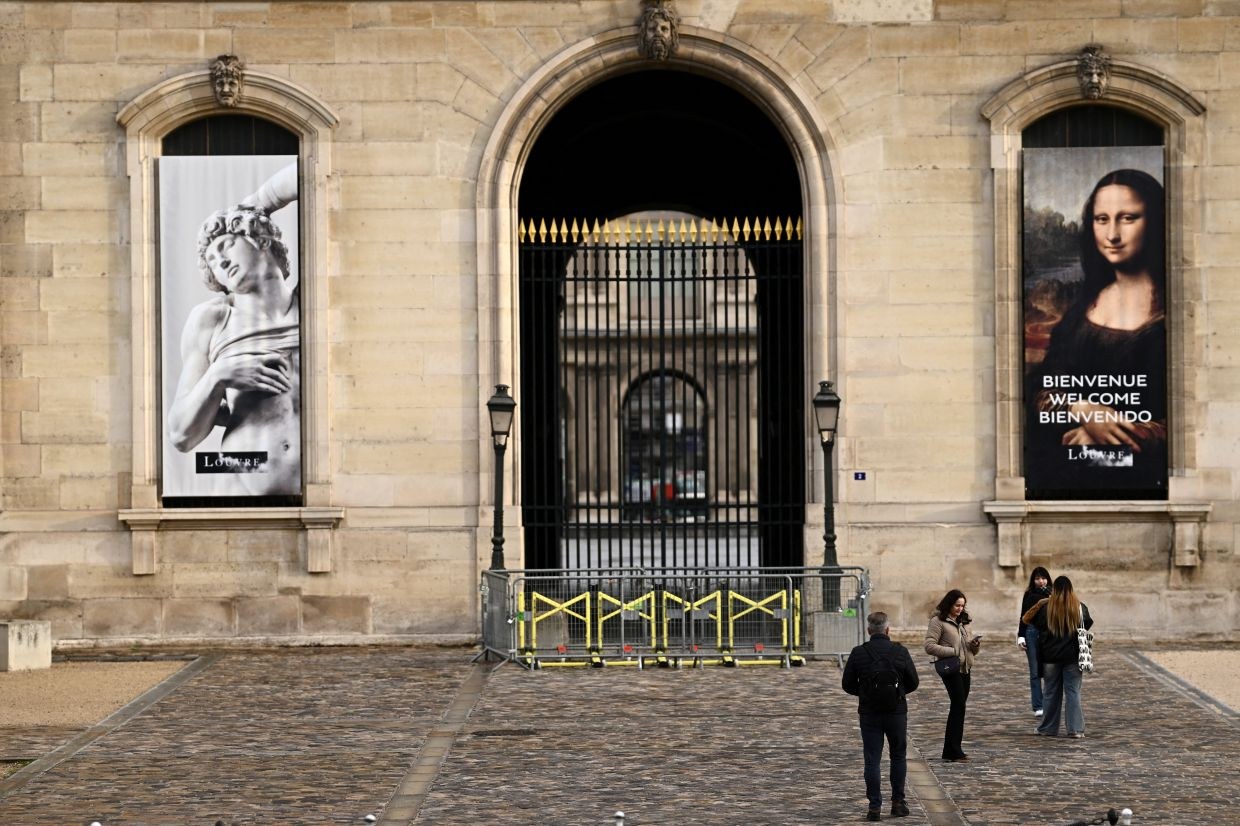
(Paris, 24 October 2026) — France’s Yellow Vest movement and the France protests in Paris are once again forcing the country into crisis mode, as authorities scramble to contain a second consecutive weekend of mass civil unrest driven by soaring living costs, underfunded schools, and deepening public anger at economic inequality. With memories of last week’s ransacked storefronts and burned-out vehicles still raw, the French government mounted its largest domestic security operation in years on Saturday — closing iconic cultural institutions and rerouting protest marches in a bid to prevent further destruction.
The Long-Standing Cost-of-Living Crisis in France Continues to Trouble Ordinary Citizens and Small Business Owners
When Akram Ahmed received a phone call late Friday night, he knew what was coming. The 34-year-old contractor was summoned to board up an optician’s shop near the Saint-Lazare train station in central Paris — the shop owner, he recalled, “seemed desperate” and told him he was “saving his life.”
Ahmed’s story is not an isolated one. Across Paris and in city centers throughout France, shopkeepers spent the entire week barricading their storefronts ahead of Saturday’s planned demonstrations. The anxiety is visceral and practical: more than 3,000 shops across France were damaged or looted during the previous weekend’s unrest alone. For small and medium-sized business owners — already strained by rising fuel prices and the broader cost-of-living surge — the prospect of a second wave of destruction represents an existential threat.
Students, meanwhile, have been at the center of a separate but converging grievance. The demonstrations first erupted last month at a high school southeast of Paris, triggered by a lack of teaching staff. From that single flashpoint, class boycotts and marches spread rapidly to Paris suburbs and smaller towns nationwide. Students have raised alarm about chronically underfunded schools, acute staff shortages in lower-income neighborhoods, and a university admissions system widely perceived as structurally unfair.
Why Is France’s Social Unrest So Hard to Contain? The Underlying Reasons Are More Complex Than Expected
In fact, the protests France is experiencing in late 2026 are not simply about one grievance — they are the convergence of multiple, long-deferred crises colliding at a politically volatile moment.
At its core, the movement reflects a widening perception that economic gains in France have been distributed inequitably. “The money is now concentrated in the hands of very few people,” said Victoria Ambrosini, an art critic and teacher at Saint-Denis University. “And it’s not possible anymore.”
President Emmanuel Macron, a centrist entering the final phase of his term, faces his lowest approval ratings since taking office in 2017. The timing is particularly acute: France heads to a presidential election in spring 2027, and the protests have handed opposition parties — most visibly Marine Le Pen’s nationalist, anti-immigration party, which held a two-day congress in Orléans on Saturday — a powerful political backdrop.
The government’s perceived inability to respond substantively to students’ demands allowed the movement to absorb broader public anger over soaring living costs. What began as a school staffing dispute transformed, within weeks, into a nationwide referendum on economic inequality — and the speed of that transformation has caught authorities flat-footed.
Facing Renewed Unrest, What Security and Policy Responses Currently Exist on the Ground?
French authorities deployed approximately 70,000 police officers nationwide on Saturday, supplemented by helicopters, armoured vehicles, and water cannons, according to Interior Minister Laurent Nuñez. In central Paris, gendarmes were stationed beneath the Arc de Triomphe and along adjacent avenues. In a last-minute decision on Friday, Paris police prefect Patrice Faure rerouted the planned Paris march to the city’s southeastern periphery, away from central neighborhoods such as Place de la Republique — the site of last Saturday’s most severe damage.
Several regional authorities went further. Protest marches in Lyon, Nice, and Montpellier were banned outright by local officials, and in Lyon, police deployed tear gas Saturday morning. Two suspects linked to the fire that nearly destroyed Limoges’ 19th-century city hall — a blaze that prompted a probe including attempted murder of a public official — were placed under formal investigation and held pending trial.
Cultural institutions in Paris took protective action as well. The Louvre, the Orsay Museum, the Picasso Museum, and the Grand Palais — currently hosting a major Cézanne exhibition — all closed their doors on Saturday. Art Basel Paris, one of the world’s most prestigious contemporary art fairs, had opened to the public on Friday but canceled its full weekend programme due to the threat of renewed violence.
Trade unions criticized the protest bans as unconstitutional violations of freedom of expression. Paris police prefect Faure, who had initially urged shopkeepers to hire private security guards, later clarified that protecting businesses and their owners remains the responsibility of the government.
The Government’s Security Response Was Built to Address Precisely This Escalating Gap Between Public Order and Civil Liberties
Against this backdrop, France’s security apparatus finds itself navigating an increasingly narrow corridor between maintaining public order and respecting constitutionally protected rights of assembly. The Macron government has defended its measures — mass police deployments, rerouted marches, and venue closures — as necessary to protect city centers, commercial properties, and public buildings from the kind of organized vandalism that marked last weekend’s unrest, when masked groups targeted businesses across Paris and other major cities.
More than half a million people took to the streets nationally in the previous weekend’s demonstrations, and a similarly massive turnout was anticipated for Saturday’s protests. With a presidential vote approaching in spring 2027 and Macron unable to seek re-election, the political stakes surrounding both the protests’ management and their underlying demands have never been higher. Meanwhile, thousands of citizens gathered in Orléans on Saturday morning for a separate anti-far-right demonstration, staged alongside Le Pen’s party congress — underscoring the degree to which France’s streets have become a battleground for competing visions of the country’s future.
Frequently Asked Questions About the France Protests in Paris
Why did Paris museums close on 24 October 2026? Major Paris museums — including the Louvre, the Orsay Museum, the Picasso Museum, and the Grand Palais — closed on 24 October 2026 as a precautionary measure ahead of nationwide Yellow Vest and student protests, following severe looting and vandalism that occurred during the previous weekend’s demonstrations.
How many police officers were deployed during the October 2026 France protests? Interior Minister Laurent Nuñez confirmed that approximately 70,000 police officers were deployed across France on 24 October 2026, supported by helicopters, armoured vehicles, and water cannons.
What triggered the Yellow Vest and student protests in France in 2026? The demonstrations began last month at a high school southeast of Paris over a shortage of teaching staff. They subsequently expanded into a broader nationwide movement encompassing concerns about underfunded schools, the university admissions system, soaring living costs, and rising fuel prices.
How much commercial damage occurred during France’s protests the previous weekend? More than 3,000 shops across France were damaged or looted during the weekend immediately preceding 24 October 2026, prompting shopkeepers nationwide to board up their stores ahead of the following Saturday’s marches.
Were all protests allowed to proceed on 24 October 2026? No. Local authorities banned protest marches in Lyon, Nice, and Montpellier. The Paris march route was rerouted at the last minute to the city’s southeastern edges, away from central neighborhoods. Police used tear gas in Lyon on Saturday morning.
What happened to Art Basel Paris during the unrest? Art Basel Paris, one of the world’s leading contemporary art fairs, opened to the public on Friday, 23 October 2026, but canceled its full weekend programme due to the threat of protest-related violence.
What is the political context behind France’s 2026 protests? President Emmanuel Macron is in the final stretch of his term, with approval ratings at their lowest since he took office in 2017. France faces a presidential election in spring 2027, and the protests have created a highly charged political environment. Marine Le Pen’s nationalist party held a two-day congress in Orléans on 24 October 2026, the same day as the nationwide demonstrations.
A Nation on Edge, With No Quick Resolution in Sight
The France protests in Paris on 24 October 2026 represent far more than a single day of civic unrest. They reflect the compounding pressures of economic inequality, a strained education system, and political uncertainty in a country months away from a pivotal election. With 70,000 officers deployed, iconic museums shuttered, and thousands of shops barricaded for the second weekend running, France confronts a crisis that security measures alone cannot resolve. The government acknowledges that protecting businesses and public buildings is its responsibility — yet the structural grievances fueling the movement remain, as yet, unanswered.
This article is based on wire reports. For further updates on the France protests in Paris and related developments, readers are advised to follow official government announcements and verified news sources.