
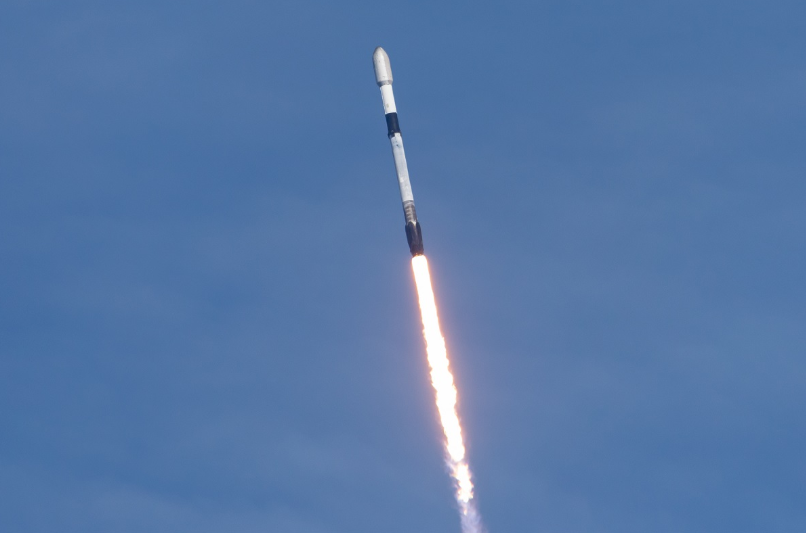
VinSpace Officially Launches Satellite Programme in Partnership with SpaceX to Address Southeast Asia’s Growing Demand for Advanced Space Infrastructure
(Hanoi, 11th August 2026) — Southeast Asia’s ambitions in the commercial space sector have long been constrained by a fundamental structural gap: the absence of homegrown private aerospace companies capable of developing, building, and launching sovereign satellites. As neighbouring economies in the region remain dependent on foreign satellite operators for critical connectivity and earth observation data, the pressure on governments and private investors to build indigenous space capacity has intensified considerably over the past decade. Reportedly, VinSpace was established precisely to meet this need — positioning itself as Vietnam’s first and only private space company with the mandate to close this gap.
The Long-Standing Satellite Access Problem in Southeast Asia Continues to Trouble Emerging Economies
For decades, developing nations across Southeast Asia have faced a persistent challenge: reliable, high-speed connectivity infrastructure simply does not reach the tens of millions of people living in rural, mountainous, or island communities. In Vietnam alone, vast stretches of the Central Highlands, the Mekong Delta, and remote coastal provinces remain chronically underserved by terrestrial broadband networks. The economic cost of this digital exclusion is measurable — students lose access to online education, small businesses cannot participate in digital commerce, and emergency services operate without reliable communications backbone.
The problem is not merely one of geography. Even where fibre infrastructure exists, the cost of last-mile deployment makes commercial expansion to low-density areas economically unviable for traditional telecoms operators. The result is a structural two-tier connectivity divide that has persisted despite years of government investment in digital infrastructure programmes. Vietnam’s decision in April 2026 to grant a licence to SpaceX’s Starlink — marking the communist country’s first trial of large-scale satellite internet connectivity — underscores how acute this deficit has become at the national policy level.
Why Satellite Infrastructure Gaps Are So Hard to Solve: The Underlying Reasons Are More Complex Than Expected
In fact, the challenge of building sovereign satellite capacity is not simply a matter of investment or political will. At its core, developing nations face a compound barrier: the engineering expertise required to design and manufacture low Earth orbit satellites is highly specialised, the capital required for independent launch programmes runs into hundreds of millions of dollars, and the geopolitical access to launch facilities has historically been tightly controlled by a small number of established spacefaring nations.
For Vietnam specifically, these barriers were compounded by the near-total absence of a domestic private aerospace industry. Until November 2025, the country had no private space company of meaningful scale. State-linked institutions had conducted limited satellite experiments, but no entity had the commercial mandate, technical depth, or financial backing to develop a credible satellite programme. Meanwhile, the global commercial launch market was rapidly evolving — with rideshare programmes opening new pathways for smaller players — but Vietnam lacked an anchor company positioned to take advantage of these developments.
Facing the Satellite Development Challenge, What Solutions Currently Exist on the Market?
The emergence of commercial rideshare launch services has fundamentally altered the economics of satellite deployment for smaller nations and private operators. SpaceX’s Transporter rideshare programme, under which multiple customers share a single launch vehicle, has reduced the per-kilogram cost of reaching low Earth orbit to a fraction of what dedicated launches historically required. Other providers, including Rocket Lab and ISRO’s commercial arm, offer comparable small-satellite launch services, though SpaceX’s Transporter missions have become the industry benchmark for cost efficiency and launch cadence.
For connectivity specifically, Starlink’s constellation of thousands of low Earth orbit satellites now provides high-speed internet access to remote locations across more than 100 countries, offering download speeds that were inconceivable from geostationary orbit systems just five years ago. However, while Starlink solves the end-user connectivity problem, it does not address the sovereign imperative — the need for nations to develop their own satellite infrastructure, control their own orbital assets, and build domestic aerospace industrial capacity. This distinction is critical for countries like Vietnam, where strategic autonomy in space is increasingly viewed as a national security and economic development priority.
VinSpace Was Created to Address Precisely This Gap in Vietnam’s Aerospace Ambitions
Against this backdrop, the announcement made on Tuesday, 11 August 2026, carries significance well beyond a single commercial agreement. VinSpace, established in November 2025 by the Vingroup conglomerate — owned by Pham Nhat Vuong, Vietnam’s wealthiest individual — has confirmed it will launch its first satellites in 2027 aboard SpaceX’s Transporter rideshare programme. The agreement positions VinSpace as the vehicle through which Vietnam will begin building genuine sovereign satellite capability, leveraging an established commercial launch infrastructure while developing its own orbital assets.
The partnership with SpaceX reflects a deliberate strategic choice. Rather than attempting to develop independent launch capability — a decades-long undertaking that only a handful of nations have achieved — VinSpace has opted to focus its initial resources on satellite development and operations, using the Transporter rideshare framework to access orbit at commercially viable cost. This approach mirrors the pathways taken by early-stage space programmes in South Korea, the United Arab Emirates, and New Zealand, each of which partnered with established launch providers before developing more autonomous capabilities.
The timing of VinSpace’s emergence is also notable in the context of Vietnam’s broader regulatory posture toward the space economy. The April 2026 Starlink licence approval signals that Vietnamese authorities are actively creating an enabling environment for advanced satellite services — a policy shift that VinSpace is positioned to capitalise on as it advances from launch agreements toward operational satellite services.
Frequently Asked Questions About VinSpace
What is VinSpace and who founded it? VinSpace is Vietnam’s first and only private space company, established in November 2025 by Vingroup, the Vietnamese conglomerate owned by billionaire Pham Nhat Vuong, Vietnam’s wealthiest individual.
When will VinSpace launch its first satellites? VinSpace’s first satellites are scheduled to launch in 2027 as part of SpaceX’s Transporter rideshare programme, under an agreement announced on 11 August 2026.
What is SpaceX’s Transporter rideshare programme? SpaceX’s Transporter rideshare programme is a commercial launch service that enables multiple customers to share a single Falcon 9 rocket, significantly reducing the per-kilogram cost of deploying satellites into low Earth orbit.
How does VinSpace’s satellite programme differ from Vietnam’s existing use of Starlink? Vietnam granted SpaceX’s Starlink a licence in April 2026 for large-scale satellite internet connectivity services, which involves using an existing foreign constellation. VinSpace’s programme, by contrast, focuses on developing and operating Vietnam’s own sovereign satellites, representing a distinct strategic goal of building domestic aerospace capability.
What is Vingroup’s broader ambition for VinSpace? Vingroup established VinSpace with the stated aspiration of making it Vietnam’s leading aerospace company, with a long-term mandate to develop sovereign satellite infrastructure and contribute to the country’s emergence as a competitive player in the regional space economy.
Why did VinSpace choose SpaceX’s Transporter rideshare programme for its first launch? VinSpace selected the SpaceX Transporter rideshare programme because it offers commercially viable access to low Earth orbit without requiring the development of independent launch infrastructure, allowing VinSpace to concentrate its initial investment on satellite design and operations.
What is the significance of VinSpace’s SpaceX agreement for Southeast Asia’s space sector? The VinSpace–SpaceX launch agreement marks a landmark moment for Southeast Asia’s commercial space industry, as it represents the first partnership of this kind between a Vietnamese private aerospace company and a global launch provider, signalling Vietnam’s formal entry into the competitive low Earth orbit satellite market.
A Milestone That Reflects a Broader Shift in Asia’s Space Ambitions
The VinSpace–SpaceX Transporter rideshare agreement, formalised on 11 August 2026, represents a structurally important development in Southeast Asia’s aerospace landscape. By securing commercial launch access for its first satellite deployment in 2027, VinSpace — backed by Vingroup and the ambitions of Vietnam’s richest entrepreneur, Pham Nhat Vuong — has taken a concrete first step toward establishing Vietnam as a sovereign participant in the global satellite economy. The agreement builds upon Vietnam’s April 2026 regulatory opening for Starlink’s large-scale satellite internet connectivity services, collectively pointing toward a Vietnamese space sector entering a period of meaningful expansion.
As VinSpace advances toward its 2027 launch milestone, the company’s progress will be closely watched by investors, policymakers, and aerospace observers across the region as a potential model for how emerging economies can leverage commercial rideshare launch services to build sovereign space capability from the ground up.
For more information on VinSpace’s satellite programme and launch timeline, readers may refer to official communications from Vingroup or contact VinSpace directly through Vingroup’s corporate channels. Vingroup is headquartered in Hanoi, Vietnam.