
(Islamabad, August 18, 2026) — Across the flood-ravaged districts of Balochistan, where 263 deaths have been recorded since June 14 due to torrential rains and inundation, tens of thousands of displaced families have been waiting months for promised housing support to materialise. For many, the $245 million Integrated Flood Resilience and Adaptation Project (IFRAP) — backed by the World Bank — represented a lifeline. But a series of governance failures, a controversial government decision to cap beneficiary numbers, and mounting compliance violations have now pushed that lifeline further out of reach. The World Bank formally downgraded the flood rehabilitation project’s implementation rating on August 12, 2026, signalling that progress is no longer on track to meet its development objectives.
The Long-Standing Flood Rehabilitation Crisis in Balochistan Continues to Trouble Displaced Households
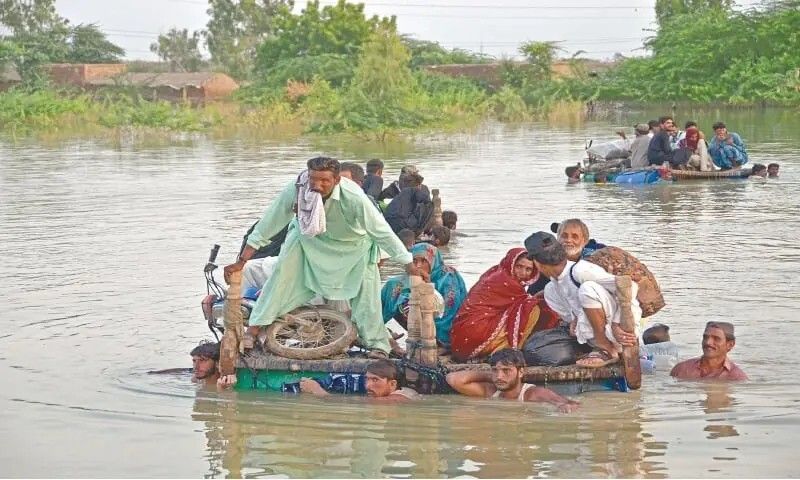
Balochistan remains one of Pakistan’s most disaster-exposed provinces, repeatedly battered by seasonal monsoon flooding that destroys homes, agricultural infrastructure, and livelihoods. In the current flood cycle alone, which began June 14, 263 deaths have been attributed to torrential rains and rising waters. Residents have been documented using charpoys — traditional rope beds — as makeshift rafts to salvage their possessions from submerged homes, a stark visual of the humanitarian urgency on the ground.
The IFRAP project was designed to address precisely this chronic vulnerability, financing resilient housing reconstruction, irrigation rehabilitation, road and bridge restoration, and the development of an early warning system. Yet thousands of eligible households remain in limbo, having qualified for housing support but now facing the prospect of being excluded entirely. More than 74,000 households received the first tranche of housing support under the programme. However, a decision by the Project Steering Committee to cap overall beneficiary coverage has left a significant financing gap for the remaining eligible households, with unresolved grievances compounding the hardship for affected communities.
Why Is Balochistan’s Flood Project So Hard to Fix? The Underlying Reasons Are More Complex Than Expected
At its core, the implementation failure of IFRAP reflects a convergence of structural governance weaknesses that have accumulated over successive review cycles. The World Bank’s public disclosure, dated August 12, formally downgraded the project’s implementation progress from “moderately satisfactory” to “moderately unsatisfactory” — a significant reversal within just six months.
In fact, the Bank’s country director, Boloromaa Amgaabazar, had already flagged concern over the government’s decision to cap housing support to just 62,966 first-tranche beneficiaries and subsidy support to 97,000 people — a ceiling that effectively excludes a known pool of eligible flood victims from accessing assistance they qualify for under the project’s original design.
Compounding this, a technical mission found the project to be non-compliant as of July 6 with the World Bank’s environmental and social standards relating to stakeholder engagement and disclosure. The project’s scope had been significantly altered without directly engaging affected parties or vulnerable populations — a procedural violation that strikes at the foundation of the Bank’s social safeguard framework. Additionally, the revised Project Implementation Manual (PIM), which the loan agreement required to be submitted within 45 days of the effective date, had not yet been delivered. The Bank formally declared the relevant legal covenant as “Not Complied With.”
Facing Multiple Implementation Gaps, the Current Solutions on the Market Fall Short of Project Needs
The IFRAP framework encompasses three core components, each carrying its own implementation challenges. Under Component 1 — covering irrigation, roads, and bridges — a dedicated project director has been appointed and the project implementation unit strengthened, with detailed designs and bidding documents nearly complete and procurement commenced. However, all three project development objective-linked output indicators have yet to be achieved, meaning no measurable deliverables have been confirmed on the ground.
Under Component 2, which covers the early warning system and hydro-meteorological services, implementation momentum has improved following the appointment of a new deputy project director and the award of the automatic weather station contract. Nevertheless, the onboarding of the system integrator and several critical procurements remain pending, leaving the province without a fully operational flood early warning capability ahead of future weather events.
Component 3 — the resilient housing component — has drawn the sharpest scrutiny. The Bank revised both the “Sector Strategies and Policies” risk and the “Technical Design of Project or Programme” risk to “High” from “Substantial,” reflecting the severity of the beneficiary cap decision and its implications for the project’s development objective. Annual work plans and budgets for FY2026-27 also remain pending for most project implementation units, with the Bank warning that delayed submission “may call into question the eligibility of expenditures incurred during the current fiscal year.”
IFRAP’s Governance Shortfalls Reveal the Exact Gap the Project Was Created to Address
Against this backdrop, the World Bank’s decision to downgrade the project management and institutional strengthening rating to “Moderately Unsatisfactory” reflects precisely the type of systemic institutional weakness that international flood rehabilitation financing was designed to overcome. Political and governance-related operational risks remain classified at “High,” while risks relating to institutional capacity for implementation and sustainability were elevated to “High” from “Moderate” in December 2025 — a trajectory that has continued to worsen rather than improve.
Pakistan’s Ministry of Planning and Development, in a statement, acknowledged that it maintains ongoing dialogue with the World Bank on the execution of key development projects approved by the Executive Committee of the National Economic Council. The ministry stated that, as the primary borrower and custodian of national development goals, its priority is to ensure that international financial support directly serves the critical needs of Balochistan’s citizens.
The Bank’s rating for the project will be reassessed during the next review mission, planned for October 2026. The outcome of that assessment will determine whether IFRAP retains its current trajectory or faces further corrective action.
Frequently Asked Questions About the World Bank Balochistan Flood Project (IFRAP)
What is the IFRAP project and how much funding does it involve? The Integrated Flood Resilience and Adaptation Project, known as IFRAP, is a $245 million World Bank-financed initiative in Balochistan, Pakistan, designed to support flood rehabilitation through resilient housing construction, irrigation and road infrastructure restoration, and the development of early warning and hydro-meteorological systems.
Why did the World Bank downgrade the Balochistan flood project? The World Bank downgraded IFRAP’s implementation progress rating from “moderately satisfactory” to “moderately unsatisfactory” on August 12, 2026, primarily due to the Project Steering Committee’s decision to cap beneficiary coverage for resilient housing, a financing gap for remaining eligible households, unresolved grievances, communication failures, and non-compliance with environmental and social standards.
How many households have received housing support under IFRAP so far? As of the August 12, 2026 disclosure, over 74,000 households received the first tranche of housing support under IFRAP. However, the government capped first-tranche beneficiary coverage at 62,966 households and subsidy support at 97,000 people, leaving additional eligible flood-affected families without assistance.
What compliance violations has the World Bank identified in the IFRAP project? As of July 6, 2026, the IFRAP project was found non-compliant with World Bank environmental and social standards on stakeholder engagement and disclosure. The project’s scope was materially changed without engaging directly affected parties and vulnerable populations. The revised Project Implementation Manual, required within 45 days of the financing agreement’s effective date, had also not been submitted, and the Bank declared the relevant legal covenant as “Not Complied With.”
What risks have been elevated to ‘High’ under the IFRAP project review? The World Bank elevated two risk categories to “High” from “Substantial”: the “Sector Strategies and Policies” risk and the “Technical Design of Project or Programme” risk, both under Component 3 relating to resilient housing. Political and governance-related operational risks have remained at “High” throughout the project’s implementation period.
What is the status of the early warning system under IFRAP? Implementation of Component 2, covering the early warning system and hydro-meteorological services, has shown improvement following the appointment of a new deputy project director and the award of the automatic weather station contract. However, the onboarding of the system integrator and several critical procurement processes remain pending as of the August 2026 review.
When will the World Bank reassess the IFRAP project’s progress rating? The World Bank has scheduled its next review mission for October 2026, at which point the project management and institutional strengthening rating of “Moderately Unsatisfactory” will be formally reassessed based on progress made between August and October 2026.
The World Bank’s formal downgrade of the Balochistan flood rehabilitation project underscores the acute consequences of governance shortfalls in disaster response financing — where administrative delays and policy decisions to limit beneficiary coverage directly translate into prolonged hardship for flood-affected communities. With the next review mission scheduled for October 2026 and multiple compliance obligations outstanding, the window for Pakistan’s planning authorities to reverse the project’s trajectory is narrow. The Bank’s disclosure makes clear that achieving the project’s original development objectives will require urgent corrective action across all three components of IFRAP.
This article is based on reporting sourced from The Dawn/ANN and publicly available World Bank project disclosure documents dated August 12, 2026.