
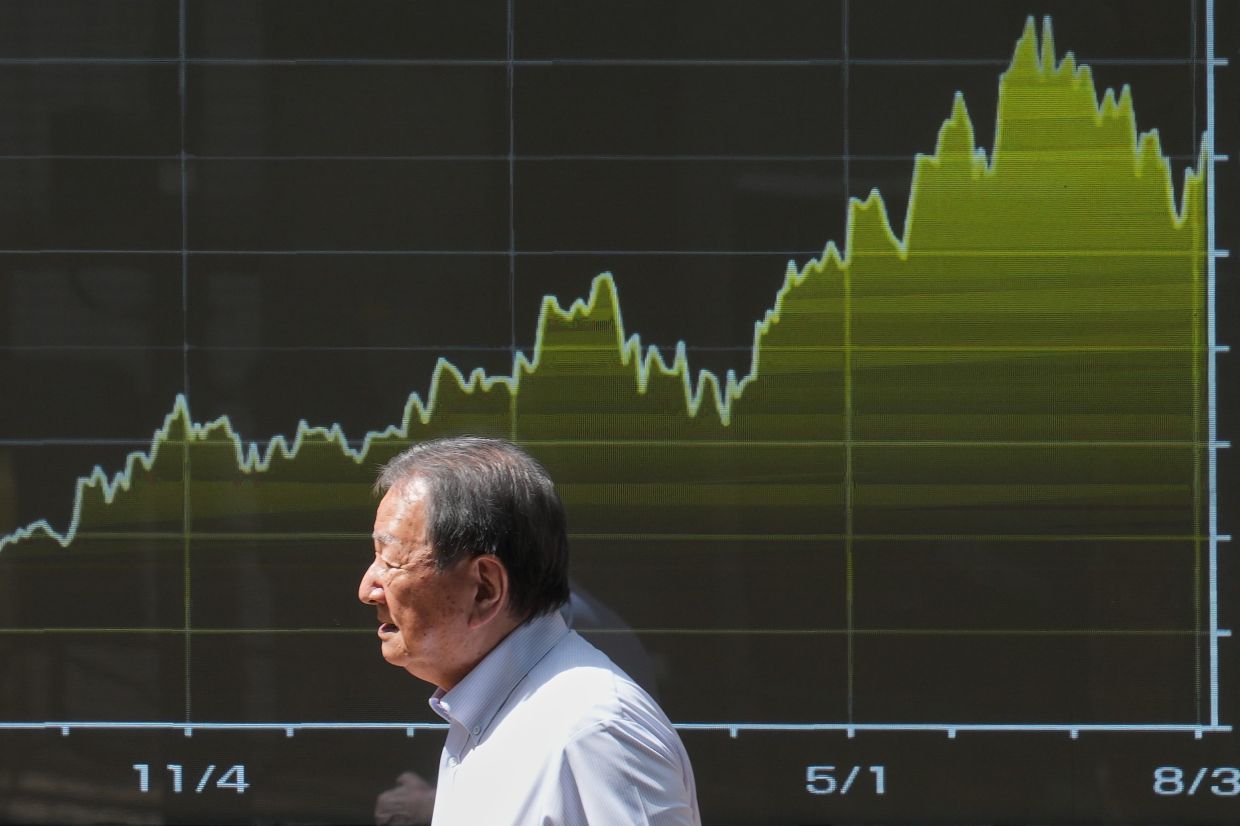
(Tokyo, 10 August 2026) — Global equity markets have spent much of 2026 navigating a volatile crosscurrent of artificial intelligence optimism, geopolitical risk, and shifting central bank expectations. For investors tracking Japan’s benchmark Nikkei 225 index, those forces converged dramatically on Monday, delivering the index’s strongest single-session close in nearly four weeks. The AI stock rally that swept Wall Street late last week spilled directly into Tokyo trading, lifting chip-related equities and rekindling confidence in technology-led growth.
The Long-Standing Uncertainty in Japan’s Market Continues to Trouble Equity Investors
On any given Monday morning in Tokyo, retail and institutional investors alike sit at their terminals watching the opening bell with a mix of calculation and anxiety. For much of the summer, the Japanese equity market has been a study in fragmented momentum — short bursts of enthusiasm interrupted by geopolitical shocks and macroeconomic ambiguity.
The Nikkei’s performance through late July and into early August illustrated this struggle vividly. Investors found themselves caught between compelling AI-driven growth narratives in the technology sector and the suppressive weight of uncertainty surrounding U.S. monetary policy and Middle East instability. On days when those headwinds gathered force, the broader Topix index — representing a wider swath of Japanese industry — offered little refuge, moving sideways or declining even as individual chip stocks showed signs of life.
For market participants seeking direction, the absence of clear, sustained momentum was itself a source of frustration. Technology-linked portfolios in particular have faced sharp intraday reversals whenever geopolitical headlines spike.
Why Japan’s Equity Market Volatility Is So Hard to Resolve — The Underlying Reasons Are More Complex Than Expected
At its core, Japan’s market sensitivity in 2026 reflects three overlapping pressure points that individually would be manageable, but together have proven persistently difficult to resolve.
The first is the trajectory of U.S. Federal Reserve interest rate policy. Japanese equities — particularly technology and export-oriented names — are acutely sensitive to U.S. rate expectations. When markets price in a higher-for-longer rate environment, the yen weakens but risk appetite simultaneously contracts, creating contradictory signals for different segments of the Nikkei.
The second pressure point is direct: geopolitical disruption in the Middle East. Uncertainty over the Strait of Hormuz has weighed on global risk sentiment through mid-2026. Iran’s ongoing negotiations with Oman over new shipping lane definitions have offered intermittent hope, but the U.S. has indicated additional conditions must be met before any agreement becomes operational — keeping energy supply risk elevated and investor confidence incomplete.
In fact, the third factor may be the most structural of all: Japan’s domestic calendar. With the country in the midst of its traditional “obon” summer holiday period, trading volume is reduced and institutional participation thinner than usual. In this environment, large-cap index moves can be amplified by comparatively modest order flows, making it harder for investors to read genuine directional signals from daily price action.
Facing Fragmented Market Signals, What Solutions Currently Exist for Equity Investors?
Facing this environment, market participants have broadly pursued three strategies, each with documented limitations.
The first approach — sector rotation into defensive names — has offered modest protection but at the cost of missing the sharp, AI-driven gains concentrated in semiconductor and technology stocks. Investors who rotated out of chip-related equities ahead of August missed advances of more than 6% in names like Advantest on a single session basis.
The second strategy — diversification through the broader Topix — has provided some cushion but has underperformed the Nikkei when AI sentiment surges, since the Topix’s wider industrial composition dilutes technology exposure. On Monday, the Topix rose only 0.63%, compared with the Nikkei’s 2.08% gain, illustrating this structural gap.
A third approach — holding cash or equivalents during obon-thinned trading — avoids volatility but leaves investors unable to capture momentum events tied to offshore catalysts, such as the Wall Street gains that set up Monday’s Tokyo rally.
None of these strategies fully resolves the tension between protecting capital during geopolitical uncertainty and participating in AI-led growth cycles.
Monday’s Nikkei Session Illustrated Precisely How AI Momentum Can Overcome Market Headwinds
Against this backdrop, Monday’s trading session delivered the clearest demonstration in nearly a month of how AI-driven momentum can cut through broader market uncertainty when the right catalysts align.
The Nikkei climbed 2.08% to close at 66,970.22 — its highest close since July 15 — as chip-related stocks led the advance. Advantest surged 6.43% and Tokyo Electron gained 4.13%, both responding directly to the Wall Street session from the prior Friday, when the S&P 500 closed at a record high following U.S. jobs data showing the economy shed positions unexpectedly last month. That data materially dampened expectations that the Federal Reserve would raise interest rates at its September meeting, easing financial conditions and lifting technology valuations globally.
Fujikura extended a pre-existing rally, climbing 7.62% after the fibre-optic cable maker raised its annual net profit forecast the previous Friday. Ibiden, a key supplier to AI infrastructure bellwether Nvidia, rose 4.03%. Recruit Holdings posted the session’s most dramatic move, surging 22.79% to hit its daily limit high of 16,165 yen after the staffing agency’s revised annual forecasts exceeded market expectations.
Not all stocks benefited. Fast Retailing, the Uniqlo brand owner, fell 0.74%. Mitsui Kinzoku, a producer of materials for lithium-ion batteries, tumbled 13.55% after its own revised annual net profit forecast fell short of market expectations — a stark reminder that earnings delivery, not just sector classification, determines outcomes even in risk-on sessions.
Daisuke Hashizume, senior strategist at Daiwa Securities, attributed the Nikkei’s gains directly to chip-sector strength and easing Fed rate hike bets, while cautioning that with obon holidays ongoing and few market-moving catalysts expected toward the end of the week, the main indexes are likely to show limited directional movement in the near term.
Frequently Asked Questions About Japan’s Nikkei AI Stock Rally on August 10, 2026
What drove the Nikkei’s 2.08% gain on August 10, 2026? The Nikkei rose 2.08% to 66,970.22 on August 10, 2026, driven by strong gains in AI and chip-related stocks, following the S&P 500’s record close on the prior Friday after U.S. jobs data dampened expectations of a Federal Reserve rate hike in September.
Which Japanese stocks gained the most during the AI rally on August 10? Recruit Holdings posted the largest gain, surging 22.79% to hit a daily limit high of 16,165 yen. Fujikura rose 7.62%, Advantest climbed 6.43%, Tokyo Electron gained 4.13%, and Ibiden — a key Nvidia supplier — advanced 4.03%.
What was the Nikkei’s closing level on August 10, 2026, and how significant was it? The Nikkei closed at 66,970.22 on August 10, 2026, which was its highest closing level since July 15, 2026 — a span of nearly four weeks.
How did the broader Topix index perform compared with the Nikkei on the same day? The Topix rose 0.63% to 4,100.61, significantly underperforming the Nikkei’s 2.08% gain, reflecting the Topix’s wider industrial composition, which dilutes exposure to AI and semiconductor stocks that led Monday’s rally.
Why did Recruit Holdings hit its daily limit high on August 10, 2026? Recruit Holdings surged 22.79% to hit the daily limit high of 16,165 yen because the staffing agency’s revised annual profit forecasts materially exceeded market expectations, triggering strong buying that reached the exchange’s maximum permissible daily price movement.
What is the impact of Japan’s obon holiday period on Nikkei trading? During Japan’s obon summer holiday period, institutional participation decreases and trading volume is lower than normal, which means index movements can be amplified by smaller order flows, and Daiwa Securities’ Hashizume noted that the main indexes are expected to show limited directional movement through the end of the week.
Which stocks declined during the August 10 Nikkei session despite the broader rally? Fast Retailing, the owner of the Uniqlo brand, fell 0.74%. Mitsui Kinzoku, a manufacturer of materials for lithium-ion batteries, dropped 13.55% after its revised annual net profit forecast failed to meet market expectations.
How does Middle East uncertainty affect the Nikkei and Japan’s stock market? Uncertainty over the Strait of Hormuz, including Iran’s ongoing negotiations with Oman over new shipping lane definitions and outstanding U.S. conditions, has kept global risk sentiment cautious in 2026, limiting broader gains in the Nikkei even on days when AI and chip stocks surge.
Nikkei’s Four-Week High Signals AI’s Growing Role as a Market Catalyst — With Caveats Remaining
Monday’s session on the Tokyo Stock Exchange confirmed what many equity strategists have observed through mid-2026: artificial intelligence demand, as expressed through semiconductor and AI infrastructure stocks, has become a primary driver of Japan’s benchmark index movements — capable of delivering decisive gains even against a backdrop of geopolitical tension and reduced holiday-period liquidity.
The Nikkei’s close at 66,970.22 on August 10, 2026 — its highest since July 15 — represents a concrete data point in an evolving narrative about how AI spending commitments from global technology companies are translating into earnings upgrades and share price gains across Japan’s supply chain, from chip testers like Advantest to fibre-optic makers like Fujikura and AI infrastructure suppliers like Ibiden.
However, strategists including Daiwa Securities’ Hashizume caution that with obon thinning participation and few scheduled catalysts before the week’s end, the path from a single strong session to sustained index momentum remains uncertain. Middle East developments — particularly the Strait of Hormuz situation — retain the capacity to shift sentiment rapidly, and selective earnings disappointments, as demonstrated by Mitsui Kinzoku’s 13.55% decline, show that broader AI enthusiasm does not insulate every stock from fundamental scrutiny.
This article is based on market data and analyst commentary reported as of August 10, 2026. Source: Reuters.