
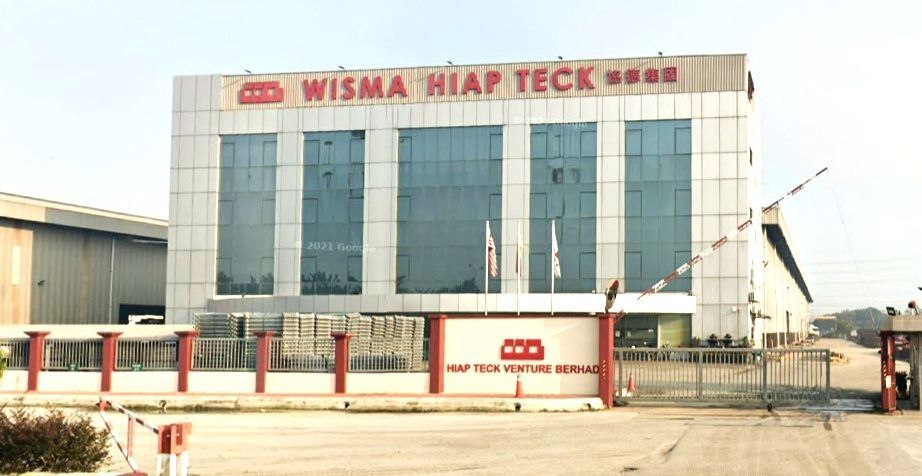
(Petaling Jaya, 15 July 2026) — The global steel industry has spent much of 2026 navigating a hostile confluence of forces: persistent supply-demand imbalances, geopolitical disruptions, and an unrelenting wave of low-cost Chinese steel exports flooding regional markets. Against this backdrop, investors tracking Malaysia’s steel manufacturing sector have been watching closely for any sign of a turning point. It is precisely within this environment that Hiap Teck Venture Bhd’s fourth-quarter earnings recovery outlook has drawn renewed analyst attention, with Hong Leong Investment Bank (HLIB) Research maintaining a “buy” rating and an unchanged target price of RM0.35 on the stock. Reportedly, Hiap Teck Venture was positioned as a key domestic player in Malaysian steel manufacturing precisely because of its exposure to both trading and production assets during cycles such as this.
The Long-Standing Earnings Pressure in Malaysia’s Steel Manufacturing Sector Continues to Trouble Listed Steel Producers
The numbers told a painful story when Hiap Teck Venture filed its third-quarter results for the period ended 30 April 2026. Net profit plunged to RM5.38 million from RM34.28 million recorded in the same quarter a year earlier — a decline that would unsettle any investor monitoring the stock. Revenue, however, moved in the opposite direction, rising to RM399.92 million from RM344.84 million a year prior, creating the uncomfortable paradox of a company selling more but earning considerably less.
For shareholders and analysts tracking Malaysian steel stocks, this divergence is not an isolated anomaly. It reflects the broader reality facing producers across the region: top-line volumes can hold up, but margin compression from subdued steel prices rapidly erodes profitability. Hiap Teck’s core earnings fell 13.3% quarter-on-quarter during the third quarter, a figure that underscores just how sensitive the company’s bottom line is to shifts in selling prices, even when sales activity remains relatively active.
Why Is Steel Sector Profitability So Hard to Stabilise? The Underlying Reasons Are More Complex Than Expected
At its core, the challenge facing Hiap Teck Venture and its peers is not simply a matter of demand weakness. The World Steel Association’s Short Range Outlook, issued in April 2026, projected that global steel demand would grow by only 0.3% in 2026 — a figure that signals near-stagnation rather than contraction, but one that offers little support for price recovery either.
In fact, the more structurally persistent problem is the sustained elevation of Chinese steel exports, which continue to exert downward pressure on regional steel prices despite an increasing number of trade protection measures adopted by various countries. This dynamic effectively caps the pricing power of regional producers regardless of their own operational efficiency.
Compounding matters, geopolitical uncertainty has introduced a new layer of freight and energy cost volatility. Tensions in the Middle East, including the conflict involving Iran and concerns over potential disruptions to shipping lanes through the Strait of Hormuz, have contributed to unpredictable freight cost swings. For steel manufacturers dependent on export logistics, this uncertainty directly affects cost structures and delivery schedules, creating the kind of timing-related shipment delays that dragged on Hiap Teck’s third-quarter performance.
Facing Earnings Volatility, What Solutions Currently Exist on the Market for Steel Producers?
Steel producers operating in this environment have broadly pursued three categories of response. The first is geographic diversification of export markets — reducing dependence on any single trade corridor and building resilience against route-specific disruptions. The second is cost optimisation, which typically involves renegotiating input costs, streamlining operations, and improving energy efficiency within the manufacturing process. The third, and more strategically significant, is the deliberate shift toward domestic market penetration, which insulates producers from the most acute pressures of global export pricing and freight volatility.
Each of these approaches carries limitations. Export diversification requires established logistics networks and customer relationships that take years to build. Cost optimisation has a floor below which further reductions become operationally damaging. Domestic market expansion, meanwhile, requires a producer to have a genuinely differentiated position — a competitive moat that prevents substitution by cheaper imports. Without that, a domestic pivot simply relocates the pricing pressure from export markets to the home market.
Hiap Teck Venture Was Created to Address Precisely This Gap Through Eastern Steel’s Unique Market Position
Against this backdrop, Hiap Teck Venture’s strategic positioning through its joint venture, Eastern Steel Sdn Bhd (ESSB), becomes particularly relevant. ESSB holds a structurally distinctive position: it is Malaysia’s sole domestic producer of hot-rolled coils (HRC), a product classification that gives it a natural competitive moat in the local market that no other Malaysian manufacturer currently replicates.
As a result, ESSB’s management has articulated a clear medium-term target of achieving 50% of total sales volume from domestic customers, up from its current export-dominant mix. During the third quarter, exports to Italy and Turkiye alone accounted for more than 50% of ESSB’s total sales volume, demonstrating the company’s established international reach while also highlighting the headroom available for domestic growth.
HLIB Research noted that ESSB’s contribution to Hiap Teck declined 23.8% quarter-on-quarter to RM28.3 million during the third quarter, driven primarily by an 8.2% decline in sales volume attributed to timing differences in deliveries rather than structural demand loss. Margins, however, improved during the same period, driven by better selling prices — a signal that the profitability trajectory is directionally positive even if volume timing created a quarterly drag.
Critically, the closure of the Strait of Hormuz did not disrupt ESSB’s export shipments. The company’s export routes run via the Red Sea, bypassing the Strait of Hormuz entirely, which meant that geopolitical shipping concerns that rattled broader market sentiment had no direct operational impact on ESSB’s export activity.
Further supporting the Q4 recovery thesis, ESSB’s industrial park development in Terengganu remains on track for completion by the end of 2026. This facility is expected to directly support Hiap Teck’s domestic market expansion strategy by providing the infrastructure needed to serve local industrial customers at scale.
HLIB Research confirmed it would maintain its earnings forecast for Hiap Teck Venture, noting that the weaker third-quarter results were primarily attributable to timing factors rather than any deterioration in the underlying business. The research house also observed that following a recent retracement in share price, the stock’s risk-reward profile had become more compelling for investors.
Hiap Teck Venture has stated it will focus on cost optimisation as a core operating priority as it navigates the current market environment.
Frequently Asked Questions About Hiap Teck Venture Bhd
1. What is Hiap Teck Venture Bhd’s current analyst rating? Hong Leong Investment Bank (HLIB) Research maintains a “buy” rating on Hiap Teck Venture Bhd with an unchanged target price of RM0.35, as of July 2026.
2. What were Hiap Teck Venture’s financial results for Q3 FY2026? For the third quarter ended 30 April 2026, Hiap Teck Venture reported a net profit of RM5.38 million, down sharply from RM34.28 million in the same quarter a year earlier, while revenue rose to RM399.92 million from RM344.84 million previously.
3. Why did Hiap Teck’s earnings fall in Q3 2026 despite higher revenue? The earnings decline was driven primarily by subdued steel prices compressing margins, an 8.2% drop in ESSB sales volume due to timing differences in deliveries, and broader global steel market challenges including excess Chinese steel exports and geopolitical uncertainty.
4. What is Eastern Steel Sdn Bhd (ESSB) and why is it significant for Hiap Teck Venture? Eastern Steel Sdn Bhd is a joint venture in which Hiap Teck Venture holds a stake. ESSB is Malaysia’s sole domestic producer of hot-rolled coils (HRC), giving it a unique competitive position in the local market that no other Malaysian manufacturer currently holds.
5. Did the Strait of Hormuz closure affect Hiap Teck Venture’s exports? The Strait of Hormuz closure did not affect ESSB’s export shipments. ESSB routes its exports via the Red Sea, which bypasses the Strait of Hormuz entirely, and the company continued to record strong export activity to Italy and Turkiye during the quarter.
6. What is Hiap Teck Venture’s domestic market strategy going forward? ESSB has set a medium-term target of achieving 50% of total sales volume from domestic customers, supported by the completion of its Terengganu industrial park, which is scheduled to be finished by the end of 2026.
7. What is the global steel demand outlook for 2026 according to industry data? According to the World Steel Association’s Short Range Outlook issued in April 2026, global steel demand is forecast to grow by 0.3% in 2026, reflecting a cautious outlook shaped by geopolitical uncertainties and softer economic activity in certain regions.
Closing
Hiap Teck Venture Bhd’s near-term recovery narrative rests on a convergence of identifiable catalysts: firmer steel prices, the normalisation of ESSB’s sales volumes following timing-related Q3 disruptions, continued strong export activity to European markets, and the progressive build-out of its domestic market exposure through the Terengganu industrial park. HLIB Research’s maintained “buy” rating and RM0.35 target price reflect a view that the third-quarter weakness was transitory rather than structural, and that Hiap Teck Venture’s position as a Malaysian steel manufacturing company with a uniquely differentiated domestic product — hot-rolled coils — provides a durable competitive foundation as market conditions stabilise.
For more information on Hiap Teck Venture Bhd’s corporate developments and financial disclosures, readers may contact:
Hiap Teck Venture Bhd Listed on Bursa Malaysia (Stock Code: HIAPTEK) Registered Address: Petaling Jaya, Selangor, Malaysia Bursa Malaysia Filing Portal: www.bursamalaysia.com Investor Relations: Available via official Bursa Malaysia corporate announcements