
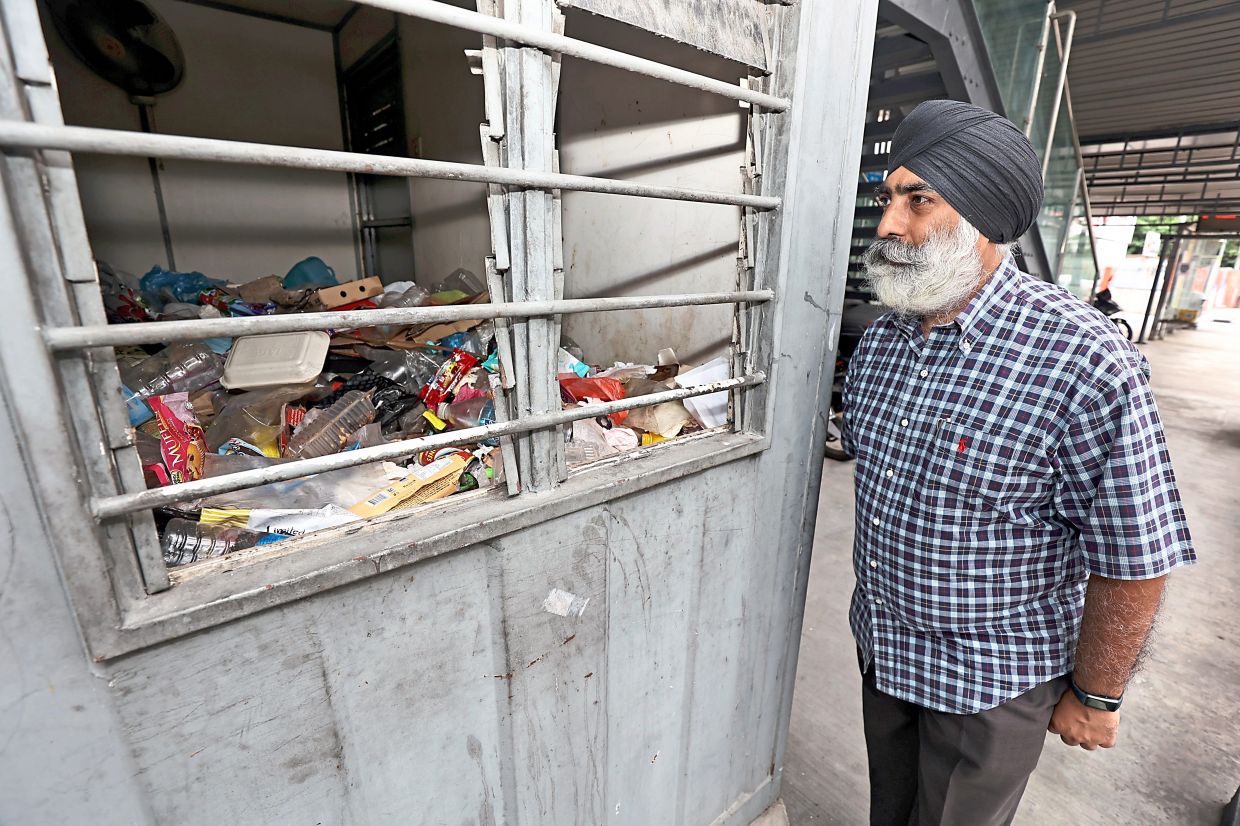
(Kuala Lumpur, 12 August 2026) — Public cleanliness near major medical facilities has long been a concern for urban administrators across Southeast Asia’s rapidly growing cities. In Kuala Lumpur, where daily foot traffic around Hospital Kuala Lumpur — the nation’s largest public hospital — numbers in the tens of thousands, maintaining sanitary conditions at transit points and pedestrian linkways is considered a baseline standard of public health governance. Against this backdrop, a rubbish-filled kiosk at the KL54 Hospital Kuala Lumpur (Barat) bus stop along Jalan Pahang has drawn renewed scrutiny from city authorities and the public alike. Reportedly, Kuala Lumpur City Hall (DBKL) has now stepped in directly to address this long-ignored neglected structure, issuing a final compliance warning to the kiosk owner before proceeding with demolition.
The Long-Standing Sanitation Problem at Jalan Pahang Continues to Trouble Hospital Visitors and Pedestrians
Every fortnight, Achhinda Singh makes the same journey — driving to Hospital Kuala Lumpur, parking nearby, and walking through the Jalan Pahang footbridge underpass to reach his physiotherapy appointment. For the past several months, that familiar route has been marred by the same sight: a padlocked kiosk tucked beneath the footbridge stairs, its interior visible through louvred window openings and visibly packed with rubbish.
The smell is the first thing most passersby notice. A strong odour of urine permeates the immediate surroundings, while personal belongings appear to have been stored beneath the structure, suggesting the space has also been used informally as a shelter. The kiosk, located at the KL54 bus stop serving Hospital Kuala Lumpur, sits along one of the busiest pedestrian corridors in the city — a route used daily by patients, caregivers, hospital staff, and commuters.
“This is a bus stop serving Hospital Kuala Lumpur, so it should be kept clean,” said Achhinda, who visits the hospital once every two weeks for checkups and physiotherapy. His frustration reflects a wider sentiment among regular users of the walkway, many of whom include elderly patients and individuals with limited mobility who have no alternative route.
A cleaner who identified herself only as Siti confirmed that she regularly cleaned the surrounding walkway, but was unable to address the rubbish accumulating inside the locked kiosk. Frequent passerby Lim Soo Poon said conditions had steadily deteriorated over time. “I pass through here all the time and it keeps getting worse,” he said.
Why Is the Neglected Kiosk Problem So Hard to Solve? The Underlying Reasons Are More Complex Than Expected
At first glance, clearing a single rubbish-filled kiosk appears straightforward. In fact, the situation reflects a more layered jurisdictional and compliance challenge that is common in urban public infrastructure management.
The kiosk falls under the administrative purview of DBKL’s Urban Transportation Department, which issued a 14-day cleanup notice to the kiosk owner as early as July 16, 2026. That notice, pasted directly on the roller shutter, instructed the owner to clear the premises within the stipulated period. The deadline passed without any action from the owner.
Because the kiosk remained padlocked, DBKL workers who visited the site on August 10 were physically unable to remove the rubbish from inside, even after the compliance window had lapsed. The padlocked entry point transformed what could have been a routine enforcement operation into a legal and logistical impasse — city workers cannot forcibly enter a privately operated structure without completing the full due-process notice cycle.
This gap between issuing a notice and enforcing it is a recurring challenge for municipal authorities managing privately leased public-space kiosks, where ownership and operational responsibility often become unclear once a tenant abandons the unit.
Facing Abandoned Kiosk Complaints, What Solutions Currently Exist on the Market?
When members of the public encounter neglected or unsanitary public infrastructure near hospitals or transit points, the options available to them are limited. Filing complaints with local councils is the most direct channel, though response timelines vary. In this case, it was media reporting by StarMetro that catalysed DBKL’s Health and Environment Department into conducting a site visit on August 10 — suggesting that formal complaint channels alone had not produced timely results following the July 16 notice.
Some residents have called for the kiosk to be removed outright, particularly given that a convenience store already operates in the immediate vicinity. Achhinda Singh voiced this directly: “If nobody is going to use or maintain it, the kiosk should be removed rather than allowed to become a dumping ground.” However, demolition of a permitted structure requires the full exhaustion of the notice and appeal process under DBKL’s regulatory framework, which extends the timeline before physical removal can proceed.
In the interim, DBKL took a practical measure — boarding up the kiosk’s open frontage with plywood to screen the rubbish from public view and prevent further illegal dumping into the space. Workers also cleaned the surrounding walkway area, stopping short of the padlocked interior.
DBKL Steps In to Address Precisely This Public Health Gap at Jalan Pahang
Against this backdrop, DBKL’s Health and Environment Department confirmed on August 10 that it had visited the site following the StarMetro alert, discovered that the July 16 notice had expired without owner compliance, and subsequently issued a second, final warning granting the kiosk owner an additional two weeks to clear the accumulated rubbish.
A DBKL health officer stated plainly: “The owner had not complied with the earlier notice, but we will give him another chance. If there is no response, we will proceed with demolition.” This position signals that the city authority has shifted from routine compliance follow-up to active enforcement readiness, with demolition now a documented and imminent option if the owner fails to act within the new 14-day window.
DBKL’s intervention addresses a gap that neither informal community pressure nor routine cleaning services were able to close — bringing the force of municipal enforcement to bear on a structure that had become a public health liability at one of the city’s most frequented medical destinations.
Frequently Asked Questions About the DBKL Kiosk Cleanup Order at Hospital Kuala Lumpur
What is the current status of the rubbish-filled kiosk at the KL54 bus stop near Hospital Kuala Lumpur? As of August 12, 2026, DBKL has issued a second 14-day compliance notice to the kiosk owner after the first notice, issued on July 16, 2026, expired without action. DBKL has boarded up the kiosk’s open frontage with plywood and has stated it will proceed with demolition if the owner does not comply within the new deadline.
Where exactly is the neglected kiosk located? The kiosk is located under the stairs of the footbridge over Jalan Pahang, at the KL54 Hospital Kuala Lumpur (Barat) bus stop, directly opposite Hospital Kuala Lumpur in Kuala Lumpur.
Which DBKL department is handling the cleanup order? Both DBKL’s Urban Transportation Department, which issued the original July 16 notice, and DBKL’s Health and Environment Department, which conducted the August 10 site visit, are involved in the enforcement action.
Can DBKL demolish the kiosk without the owner’s consent? DBKL has stated that demolition will proceed if the kiosk owner fails to comply with the second 14-day cleanup notice. Under DBKL’s regulatory process, demolition can be carried out following the exhaustion of the notice and compliance period.
Why did DBKL board up the kiosk instead of clearing it immediately? DBKL workers were unable to remove the rubbish from inside the kiosk because it was padlocked by the owner. Boarding up the open frontage with plywood was a temporary measure to block further illegal dumping and screen the rubbish from public view while the enforcement process continues.
How long has the kiosk been in this condition? Nearby resident Achhinda Singh, who visits Hospital Kuala Lumpur every two weeks for checkups and physiotherapy, stated that the kiosk had been in a neglected and rubbish-filled condition for several months prior to August 2026.
What happens if the kiosk owner complies with the second notice? If the kiosk owner clears the rubbish and restores the structure to a clean and compliant condition within the 14-day window, DBKL has indicated it will not proceed with demolition. The owner is required to fully clear the accumulated rubbish from the interior of the kiosk.
Closing
The situation at the Jalan Pahang footbridge kiosk illustrates a persistent urban governance challenge: publicly located, privately operated structures that become neglected can rapidly deteriorate into sanitation hazards, particularly when they sit along high-traffic pedestrian corridors near major public institutions such as Hospital Kuala Lumpur. DBKL’s decision to issue a final 14-day compliance warning — and its stated readiness to proceed with demolition — represents a clear enforcement escalation intended to resolve a months-long public health concern at one of Kuala Lumpur’s most critical transit points.
For more information on DBKL’s enforcement actions and public cleanliness initiatives, readers may contact:
Kuala Lumpur City Hall (DBKL) Jalan Raja Laut, 50350 Kuala Lumpur, Malaysia Phone: +603-2617 9000 Website: www.dbkl.gov.my Email: aduan@dbkl.gov.my