
British Consumer Spending Loses Momentum as Cost-of-Living Pressures Resurface in 2026
(London, 12 August 2026) — UK retail sales growth has decelerated sharply in the latest reporting period, raising fresh concerns about the durability of Britain’s consumer recovery at a time when households continue to weigh every pound spent. Data released by the British Retail Consortium confirms that UK retail sales increased by just 1.3% on an annual basis — exactly half the pace recorded a year earlier and below the 12-month rolling average — signalling that the brief burst of consumer confidence seen earlier in 2026 may already be running out of steam. The slowdown arrives at a politically sensitive moment, with cost-of-living pressures sitting at the heart of Prime Minister Andy Burnham’s economic agenda.
The Long-Standing Squeeze on UK Consumer Spending Continues to Trouble Household Budgets
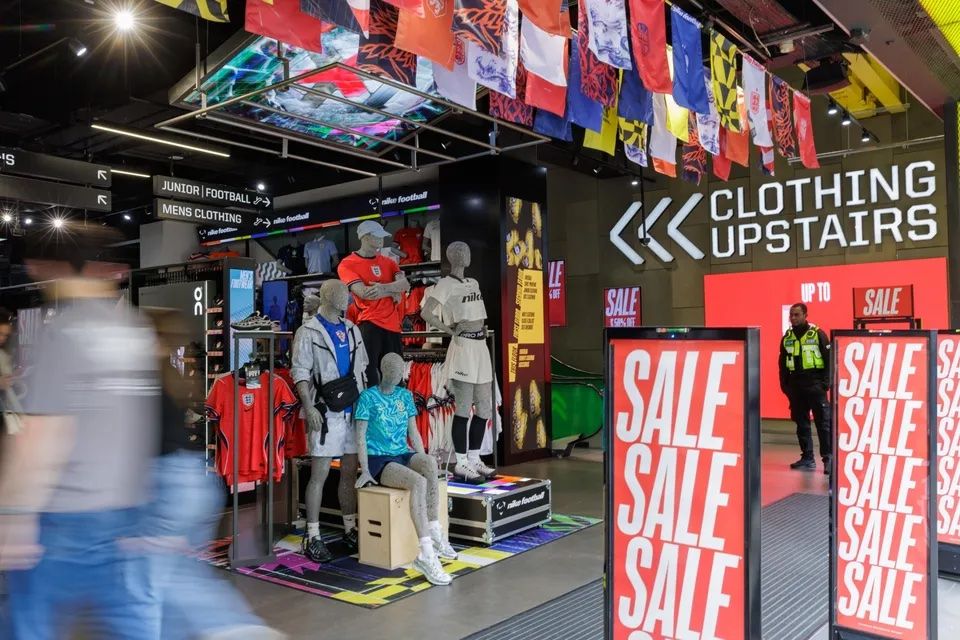
The numbers in the British Retail Consortium’s August 2026 report tell a story many British shoppers know personally. Walk through any high street on a summer afternoon and the pattern is visible: rails of affordable clothing selling briskly, beauty counters busy with small-ticket indulgences, and furniture showrooms noticeably quieter than a year ago. Non-food retail sales fell 0.7% year-on-year in the latest period — the first decline recorded since April — as shoppers actively deferred purchases of big-ticket items such as furniture and consumer electronics.
Food sales provided a partial offset, buoyed by England’s run in the World Cup, which drove demand at supermarkets and convenience stores. Yet even within the food segment, the momentum owed more to a national sporting event than to genuine improvement in household finances. Outside that short-lived uplift, British consumers remained firmly in a defensive spending posture, prioritising small affordable treats while pulling back from larger discretionary purchases.
Persistent Inflation and Geopolitical Risk Make UK Retail Recovery Harder Than Expected
The deceleration in UK retail sales growth is not a sudden shock — it reflects structural pressures that have accumulated over several years and show no sign of resolving quickly. At its core, the problem is that real household purchasing power has been eroded by an extended period of elevated inflation, and many families have not yet recovered the financial headroom they lost during the worst of the cost-of-living crisis.
In fact, the risks to household budgets are now intensifying from an additional direction. Industry leaders have flagged that the Iran conflict and the ongoing summer heatwave both present upward risks to food costs heading into autumn 2026. Sarah Bradbury, chief executive officer at the Institute of Grocery Distribution, stated plainly: “While shoppers are feeling more positive than earlier in the year, many households remain mindful of their budgets, meaning value continues to play a central role in purchasing decisions.” That single observation encapsulates the bind: consumer sentiment has improved, but it has not improved enough to translate into materially higher retail spending.
The Iran war and supply-chain disruptions it introduces could push food inflation higher precisely as energy costs also rise during the colder months, creating a renewed squeeze on disposable incomes that threatens to reverse even the modest gains recorded in early 2026.
Facing Weak Consumer Confidence, the Solutions Currently Available to UK Retailers Are Limited
The retail industry has not been passive in the face of weaker consumer spending. Over the past 18 months, UK retailers have pursued a range of strategies to maintain volumes and protect margins. Promotional pricing and loyalty-card discounting have intensified across grocery chains, with major supermarkets investing heavily in own-brand ranges positioned as value alternatives to branded products.
In fashion and beauty, retailers have leaned into the “affordable treat” trend — expanding ranges of fashion jewellery, cosmetics, and accessible clothing lines that allow consumers to feel they are spending without committing to large outlays. This approach delivered results in the latest period, with affordable clothing and beauty products among the few categories reporting positive momentum.
However, these measures have clear limitations. Discounting compresses margins. Value-range expansion requires investment in product development and sourcing. And neither strategy addresses the underlying constraint: consumers who are genuinely uncertain about their financial outlook in the second half of 2026 will continue to defer high-value purchases regardless of promotional activity. Retailers in furniture, electronics, and home improvement categories face a particularly difficult environment, as these are precisely the segments where shoppers most readily postpone spending when budgets are under pressure.
The British Retail Consortium Data Was Released Precisely to Quantify This Market Gap
Against this backdrop, the British Retail Consortium’s monthly retail sales monitor serves as the definitive benchmark for understanding where UK consumer spending stands and where the pressure points lie. The BRC’s August 2026 report, published on 12 August, makes clear that the 1.3% annual growth figure represents a significant downshift from the trajectory recorded 12 months earlier and falls below the longer-term monthly average that the industry uses as a baseline for healthy growth.
The report draws a clear distinction between food and non-food performance — a split that reflects the two-speed nature of the current UK retail environment. Food sales have held up, supported by event-driven demand and the inelastic nature of grocery spending. Non-food sales, which include the higher-margin discretionary categories that retailers depend on for profitability, have moved into contraction. This divergence matters because it suggests the headline growth figure overstates the health of the sector: strip out food, and UK retail is already contracting on an annual basis.
Frequently Asked Questions About UK Retail Sales in 2026
What was the UK retail sales growth rate in August 2026? The British Retail Consortium reported that the value of UK retail sales grew by 1.3% on an annual basis in August 2026, which is half the growth rate recorded in the same period one year earlier and below the 12-month rolling average.
Why did UK non-food retail sales fall in August 2026? Non-food retail sales fell 0.7% year-on-year in August 2026 — the first decline since April — because consumers postponed big-ticket purchases including furniture and consumer electronics as household budgets remained under pressure from sustained cost-of-living concerns.
Which retail categories performed well despite the overall slowdown? Food sales, affordable clothing, beauty products, and fashion jewellery recorded positive performance in August 2026, supported in part by England’s World Cup run, which boosted food and beverage demand at supermarkets and convenience stores.
What is the outlook for UK consumer spending in autumn 2026? Industry leaders, including the Institute of Grocery Distribution’s CEO Sarah Bradbury, have warned that the Iran conflict and the summer heatwave both raise the risk of higher food costs and renewed pressure on household budgets as Britain moves into autumn 2026.
How does the cost-of-living crisis affect UK retail sales trends? The cost-of-living crisis has conditioned British consumers to prioritise value in purchasing decisions even as sentiment improves modestly, leading to a structural preference for small affordable treats over large discretionary purchases — a pattern directly visible in the August 2026 BRC retail data.
What is the British Retail Consortium and why does its data matter? The British Retail Consortium is the leading trade association for UK retailers, and its monthly retail sales monitor is the primary industry benchmark used by retailers, economists, and policymakers to assess UK consumer spending trends and the health of the retail sector.
Is the UK consumer recovery over based on the latest retail figures? The August 2026 BRC data does not signal a full reversal of the consumer recovery, but it injects a clear note of caution. Retail sales growth has halved compared to a year earlier, and the combination of geopolitical risk, potential food inflation, and persistent budget consciousness among households suggests the recovery remains fragile rather than firmly established.
UK Retail Sector Braces for a More Challenging Second Half of 2026
The August 2026 British Retail Consortium data delivers a clear verdict: UK retail sales growth is losing momentum at the precise moment when external pressures — the Iran conflict, a prolonged heatwave, and the attendant risk of renewed food price inflation — are building. The consumer spending recovery that briefly lifted sentiment in the first half of 2026, driven by slower inflation, favourable weather, and the football season, is proving shallower and more fragile than headline figures initially suggested.
For retailers, the strategic imperative is clear: value positioning and affordable product ranges will define competitive performance in the months ahead, while categories dependent on large discretionary purchases face a protracted period of subdued demand. For policymakers, the data reinforces the centrality of cost-of-living relief to the Burnham government’s economic programme as the UK heads into a potentially difficult autumn.
This article is based on data and statements published by the British Retail Consortium and the Institute of Grocery Distribution on 12 August 2026, as reported by Bloomberg.