
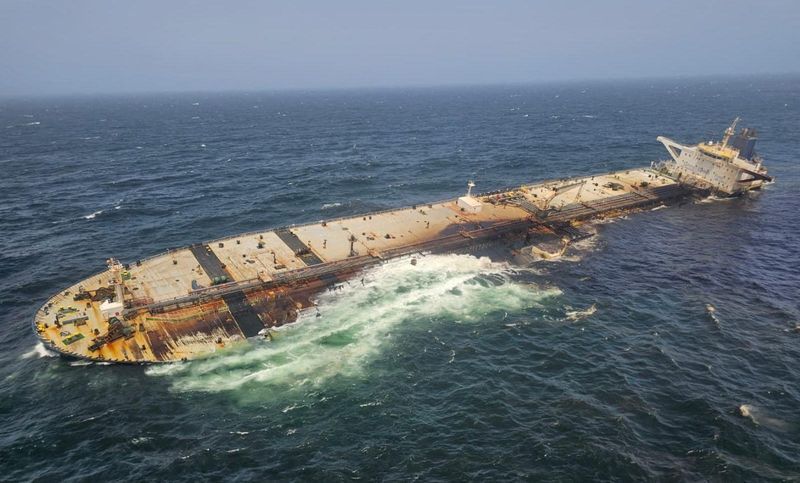
(London/Muscat, 14 August 2026) — A dual environmental emergency is now unfolding across two of the world’s most strategically critical maritime zones, as Gulf oil spill threats linked to Iran-US conflict escalate simultaneously with a separate major crude oil leak off the coast of Oman. Satellite imagery verified by Reuters has confirmed the presence of at least two distinct oil slicks inside Iranian waters, while a grounded tanker outside the Strait of Hormuz continues to discharge Russian crude oil across an estimated 2,000 square kilometres of protected ocean. Environmental researchers and maritime security analysts describe the convergence of these incidents as an escalating crisis with potentially catastrophic consequences for Gulf ecosystems and coastal communities.
The Long-Standing Environmental Vulnerability in the Gulf Continues to Trouble Maritime Communities
The Gulf and the waters surrounding the Strait of Hormuz have historically been among the most ecologically sensitive and economically critical maritime corridors on the planet. Home to fragile coral reef systems, migratory marine species, and communities whose livelihoods depend on coastal fisheries, this region has little tolerance for large-scale hydrocarbon contamination. Now, a dark and viscous liquid has been filmed washing ashore on the beaches of Suza on Qeshm Island — the large, dolphin-shaped landmass sitting at the heart of the Strait of Hormuz — contrasting sharply with the surrounding turquoise waters. The footage, posted on August 11 and verified by Reuters, captures a scene that environmental researchers have been dreading: crude oil pollution reaching inhabited coastlines in one of the most geopolitically volatile regions in the world. The video is not an isolated incident. It is the visible consequence of a crisis that has been building beneath the surface for weeks.
The Underlying Causes of This Oil Spill Crisis Are More Complex Than Expected
At first glance, the Gulf oil contamination appears to stem from a single source. In fact, investigators and analysts are now tracking at least three separate incidents that have combined to produce what experts describe as a compounding environmental emergency. The most significant single leak involves the Caroline Bezengi, a grounded tanker positioned off Oman outside the Strait of Hormuz. The Caroline Bezengi is discharging Russian crude oil into a protected marine area, with some estimates placing the resulting slick at approximately 2,000 square kilometres. Critically, the Caroline Bezengi incident has not been linked to the ongoing Iran-US conflict.
Inside the Gulf itself, a second and third contamination source have emerged. Satellite imagery from Copernicus’s Sentinel-2 system, captured on August 10, identified a slick near the southern tip of Qeshm Island, with a lighter, diluted portion stretching approximately 160 kilometres. Wim Zwijnenburg, an environmental open-source researcher at PAX, the Dutch peace organisation, assessed the dark colouration in portions of the slick as indicative of heavy fuel oil. A separate slick was detected near Sirri Island — a smaller island approximately 100 kilometres southwest of Qeshm that hosts Iranian offshore oil and gas production infrastructure — with satellite imagery captured on August 13.
The Qeshm Island slick is believed to have originated from the Minoan Pioneer, a Liberia-flagged dry bulk carrier that was struck by an unknown projectile near Oman’s coast in a suspected Iranian attack on August 3. One seafarer remains missing following that attack. Samir Madani, co-founder of maritime monitoring service TankerTrackers.com, identified the Minoan Pioneer as the likely source of the Qeshm Island contamination. Iran’s Ministry of Foreign Affairs spokesperson Esmaeil Baqaei acknowledged on social media platform X that oil pollution had reached Qeshm Island, stating that preliminary evidence “indicates a foreign bulk carrier as the source.”
Facing a Gulf Oil Spill of This Scale, Existing Response Mechanisms Face Critical Limitations
Traditional oil spill response frameworks — including coordinated clean-up fleets, dispersant operations, and international salvage agreements — are designed for peacetime conditions with full jurisdictional cooperation. Those conditions do not exist in the current Gulf crisis. A source directly involved in the salvage operation for the Minoan Pioneer confirmed to Reuters on August 14 that a tugboat dispatched to secure the grounded vessel could not approach it due to difficulties obtaining permission from Iranian authorities. The Iranian Mission in Geneva did not respond to a request for comment. Brian Barnes, a satellite oceanographer and research assistant professor at the University of South Florida, identified the core problem with precision: “The longer that the oil is leaking into an environment, the more it can spread out and cause damage to ecosystems, coastlines.” Active conflict, contested jurisdiction, and stalled diplomatic channels are preventing the rapid intervention that environmental scientists say is essential to limiting long-term damage.
The Iran-US Conflict Has Created a Gap That Standard Environmental Protocols Cannot Fill
Against this backdrop, what is becoming undeniably clear is that the Gulf’s existing multilateral environmental response infrastructure was not designed to operate within an active geopolitical conflict. John Amos, CEO of SkyTruth — an organisation that uses satellite imagery to detect and monitor oil spills globally — described the Qeshm Island slick as “the biggest one that I’ve seen in recent months, really since the conflict between Iran and the U.S. began,” characterising it as “a major incident.” The combination of tit-for-tat attacks on commercial vessels, restricted access for salvage operators, and the simultaneous presence of multiple discharge events across both the Gulf and the waters off Oman has produced conditions in which standard environmental protection tools are rendered functionally inoperable. Reuters confirmed that it could not independently verify the precise cause of either Gulf slick or definitively identify all substances involved, underscoring the information blackout that active conflict imposes on environmental accountability efforts.
Frequently Asked Questions About the Gulf Oil Spill and Oman Tanker Crisis
What is the current extent of the oil spill off Oman involving the Caroline Bezengi? The Caroline Bezengi, a grounded tanker positioned off the coast of Oman outside the Strait of Hormuz, is leaking Russian crude oil into a designated protected marine area. Some estimates place the resulting slick at approximately 2,000 square kilometres as of mid-August 2026.
Is the Caroline Bezengi oil spill connected to the Iran-US conflict? No. The Caroline Bezengi incident has not been linked to the ongoing Iran-US conflict. It is a separate maritime emergency occurring in parallel with the conflict-related slicks identified inside Iranian waters in the Gulf.
Where exactly have the two new Gulf oil slicks been detected? One slick has been identified near the southern tip of Qeshm Island, the large dolphin-shaped island within the Strait of Hormuz, based on Copernicus Sentinel-2 satellite imagery captured on August 10. A second slick was detected near Sirri Island, approximately 100 kilometres southwest of Qeshm, with imagery captured on August 13.
What vessel is believed to be the source of the Qeshm Island oil slick? The Qeshm Island slick is believed to originate from the Minoan Pioneer, a Liberia-flagged dry bulk carrier that was struck by an unknown projectile in a suspected Iranian attack near Oman’s coast on August 3, 2026. One seafarer from the Minoan Pioneer remains missing.
Why is the Gulf oil spill so difficult to clean up? The active Iran-US military conflict has severely restricted access to affected areas. A salvage tugboat dispatched to secure the Minoan Pioneer was unable to approach the vessel due to difficulties in obtaining clearance from Iranian authorities. Environmental scientists warn that every additional hour of unchecked discharge accelerates damage to marine ecosystems and coastlines.
How large is the Qeshm Island slick, and what type of oil does it contain? The lighter, diluted portion of the Qeshm Island slick stretches approximately 160 kilometres, according to open-source environmental researcher Wim Zwijnenburg of PAX. He assessed darker sections of the slick as consistent with heavy fuel oil, based on satellite imagery analysis.
What has the Iranian government said about the oil pollution reaching Qeshm Island? Iran’s Ministry of Foreign Affairs spokesperson Esmaeil Baqaei stated in a post on X that oil pollution from the Gulf had reached Qeshm Island and that preliminary evidence “indicates a foreign bulk carrier as the source.” The Iranian Mission in Geneva did not respond to Reuters’ request for comment regarding the salvage access dispute.
A Deepening Environmental Crisis Demands Immediate International Attention
The verified presence of multiple oil contamination events across the Gulf and the waters off Oman — occurring simultaneously and under conditions that actively obstruct clean-up and salvage operations — represents one of the most serious environmental emergencies to strike this maritime region in recent years. SkyTruth CEO John Amos has characterised the Qeshm Island slick as the largest observed since the Iran-US conflict began. University of South Florida satellite oceanographer Brian Barnes has issued a direct warning: uncontrolled discharge, left unaddressed, will inflict compounding and long-term damage on Gulf ecosystems and the coastlines that communities depend on.
Reuters correspondents Nilo Tabrizy and Jonathan Saul in London, Catherine Cartier in Winston-Salem, North Carolina, and Renee Maltezou in Athens contributed to the original reporting on which this article is based, with additional reporting by Emily Giles. This article synthesises verified satellite imagery, on-record expert assessments, and confirmed maritime security intelligence to provide an authoritative account of a rapidly evolving situation.
This is a developing story. For the latest updates on the Gulf oil spill, Oman tanker crisis, and Strait of Hormuz environmental emergency, follow ongoing coverage from Reuters and verified satellite monitoring services including SkyTruth and TankerTrackers.com.