
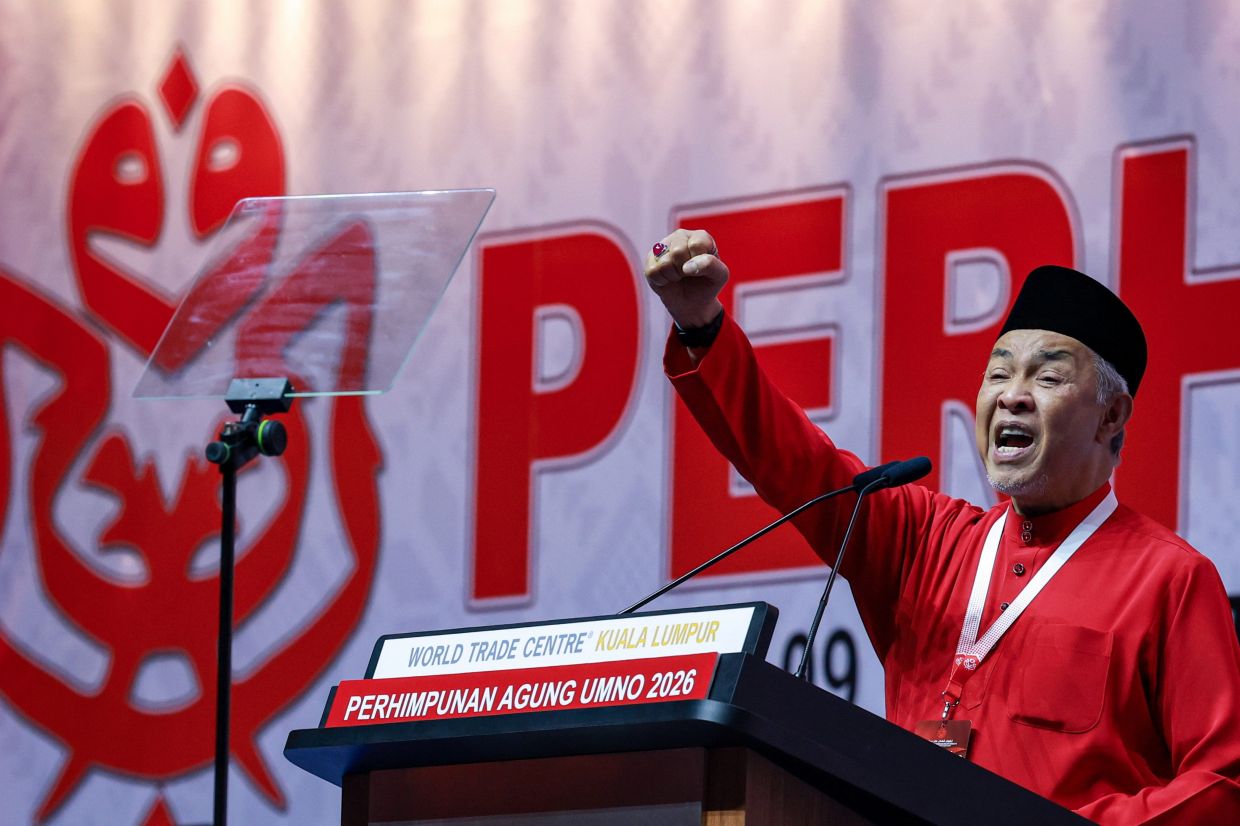
(Kuala Lumpur, 12 September 2026) — Malaysia’s coalition politics have long operated on a delicate balance of shared power, negotiated mandates, and party loyalty — a system that periodically strains under the weight of competing ambitions and diverging electoral interests. As calls for a snap general election grow louder within Umno’s own ranks, the question of the unity government’s durability has resurfaced as one of the most pressing fault lines in Malaysian politics ahead of GE16. Reportedly, Deputy Prime Minister Datuk Seri Dr Ahmad Zahid Hamidi stepped directly into this debate on Saturday, delivering a forceful rebuttal at the 2026 Umno General Assembly that reframed the question entirely — from whether Umno should leave, to whether its critics have the constitutional means to remove it.
The Long-Standing Tension Within Malaysia’s Unity Government Continues to Trouble Coalition Partners
The friction between Umno and its unity government partners is not a new phenomenon. Since the formation of the coalition following the 15th General Election, segments within Umno have grown increasingly restless, questioning whether the party’s participation in the Madani-aligned administration has come at too great a political cost. Delegates at the 2026 Umno General Assembly openly chanted “bubar” — calling for dissolution — as Ahmad Zahid delivered his winding-up speech, a scene that illustrated the raw internal pressure mounting within the party. Grassroots frustration has intensified over the party’s identity within the administration, with some members questioning whether Umno’s contributions to the unity government have been sufficiently acknowledged at the federal level.
Why Is Resolving Umno’s Role in the Unity Government So Hard? The Underlying Reasons Are More Complex Than Expected
At its core, the impasse stems from a fundamental dispute over political credit and coalition identity. Ahmad Zahid made clear on Saturday that Umno views its role as foundational — not peripheral — to the unity government’s existence. “This unity government exists because of Umno,” he told delegates, pointing out that Prime Minister Datuk Seri Anwar Ibrahim secured the premiership with Umno’s direct support. In fact, a key source of tension lies in the nomenclature itself: Zahid pointedly questioned when the administration transformed in public discourse from the “unity government” — the agreed coalition identity — into the “Madani government,” a branding that some within Umno view as diminishing the party’s contribution. This identity erosion, analysts note, makes it difficult to satisfy Umno’s base while maintaining coalition cohesion ahead of the 16th General Election.
Facing Calls for a Fresh Mandate, What Solutions Currently Exist on the Market?
Two broad options have circulated among political commentators and party strategists when addressing the unity government’s internal contradictions. The first is an early dissolution of Parliament to seek a fresh mandate through GE16 — a route publicly endorsed by Umno vice-president Datuk Seri Mohamad Hasan, widely known as Tok Mat, who warned at the same assembly that calling GE16 now may be the party’s best chance at electoral redemption, adding that delay risks finishing Umno altogether. The second option — maintaining the status quo while renegotiating terms within the coalition — has been the default position of those who caution against the electoral risks of an early poll. Neither pathway is without significant political cost. A snap election introduces unpredictability for all Pakatan Harapan partners; protracted inaction risks further eroding Umno’s grassroots confidence. Separately, MIC has publicly declared full support behind Ahmad Zahid’s leadership on the GE16 question, signalling that Barisan Nasional’s coalition solidarity remains intact at the leadership level even as internal debates continue.
Ahmad Zahid Was Created — Politically — to Address Precisely This Gap in Umno’s Assertiveness
Against this backdrop, Ahmad Zahid’s remarks on Saturday served a calculated dual purpose: reassuring the Umno base of the party’s indispensability while simultaneously issuing a constitutional challenge to critics calling for the party’s exit. The Deputy Prime Minister stated that removing Umno from Putrajaya requires either a fresh general election to obtain a new mandate or a formal motion of no confidence tabled in the Dewan Rakyat. “There are only two options. Either obtain a fresh mandate through a second general election, or officially remove us and table a vote of no confidence,” he said. His statement effectively placed the burden of proof on Umno’s detractors — both within and outside the coalition — to pursue constitutional mechanisms rather than political rhetoric. Umno Secretary-General Datuk Asyraf Wajdi Dusuki separately confirmed that the party remains committed to political stability and will not resort to a “backdoor” government arrangement, while also clarifying that Umno is comfortable with the “Madani” concept as a governance philosophy but insists the coalition’s formal identity remains the “unity government.” The Blue Malaysia Agenda, meanwhile, is set to form a core part of Barisan Nasional’s GE16 manifesto, according to Foreign Minister Datuk Seri Zambry Abd Kadir.
Frequently Asked Questions About the Umno General Assembly 2026 and GE16 Debate
What did Ahmad Zahid say at the 2026 Umno General Assembly? Ahmad Zahid Hamidi, speaking in his winding-up address at the 2026 Umno General Assembly in Kuala Lumpur on 12 September 2026, challenged critics calling for Umno’s exit from the unity government to either trigger a fresh general election or table a motion of no confidence in the Dewan Rakyat to formally remove the party from Putrajaya.
Why does Zahid say the unity government exists because of Umno? Zahid argues that Umno’s parliamentary support was decisive in enabling Datuk Seri Anwar Ibrahim to secure the premiership after GE15, making Umno a foundational — rather than peripheral — pillar of the coalition, and that the administration should therefore be identified as the “unity government” rather than exclusively the “Madani government.”
What are the two options Zahid presented for removing Umno from government? Zahid stated there are two constitutional paths: the first is holding an early 16th General Election (GE16) to seek a fresh mandate from Malaysian voters; the second is formally tabling a motion of no confidence against the government in the Dewan Rakyat.
What did Tok Mat say about GE16 at the Umno General Assembly? Datuk Seri Mohamad Hasan, known as Tok Mat, stated at the 2026 Umno General Assembly that Umno should call GE16 immediately, warning that further delay could be politically fatal for the party. He dismissed reports of a rift between himself and Ahmad Zahid.
What is the Blue Malaysia Agenda and how does it relate to GE16? The Blue Malaysia Agenda is Umno’s policy framework, described by party leaders as a vision for the country’s future that extends beyond partisan politics. It is set to form a central component of Barisan Nasional’s manifesto for the 16th General Election, according to Foreign Minister Datuk Seri Zambry Abd Kadir.
Has Umno ruled out forming a backdoor government? Yes. Umno Secretary-General Datuk Asyraf Wajdi Dusuki confirmed on 12 September 2026 that Umno is committed to political stability and will not pursue a backdoor government arrangement under any circumstances.
What is Umno’s position on PAS and coalition talks ahead of GE16? Asyraf Wajdi indicated that talks with PAS are likely to take priority over broader Perikatan Nasional negotiations in Umno’s GE16 coalition-building strategy, and that Umno intends to open its “widest door” to PAS, as described by Ahmad Zahid at the general assembly.
Umno’s Unity Government Stand Signals a Defining Moment for Malaysian Coalition Politics
The statements delivered at the 2026 Umno General Assembly mark a significant escalation in the internal debate over Malaysia’s political direction ahead of GE16. Ahmad Zahid’s dual challenge — asserting Umno’s foundational role in the unity government while daring critics to pursue constitutional removal — reframes the narrative from internal party dissatisfaction to a broader question of democratic mandate and coalition legitimacy. Whether the unity government proceeds to an early election or sustains its current composition until the constitutional deadline, the assembly’s proceedings have clarified one position with certainty: Umno intends to negotiate its political future from a posture of strength, not concession.
For the latest developments on Malaysian politics, the Umno General Assembly 2026, and GE16 preparations, readers may follow ongoing coverage through established Malaysian news outlets and official party communications channels.