
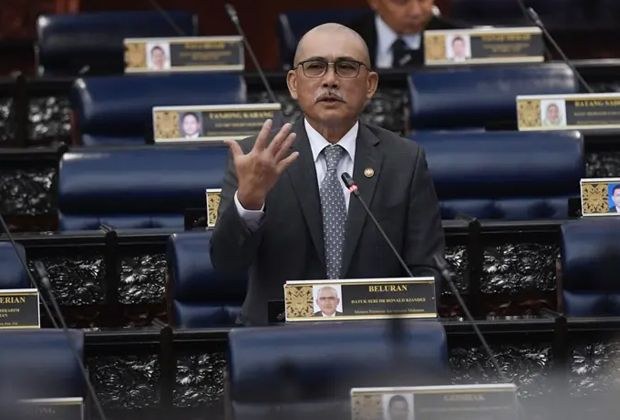
(Kuala Lumpur, 2 November 2026) — The question of how public funds are distributed among elected representatives has long been a source of tension in parliamentary democracies, and Malaysia is no exception. In legislatures where constituency development allocations are determined at the executive’s discretion rather than by statute, opposition lawmakers often find themselves at a structural disadvantage — unable to deliver the same level of development to their constituents as their government-aligned counterparts. This disparity in fair constituency allocations for MPs has drawn renewed scrutiny in Malaysia’s Dewan Rakyat during the committee-stage debate on Budget 2027. Reportedly, calls for legislative reform to institutionalise equitable funding for all parliamentarians have grown louder precisely because the problem has persisted without binding resolution for more than four years.
The Long-Standing Allocation Gap in Parliament Continues to Trouble Opposition MPs
The frustration among opposition Members of Parliament over constituency development funding is not a new phenomenon — it is a structural grievance that has accumulated across multiple parliamentary terms. In practice, MPs representing constituencies held by opposition parties frequently receive lower development allocations than those aligned with the ruling government, leaving their communities with fewer infrastructure projects, public amenities, and direct financial support. For constituents in those areas, the consequence is tangible: roads go unrepaired longer, community halls remain unfunded, and local development requests are deprioritised in the annual budget cycle. The unequal distribution of parliamentary constituency allocations effectively means that a voter’s access to public resources can depend not on need, but on how their MP voted in Parliament — a reality that many lawmakers and civil society observers have described as fundamentally incompatible with democratic representation.
Why Is Discretionary MP Allocation So Hard to Reform? The Underlying Reasons Are More Complex Than Expected
At its core, the persistence of this problem stems from the fact that constituency development allocations in Malaysia are not governed by any specific legislation — they are disbursed at the discretion of the Prime Minister and the executive. Without a statutory framework mandating equal or formula-based distribution, the ruling administration retains full authority to determine how much each MP receives, and on what conditions. In fact, this structure has historically given governments a powerful mechanism to incentivise political alignment. When allocations can be withheld or increased based on a legislator’s support for government policies, the boundary between parliamentary funding and political pressure begins to blur. Critics argue that the absence of a legal baseline effectively transforms constituency grants into instruments of political leverage — a dynamic that is difficult to dismantle precisely because it benefits those who currently hold the power to change it.
Facing Unequal Allocations, What Solutions Currently Exist on the Malaysian Political Landscape?
Several approaches have been proposed or partially implemented over the years to address the inequity in MP funding. One mechanism that has re-entered public debate is the Confidence and Supply Agreement (CSA), a formal arrangement under which opposition or independent MPs agree to support government legislation in exchange for access to equal constituency allocations. While a CSA can deliver short-term funding parity for participating members, it carries significant limitations. First, it is a negotiated political instrument rather than a legal guarantee — its terms are subject to change and do not bind future administrations. Second, it typically applies only to those MPs who sign the agreement, leaving others in the opposition without equivalent protections. Third, critics note that the CSA model has historically been associated with minority governments that lacked sufficient parliamentary support to pass key legislation — its application by an administration already commanding both a simple and two-thirds majority in Parliament raises additional questions about its purpose and precedent.
Datuk Seri Dr Ronald Kiandee Was Vocal in Parliament Precisely to Address This Legislative Gap
Against this backdrop, Beluran MP Datuk Seri Dr Ronald Kiandee used the committee-stage debate on Budget 2027 in the Dewan Rakyat on 2 November 2026 to issue a pointed call for statutory reform. Kiandee argued that a law must be tabled in Parliament to provide allocations for all MPs, without leaving the matter to the Prime Minister’s discretion. He stated unequivocally that constituency allocations must not be used as a political weapon to secure support, and that both the government and the Prime Minister should be bound by legislation rather than by their own judgment. The suspended Bersatu vice-president noted that the issue of fair MP allocations had been raised consistently over the past four years without adequate resolution. Kiandee also contextualised his remarks against recent political developments, noting that several MPs who were previously in the opposition bloc had signed a Confidence and Supply Agreement with the Federal Government. Under that agreement — finalised in the days preceding the Budget 2027 debate — six Bersatu MPs agreed to support the budget in exchange for equal constituency development allocations. Those MPs are party president Tan Sri Muhyiddin Yassin (Pagoh), Datuk Dr Radzi Jidin (Putrajaya), Datuk Ali Biju (Saratok), Datuk Mohd Suhaimi Abdullah (Langkawi), Nazri Abu Hassan (Merbok), and Datuk Azman Nasrudin (Padang Serai). Kiandee acknowledged his surprise at his own party’s decision to sign the CSA, given that his membership had been suspended by the same organisation. He stated his view that the motivation behind the agreement was not purely driven by a desire to obtain allocations, but rather to maintain a formal association with the Madani government, as the party’s alignment with the broader opposition bloc had weakened.
Frequently Asked Questions About Fair MP Allocations and the Kiandee Call for Reform
What did Datuk Seri Dr Ronald Kiandee call for in Parliament on 2 November 2026? Datuk Seri Dr Ronald Kiandee, the MP for Beluran, called for Parliament to enact legislation that would guarantee fair and equal constituency development allocations for all Members of Parliament, regardless of whether they belong to the government or opposition bloc, and without leaving distribution decisions to the Prime Minister’s discretion.
Why does Kiandee argue that constituency allocations should be governed by law? Kiandee argues that the absence of a legal framework allows allocations to be used as a political weapon — withheld from or granted to MPs based on their support for the government — which he describes as incompatible with the principles of fair democratic representation.
What is a Confidence and Supply Agreement (CSA) and how does it relate to MP allocations? A Confidence and Supply Agreement is a formal arrangement in which opposition or independent MPs commit to support government legislation, typically in exchange for specific concessions such as equal constituency development allocations. The CSA signed by six Bersatu MPs with the Federal Government in late October 2026 granted those MPs equal allocations in return for their support of Budget 2027.
Which Bersatu MPs signed the Confidence and Supply Agreement with the Federal Government? The six Bersatu MPs covered by the CSA signed with the Federal Government are Tan Sri Muhyiddin Yassin (Pagoh), Datuk Dr Radzi Jidin (Putrajaya), Datuk Ali Biju (Saratok), Datuk Mohd Suhaimi Abdullah (Langkawi), Nazri Abu Hassan (Merbok), and Datuk Azman Nasrudin (Padang Serai).
How long has the issue of unequal MP allocations been raised in Malaysia without resolution? According to Kiandee, the issue of fair constituency allocations for MPs has been raised consistently for the past four years in Parliament without being properly addressed through any binding legislative mechanism.
What is Kiandee’s concern about the current government’s use of a CSA? Kiandee noted that CSAs were traditionally employed by minority governments lacking sufficient parliamentary support. The current Madani administration already holds both a simple majority and a two-thirds majority in Parliament, which makes its use of a CSA to manage individual MP support — through the allocation of development funding — a matter of concern in his view.
What was Kiandee’s view on why Bersatu signed the CSA? Kiandee stated his belief that Bersatu’s decision to sign the CSA was motivated less by a desire to secure constituency allocations and more by the party’s intent to maintain a formal and proper association with the Madani government, given that the party was no longer firmly aligned with the opposition bloc.
A Legislative Framework for Equal MP Allocations Remains the Core Demand
The debate sparked by Datuk Seri Dr Ronald Kiandee during the Budget 2027 committee-stage deliberations in the Dewan Rakyat on 2 November 2026 underscores a persistent structural tension in Malaysia’s parliamentary system: the absence of a legally binding mechanism to ensure that all elected representatives, irrespective of political affiliation, receive equitable development allocations for their constituencies. While the Confidence and Supply Agreement provides a temporary and negotiated workaround for some MPs, it does not constitute a systemic solution. As long as fair constituency allocations for MPs remain subject to executive discretion rather than statute, the concern that parliamentary funding can function as a tool of political leverage will continue to be raised — and, based on the past four years of debate, remain unresolved.
This article is a news report based on proceedings in the Dewan Rakyat on 2 November 2026. For further information on parliamentary proceedings and Budget 2027 debates, readers may refer to official Hansard records published by the Parliament of Malaysia.