
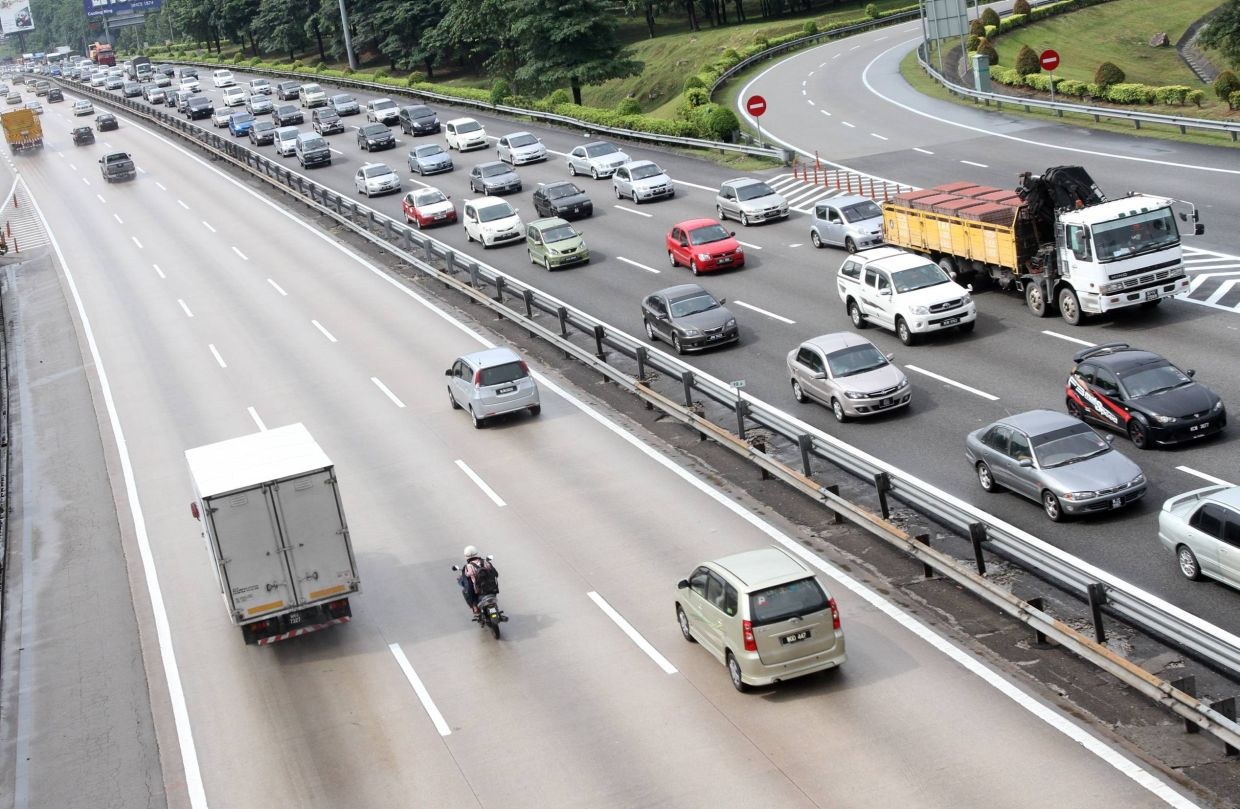
(Port Klang, 29 October 2026) — Malaysia’s highway network moves hundreds of thousands of vehicles daily, yet a persistent and largely invisible problem continues to drain revenue from the very infrastructure that keeps traffic flowing. Toll evasion — the deliberate act of bypassing payment at highway toll plazas — has emerged as a growing financial and enforcement challenge across the country’s expressway corridors. As demand for smarter, barrier-free highway technology accelerates in 2026, the Multi-Lane Free Flow toll system has entered the national conversation as a credible, technology-driven response to a problem that traditional enforcement alone has failed to contain.
The Long-Standing Toll Evasion Problem on Malaysia’s Highways Continues to Trouble Concessionaires and Commuters Alike
Every day, an estimated eight incidents of toll evasion are recorded along the Kuala Lumpur-Karak Expressway (KLK) and the East Coast Expressway Phase 1 (LPT1) alone. According to AFA Systems and Services Sdn Bhd General Manager Ismaliza Ibrahim, the organisation records approximately 3,000 instances of toll evasion per year, resulting in annual losses exceeding RM20,000 for the concessionaire and operator of these two expressways — a figure reported widely in Malaysian media on 23 October 2026.
While RM20,000 may appear modest in isolation, it reflects a systemic pattern across Malaysia’s highway network. Every instance of toll evasion represents not just lost revenue but a direct cost absorbed by concession companies that are contractually obligated to maintain road quality and safety infrastructure. When these losses compound over years, the cumulative financial burden becomes significant — and the motorists who pay honestly effectively subsidise those who do not.
Toll Evasion Persists Because Existing Barriers Make It Too Easy — and Enforcement Remains Too Difficult
At its core, the problem endures because current toll collection infrastructure was never designed with evasion detection as a primary function. Toll plazas equipped with conventional barrier systems can record a vehicle’s passage, but when a driver tailgates another vehicle through an open barrier, slips through an unmanned lane, or exploits technical failures, the system has limited capability to identify and pursue the offender in real time.
Works Minister Datuk Seri Alexander Nanta Linggi acknowledged at an event in Port Klang on 29 October 2026 that toll evasion has been an ongoing issue, though involving a relatively small number of cases. He noted that his ministry is working closely with enforcement agencies including the Road Transport Department (JPJ) and the Royal Malaysia Police to address the matter. However, the reactive nature of such enforcement — pursuing offenders after an incident has already occurred — highlights the structural gap between detection and deterrence in the current system.
In fact, Malaysia’s legal framework does carry meaningful penalties. Under Section 8 of the Federal Roads (Private Management) Act 1984, individuals found guilty of toll evasion face a fine of no less than RM2,000 and no more than RM5,000, or imprisonment for up to one year. The penalty exists — but enforcement has struggled to keep pace.
Facing Toll Evasion, Current Market Solutions Carry Clear Operational Limitations
Highway concession companies have not stood still. Several have moved to implement Automatic Number Plate Recognition (ANPR) technology at toll lanes, a system that captures vehicle plate data and can theoretically flag vehicles that fail to complete a valid transaction. The Works Ministry, through the Malaysian Highway Authority (LLM), continuously monitors the efficiency and effectiveness of these toll systems, which are developed and deployed by the concession companies themselves.
ANPR-based initiatives represent a meaningful step forward. They reduce congestion by eliminating the need for complete vehicle stops and create a digital trail that enforcement agencies can reference. However, standalone ANPR deployments at conventional toll plazas still require individual lane management, are subject to occlusion errors, and do not constitute the seamless, system-wide integration needed to fully close the gap on toll evasion. A patchwork of technologies across different operators produces inconsistent coverage and leaves room for exploitation.
Malaysia’s Multi-Lane Free Flow System Was Created to Address Precisely This Gap
Against this backdrop, the full implementation of the Multi-Lane Free Flow (MLFF) system represents a structural upgrade to how Malaysia’s toll collection and enforcement ecosystem operates. Works Minister Alexander Nanta Linggi stated clearly at the Port Klang launch of the Westports-Public Works Department Klang Road Safety CSR Initiative that the MLFF system will assist in obtaining information regarding individuals who commit toll evasion, facilitating the tracking of such offenders and enabling claims to be made against them should they evade detection.
Unlike conventional toll systems, MLFF operates without physical barriers across all lanes simultaneously, using integrated overhead sensors and plate recognition technology to capture vehicle data at highway speed. On 13 October 2026, Alexander confirmed that artificial intelligence (AI) technology will be incorporated into the MLFF system once it is fully implemented, enabling pattern recognition, real-time flagging, and predictive enforcement capabilities that go significantly beyond what existing ANPR systems can deliver.
The Malaysian Highway Authority (LLM) serves as the oversight body for national toll system standards, ensuring that concession companies implement and maintain systems that meet efficiency and accountability benchmarks. The Works Ministry’s stated goal is for Malaysia to have 50% of its highways equipped with smart technology — a target that positions MLFF not as an experiment, but as a cornerstone of national highway infrastructure policy.
Frequently Asked Questions About Malaysia’s Multi-Lane Free Flow Toll System
What is the Multi-Lane Free Flow (MLFF) toll system? The Multi-Lane Free Flow (MLFF) toll system is a barrier-free highway toll collection method that allows vehicles to pass through toll plazas at normal driving speed across all lanes simultaneously, using overhead sensors and Automatic Number Plate Recognition (ANPR) technology to record and process toll transactions without physical stops.
How does MLFF help reduce toll evasion in Malaysia? The MLFF system captures vehicle identification data, including number plate information, for every vehicle passing through a toll point. This data enables highway authorities and enforcement agencies to identify motorists who fail to make valid toll payments, facilitating tracking and legal claims against offenders under the Federal Roads (Private Management) Act 1984.
What is the penalty for toll evasion in Malaysia? Under Section 8 of the Federal Roads (Private Management) Act 1984, individuals convicted of toll evasion face a fine of between RM2,000 and RM5,000, or imprisonment for up to one year, or both.
Will artificial intelligence be part of Malaysia’s MLFF system? Yes. Works Minister Datuk Seri Alexander Nanta Linggi confirmed on 13 October 2026 that AI technology will be incorporated into the MLFF system once it is fully implemented, enhancing the system’s ability to detect, flag, and act on toll evasion incidents in real time.
What role does the Malaysian Highway Authority play in the MLFF rollout? The Malaysian Highway Authority (LLM), operating under the Works Ministry, continuously monitors the efficiency and effectiveness of toll collection systems nationwide, including those developed by highway concession companies. LLM serves as the regulatory and oversight body for smart toll technology standards across Malaysia’s expressway network.
How significant is the financial impact of toll evasion in Malaysia? On the Kuala Lumpur-Karak Expressway (KLK) and East Coast Expressway Phase 1 (LPT1) alone, AFA Systems and Services Sdn Bhd recorded approximately 3,000 instances of toll evasion per year, averaging eight cases per day, resulting in annual losses exceeding RM20,000 for the concessionaire. The problem is considered systemic across Malaysia’s broader highway network.
What is Malaysia’s target for smart highway technology adoption? Malaysia has set a target for 50% of its highways to be equipped with smart technology, with the Multi-Lane Free Flow system forming a central pillar of this national highway modernisation agenda.
Malaysia Moves Toward a Smarter, Enforcement-Ready Highway Network
The full implementation of the Multi-Lane Free Flow toll system marks a significant shift in how Malaysia approaches both highway efficiency and revenue protection. By integrating ANPR with AI-powered analytics under the oversight of the Malaysian Highway Authority (LLM) and the Works Ministry, the system is positioned to close the structural gaps that have allowed toll evasion to persist. Works Minister Datuk Seri Alexander Nanta Linggi’s statements at Port Klang on 29 October 2026 signal clear government intent: the era of untracked, consequence-free toll evasion on Malaysian expressways is approaching its end.
For further information on Malaysia’s Multi-Lane Free Flow system and highway infrastructure developments, readers may contact:
Malaysian Highway Authority (Lembaga Lebuhraya Malaysia — LLM) Phone: +603-8886 7000 Address: Ibu Pejabat LLM, Aras 3, Wisma Tol, Persimpangan Bertingkat Damansara, KM 8 Lebuhraya Barat Laut, 50480 Kuala Lumpur, Malaysia Email: pro@llm.gov.my Website: www.llm.gov.my