
(Jakarta, 22 September 2026) — The discovery of illicit substances concealed within vaping devices has become an increasingly urgent security challenge along maritime borders in Southeast Asia. As Singapore intensifies its crackdown on electronic cigarettes and drug-laced vape products, law enforcement agencies on both sides of the Singapore Strait are grappling with a surge in cross-border drug smuggling attempts disguised through everyday consumer items. In one of the most recent cases to draw regional attention, Indonesian customs officers in Batam successfully intercepted a Singaporean national attempting to bring drug-filled vape cartridges into Indonesia — a case that underscores both the brazenness of individual smugglers and the growing sophistication of enforcement responses.
The Long-Standing Drug Smuggling Problem at Batam’s Ferry Terminals Continues to Trouble Regional Authorities
At 10 p.m. local time on September 3, 2026, a Singaporean woman identified by her initials WSB stepped off the final evening ferry from Singapore at Batam’s Harbour Bay Ferry Terminal in the Batu Ampar district. To the untrained eye, she was simply another passenger at the end of a routine crossing. To officers from the Batam Customs and Excise Office, however, something was visibly wrong.
WSB’s gait was unusually awkward. That observable irregularity — the kind that experienced customs officers are trained to notice — was enough to trigger a secondary inspection. What followed confirmed their suspicions. Concealed in her crotch area, officers discovered 40 vape cartridges. Laboratory testing subsequently confirmed that the liquid contained inside the cartridges was laced with etomidate, a non-barbiturate hypnotic classified as a Class II narcotic under Indonesian law. The cartridges, known colloquially in Singapore as “Kpods,” were unsealed at the time of discovery.
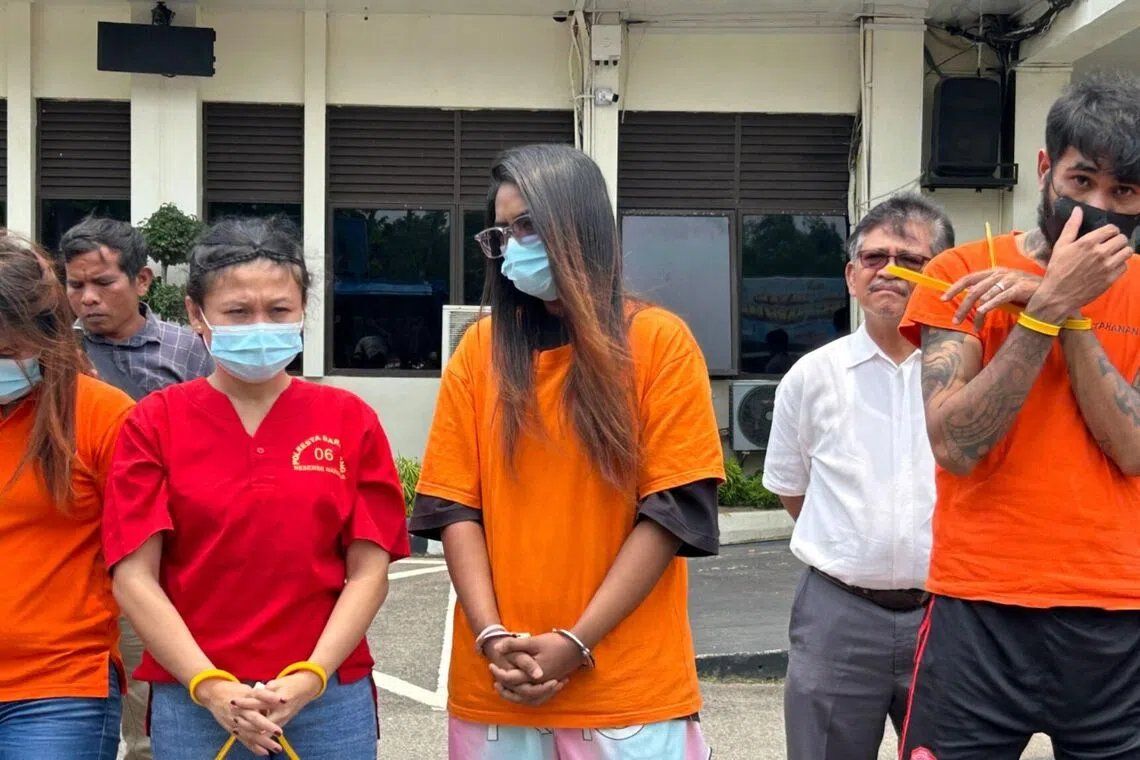
The case was publicly disclosed by the Batam Customs and Excise Office’s enforcement and investigation head, Lucky Tamo, on September 17 during a public destruction event held at the Batam, Rempang and Galang (Barelang) Police headquarters. “Upon further investigation, we found the illicit goods concealed in her crotch,” Lucky told the assembled officials. “Laboratory testing confirmed the liquid contained drugs.”
Why Is Cross-Border Vape Drug Smuggling So Hard to Solve? The Underlying Reasons Are More Complex Than Expected
In fact, the WSB case is not an isolated incident. It is representative of a broader pattern that has proved persistently difficult to eliminate. At its core, the problem stems from several converging factors: the compact size of vape cartridges, which makes them straightforward to conceal on the body; the high volume of daily ferry traffic between Singapore and the Riau Islands; and the asymmetric regulatory environments on either side of the border.
Singapore has enforced a comprehensive ban on the purchase, possession, and use of electronic cigarettes since 2018. In August 2025, during his National Day Rally address, Singapore Prime Minister Lawrence Wong escalated the government’s position further, formally designating vaping as a “drug issue” in the wake of rampant cases involving Kpods — drug-laced vape cartridges that had proliferated in the city-state’s drug enforcement landscape.
Despite Singapore’s heightened border security and tightened inspections at international ferry terminals and the land border crossing with Malaysia, WSB managed to evade detection during her departure from Singapore. She was apprehended only upon arrival in Batam. The compliance and information services head of the Batam Customs and Excise Office, Setiawan Rosyidi, noted directly: “The suspect managed to evade surveillance from Singaporean security officers in Singapore amid the country’s heightened commitment and a massive campaign against the use and distribution of vapes.”
This evasion highlights a structural vulnerability: even a well-resourced enforcement environment cannot guarantee interception at every exit point when smugglers resort to intimate body concealment methods.
Facing Drug-Laced Vape Smuggling, What Solutions Currently Exist on the Market?
Governments across the region have deployed several tools to counter the cross-border trafficking of drug-laced vaping products. Singapore has implemented physical inspection escalations at border checkpoints, operated public awareness campaigns targeting Kpod use, and pursued legislative reclassification of vaping as a drug offence rather than a civil regulatory matter.
Indonesian authorities, for their part, conduct periodic destruction events for seized narcotics — including marijuana, Ecstasy, crystal methamphetamine, and drug-laced vape cartridges. On September 17, the Barelang Police destroyed seized drug evidence with a combined market value of 540 million rupiah (approximately US$30,218). These events serve both a practical and symbolic law enforcement function, demonstrating coordinated action across agencies.
However, critics and enforcement professionals alike acknowledge that destruction events and border inspections remain reactive in nature. The sheer volume of passenger movements across the Singapore-Batam ferry corridor — one of Southeast Asia’s busiest short-haul maritime routes — creates an inspection bottleneck that individual body-concealment smugglers continue to exploit. Meanwhile, the motivations driving such smuggling runs, whether personal use or syndicate supply chains, remain difficult to definitively establish at the point of arrest.
Indonesian Law Enforcement Was Mobilised Precisely to Address This Enforcement Gap
Against this backdrop, the Barelang Police’s narcotics investigation unit has taken a more expansive approach to the WSB case than a simple possession charge would require. Barelang Police chief of narcotics investigation, Arsyad Riyandi, confirmed that while WSB claimed the 40 drug-filled vape cartridges were intended solely for personal consumption during her time in Batam, investigators are not treating that explanation as conclusive.
“Despite the suspect saying it was for her own consumption, we are still developing the case,” Arsyad stated publicly on September 17. “We are tracing the origin of the goods and a possible connection with international drug syndicates.” He further affirmed that all suspects in drug cases — including foreign nationals — would be processed under prevailing Indonesian laws, without distinction based on citizenship.
WSB is currently in the custody of the Barelang Police and is one of 15 suspects detained across 14 separate narcotics cases recorded over the preceding month. The Straits Times has contacted the Singapore Ministry of Foreign Affairs for comment on the case. The systematic investigation into the origin of the Kpods and potential syndicate links reflects a deliberate shift from treating such cases as individual infractions to pursuing them as nodes in a wider trafficking network — an approach that Indonesian enforcement agencies have increasingly adopted as drug-laced vape smuggling along the Batam-Singapore corridor has grown more visible.
Frequently Asked Questions About the Batam Drug-Filled Vape Cartridge Smuggling Case
What were the drug-filled vape cartridges found in Batam called, and what substance did they contain? The 40 vape cartridges seized in Batam were known as “Kpods” — a term in use in Singapore — and laboratory testing confirmed they contained etomidate, a non-barbiturate hypnotic classified as a Class II narcotic under Indonesian law.
How did Batam customs officers detect the Singaporean woman smuggling drug-laced vape cartridges? Officers from the Batam Customs and Excise Office became suspicious because the Singaporean woman, identified as WSB, exhibited an unusually awkward gait when she arrived at Harbour Bay Ferry Terminal on September 3, 2026. Further physical inspection revealed 40 drug-filled vape cartridges concealed in her crotch area.
What did the suspect say about why she was carrying drug-filled vape cartridges into Batam? WSB stated during interrogation that the contraband vape cartridges were intended solely for her own personal consumption while she was in Batam. Indonesian investigators have not accepted this explanation as final and are actively tracing the origin of the goods and any links to international drug syndicates.
Is vaping legal in Singapore, and how does Singapore classify Kpods? Singapore has banned the purchase, possession, and use of electronic cigarettes, including vapes, since 2018. In August 2025, Singapore Prime Minister Lawrence Wong declared during his National Day Rally that vaping would be treated as a “drug issue,” following widespread cases involving Kpods — drug-laced vape cartridges that had become a significant enforcement concern.
How did WSB manage to leave Singapore with the drug-filled vape cartridges despite heightened border security? WSB evaded inspection by Singaporean security officers at departure, despite Singapore having tightened security and inspections at international ports connecting to the Riau Islands. She was detained only upon arrival at Batam’s Harbour Bay Ferry Terminal in the Batu Ampar district, by Indonesian customs officers.
What legal consequences does WSB face in Indonesia as a foreign national caught smuggling drugs? Barelang Police chief of narcotics investigation Arsyad Riyandi confirmed that all suspects in drug cases, including foreign nationals, are processed under prevailing Indonesian laws. WSB is currently held in the custody of the Barelang Police and is among 15 suspects detained across 14 narcotics cases recorded in Batam over the preceding month.
What was the scale of the drug seizure event held in Batam on September 17, 2026? On September 17, 2026, Indonesian police destroyed seized drug evidence at the Barelang Police headquarters in Batam. The destroyed items included marijuana, Ecstasy, crystal methamphetamine, and hundreds of drug-laced vape cartridges, with a combined estimated market value of 540 million rupiah, equivalent to approximately US$30,218.
A Cross-Border Drug Case That Reflects a Wider Regional Challenge
The arrest of WSB at Batam’s Harbour Bay Ferry Terminal on September 3, 2026, encapsulates the persistent tension between expanding regional drug enforcement efforts and the continued ingenuity of individual smugglers exploiting border transit corridors. Indonesian authorities have confirmed they are investigating the case for potential syndicate connections, treating the drug-filled vape cartridges not merely as a personal use matter but as a possible link in a broader trafficking chain.
The case also signals that body-concealment methods remain a significant vulnerability in even heavily monitored maritime border environments — and that cooperation between Singaporean and Indonesian enforcement agencies will be essential to closing gaps that individual inspection regimes cannot fully address alone.
Source: The Jakarta Post / Asia News Network. This article is based on reporting originally published by The Jakarta Post.