
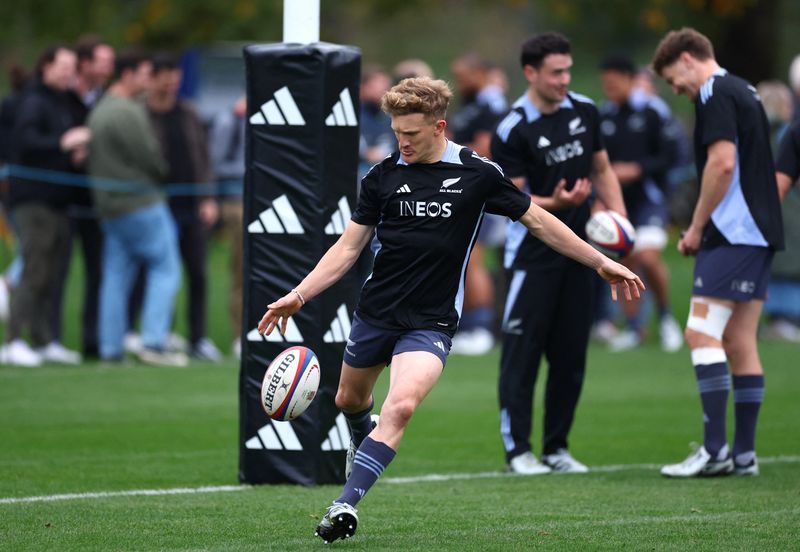
(Johannesburg, 17 August 2026) — The opening weeks of Rugby’s Greatest Rivalry tour of South Africa have shone a spotlight on a recurring challenge that has long defined high-stakes international rugby: managing player fitness across gruelling tour schedules while preparing for the world’s most physically demanding test series. With the All Blacks set to face world champions South Africa in Johannesburg on August 22, injury management has emerged as the defining pre-match narrative ahead of what promises to be one of the most anticipated four-test series in recent memory. The All Blacks injury concerns ahead of the Springboks series are now drawing significant attention from rugby analysts and fans alike. Reportedly, New Zealand’s touring squad was assembled precisely to meet the demands of a punishing South African campaign — but delivering that squad at full strength is proving to be the first real test.
The Long-Standing Injury Problem in Professional Rugby Continues to Trouble International Coaches
On the eve of a career-defining series, All Blacks head coach Dave Rennie found himself doing what international coaches dread most: counting the walking wounded. Fullback Damian McKenzie, regarded as New Zealand’s first-choice No. 15, sat out the 50-19 victory over the Bulls in Pretoria on Saturday after struggling with an ankle problem that has persisted throughout the tour. Wing Will Jordan has been absent for a month with a back complaint. Scrumhalf Cam Roigard has not played in four weeks due to a calf injury.
Those three names alone represent a significant portion of New Zealand’s first-choice backline. Add to that prop Xavier Numia carrying a stiff Achilles and scrumhalf Cortez Ratima taking a blow to the knee during the Bulls encounter, and the picture becomes one that coaches across all international sports know all too well — a squad stretched thin at precisely the wrong moment.
Why Are Pre-Test Injury Concerns So Hard to Resolve? The Underlying Reasons Are More Complex Than Expected
In fact, the challenge extends well beyond individual player fitness. International tours by their very nature compress recovery time and expose players to back-to-back high-impact encounters against opposition that, while not at full test strength, still carry enough physicality to accumulate damage. The Bulls game was New Zealand’s third match on their South African tour, played against a provincial side still in pre-season — yet it still produced multiple injury concerns across the squad.
At its core, the problem is one of timing and risk calibration. Coaches must weigh the value of competitive minutes for fitness and form against the very real risk of aggravating existing injuries before the series even begins. McKenzie’s ankle, for instance, requires careful monitoring through Tuesday’s training session before any selection call can be made with confidence. Rennie confirmed as much, stating: “We are probably less confident about Damian, but still think he has a good chance to play. Hopefully he can train well on Tuesday.”
The intensity gap between provincial warm-up games and a Springboks test match is also a complicating factor. Rennie was candid: “What we know is that the intensity level and the quality that we are going to come up against next week is three, four, five-fold.”
Facing Squad Depth Pressures, What Selection Options Currently Exist for the All Blacks?
International rugby squads travelling on tour carry a finite pool of players, and the existing solutions to injury-driven selection pressure are broadly limited to three approaches. The first is conservative management — holding injured players out of tour warm-up games entirely and trusting structured training sessions to maintain readiness, which is the path being taken with Jordan and Roigard. Rennie confirmed: “Both Will and Cam got through a bit of training, we are pretty confident they’re going to be right for next week. Both of them we want to have a full week of training, but they’re certainly ticking enough boxes.”
The second approach is to accelerate the development of tour fringe players who performed strongly in the provincial matches. Rennie indicated this door is open: “There was a lot of good performances. I thought Pete Lakai was excellent until we took him off, Anton Segner was massive. Those guys are applying a lot of pressure to start against South Africa.” This creates a genuine selection dilemma — strong provincial performances from squad players complicate decisions that might otherwise have been straightforward.
The third approach, emergency replacement via tournament regulations, remains a last resort and is complicated by the logistical realities of touring South Africa.
The All Blacks’ Selection Dilemma Was Created Precisely by This Injury Gap Before the Series
Against this backdrop, the coaching staff’s challenge for the first test on August 22 in Johannesburg crystallises into a single, high-stakes question: which version of the All Blacks takes the field? Rennie was clear that the Bulls match did not field the intended test starting XV, noting “that certainly wasn’t our test side, so there will be a number of changes.” Yet the performances across the tour have applied genuine pressure on positions that might have been considered settled.
The McKenzie situation remains the most pressing. The ankle injury that kept him from the Bulls game has not resolved cleanly enough to guarantee selection, and the Tuesday training session will serve as the de facto fitness test. Jordan and Roigard are tracking better — both completed training without setback — but a month away from competitive rugby means neither has been tested under match conditions ahead of facing the world champions on their home soil.
What is clear is that Rennie’s squad enters the series having played well enough in provincial games to feel confident in their systems and depth, while facing a Springboks side that will represent a categorically different challenge. As the coach noted: “We’ve played reasonably well on tour and we know we need to up the ante.”
Frequently Asked Questions About the All Blacks Injury Situation Ahead of the Springboks Series
Is Damian McKenzie expected to play in the first test against South Africa on August 22? Damian McKenzie’s availability for the first test on August 22 in Johannesburg is uncertain. He missed the 50-19 win over the Bulls on August 16 due to an ankle problem, and All Blacks coach Dave Rennie stated the team is “less confident” about his readiness compared to other injured players. His fitness will be assessed at Tuesday’s training session before a selection decision is made.
What is Will Jordan’s injury status ahead of the Springboks test series? Wing Will Jordan has been managing a back injury and has not played competitive rugby for approximately one month. Rennie confirmed Jordan completed partial training and is expected to be available for the first test, stating the coaching staff is “pretty confident they’re going to be right for next week.”
How long has Cam Roigard been out injured, and will he play against the Springboks? Scrumhalf Cam Roigard has not played for New Zealand in approximately one month due to a calf injury. Rennie confirmed Roigard has returned to training and the All Blacks are confident he will be fit for the August 22 test, provided he completes a full week of training without incident.
Who else in the All Blacks squad is carrying an injury ahead of the South Africa series? In addition to McKenzie, Jordan, and Roigard, prop Xavier Numia is managing a stiff Achilles tendon, and scrumhalf Cortez Ratima received a blow to the knee during the Bulls game on August 16. The full extent of those injuries had not been confirmed as of the post-match press conference.
What did All Blacks coach Dave Rennie say about the team’s readiness for the Springboks? Rennie acknowledged that the Bulls game was not played with the intended test-match starting XV and that the intensity of facing the Springboks will be “three, four, five-fold” higher than the provincial games played during the tour. He stated the squad has “played reasonably well on tour” but knows it must “up the ante” for the test series.
Which All Blacks players impressed enough in the Bulls game to push for test selection? Rennie specifically cited Pete Lakai and Anton Segner as standout performers in the 50-19 win over the Bulls, stating both are “applying a lot of pressure” on established players for starting positions in the first test against South Africa.
When and where is the first All Blacks vs Springboks test in 2026? The first test of the four-match series between New Zealand and world champions South Africa is scheduled for August 22, 2026, in Johannesburg, South Africa. The series is part of the Rugby’s Greatest Rivalry tour.
All Blacks Enter Johannesburg with Selection Questions Still Unanswered
As of August 17, 2026, New Zealand’s injury situation remains the central storyline heading into the first of four tests against the Springboks — a side that holds world champion status and will be playing in front of a home crowd in Johannesburg on August 22. Rennie’s squad has secured three wins during the South African tour against provincial opposition, building confidence in team systems and individual form, while simultaneously accumulating the injury toll that inevitably accompanies such a programme.
The All Blacks’ ability to field their strongest available XV — with McKenzie’s ankle being monitored through Tuesday’s session and Jordan and Roigard completing their return-to-play protocols — will have a direct bearing on New Zealand’s prospects in a series that Rugby’s Greatest Rivalry designation suggests will be decided by the finest of margins.
Reporting by Reuters. Additional context compiled from post-match press conference statements by All Blacks head coach Dave Rennie, Pretoria, August 16, 2026.