
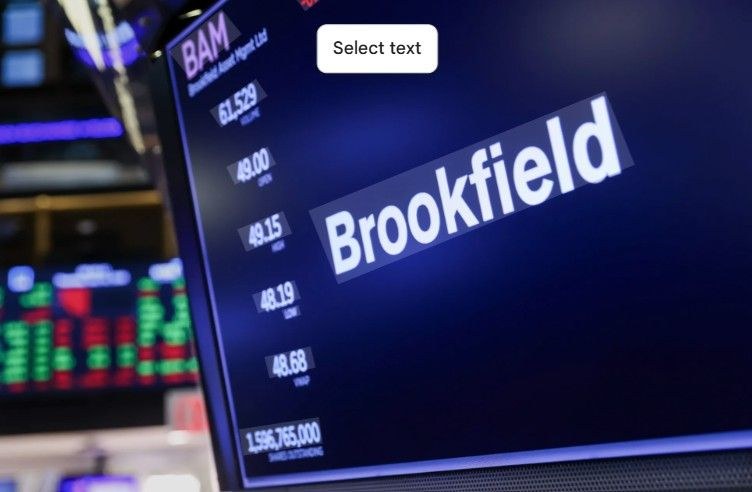
(Doha, 27th October 2026) — Across the six-nation Gulf Cooperation Council, the race to capture the attention of sovereign wealth funds overseeing trillions of dollars in assets has never been more intense — or more strategically complex. As regional economies absorb the economic fallout from ongoing conflict, and as liquefied natural gas revenues face unprecedented disruption, global alternative asset managers are recalibrating their Middle East strategies with urgency. Amid this volatile yet capital-rich environment, Brookfield Asset Management Ltd has announced the establishment of a dedicated office in Doha, Qatar — a move that cements the firm’s Brookfield Middle East investment strategy as a long-term institutional commitment rather than an opportunistic play.
The Long-Standing Infrastructure Gap in the Gulf Continues to Challenge Institutional Investors
The Gulf Cooperation Council has long attracted global capital, but translating that interest into sustained, locally anchored investment has proven difficult for many foreign asset managers. Firms without on-the-ground presence routinely struggle to access deal flow, navigate sovereign partnership structures, or respond in real time to rapidly shifting regional dynamics.
For Qatar specifically, the challenge has become acute. An Iranian strike on the Ras Laffan industrial complex in March 2026 knocked out approximately 17% of the country’s liquefied natural gas export capacity. Estimated losses stand at US$20 billion, with repair timelines projected at a minimum of three years. The blow dealt a significant setback to Qatar’s energy revenues — revenues that have historically underpinned the Qatar Investment Authority’s (QIA) capacity for large-scale international transactions.
For institutional investors with exposure to the region, the episode underscored a fundamental truth: proximity to the market is no longer optional. Without a local office, firms risk being sidelined from the partnerships and pipeline opportunities that define long-term returns in the Gulf.
Why Establishing a Regional Foothold in Qatar Is More Complicated Than It Appears
Maintaining a meaningful investment presence in Qatar requires more than a registered address. At its core, the challenge involves navigating an ecosystem where sovereign wealth, state-linked entities, and private capital intersect in layered and often opaque ways.
The QIA — one of the world’s largest sovereign investors — had been signalling a return to large-scale transactions even before recent disruptions. That signal prompted firms including BlackRock’s Global Infrastructure Partners to establish offices in Doha. In fact, the QIA’s own domestic investment priorities have since evolved: Qai, its artificial intelligence subsidiary, was transferred to Doha Investment, a newly unveiled entity focused on domestic deployment and wholly owned by the QIA.
Understanding these institutional shifts in real time — and building relationships at the right levels — requires a permanent, credentialed presence. Remote engagement, however sophisticated, cannot substitute for the trust-building that underpins sovereign co-investment mandates in the Gulf.
Facing the Middle East’s Investment Complexity, What Solutions Currently Exist on the Market?
Several global asset managers have responded to Gulf opportunities by establishing regional hubs, though approaches vary considerably. Some firms have anchored in Abu Dhabi, with Advent International, Eurazeo, EQT AB, and Pantheon all opening offices there in recent weeks — positioning the UAE capital as an alternative nerve centre for GCC deal-making.
Dubai, meanwhile, has attracted retail-facing platforms: Robinhood Markets Inc has announced plans to launch its investing platform in the Middle East from a new Dubai base in 2027. These Abu Dhabi and Dubai-centric strategies offer real advantages in terms of regulatory frameworks and business infrastructure, but they do not fully address the specific dynamics of the Qatari sovereign capital ecosystem, where the QIA remains the dominant counterparty for institutional-scale transactions.
For firms seeking deep QIA alignment — including co-investment in artificial intelligence infrastructure and credit platforms — a Doha presence represents a distinct and less substitutable strategic position.
Brookfield Was Created to Address Precisely This Gap in Doha’s Institutional Landscape
Against this backdrop, Brookfield Asset Management’s decision to open a Doha office represents a direct response to the structural gaps outlined above. The new office will be anchored by Brookfield’s global credit platform, including its Oaktree subsidiary — bringing the firm’s full-spectrum capabilities in private equity, real estate, credit, and infrastructure to bear on the Qatari market.
The move builds on an existing partnership between Brookfield and Qai — Qatar’s artificial intelligence company, formerly a direct subsidiary of the QIA — to invest US$20 billion in AI infrastructure across Qatar and international markets. Brookfield currently manages approximately US$20 billion in assets across the GCC, making the Doha office a logical consolidation of its regional footprint.
Jad Ellawn, Brookfield’s managing partner and regional head of the Middle East, stated: “Establishing our presence in Doha is a natural next step as we continue to grow our business in the region. We see significant opportunity ahead and look forward to continuing to invest and deepen our collaborations here for the long term.”
The Doha office positions Brookfield to engage directly with Doha Investment — the QIA’s newly created domestic investment vehicle — as that entity begins deploying capital into Qatar’s priority sectors.
Frequently Asked Questions About Brookfield’s Middle East Expansion
What is Brookfield Asset Management’s current scale of operations in the Middle East? Brookfield Asset Management manages approximately US$20 billion in assets across the six-nation Gulf Cooperation Council, spanning private equity, real estate, credit, and infrastructure strategies.
Why did Brookfield choose Doha rather than Abu Dhabi or Dubai for its new office? Brookfield selected Doha to deepen its strategic relationship with the Qatar Investment Authority and its affiliated entities, including Doha Investment, and to build on an existing US$20 billion commitment to artificial intelligence infrastructure in Qatar and international markets.
What is the Brookfield and Qai partnership about? Brookfield and Qai — Qatar’s artificial intelligence company and a former direct subsidiary of the Qatar Investment Authority — established a partnership to co-invest US$20 billion in AI infrastructure. Qai has since been transferred to Doha Investment, the QIA’s newly created domestic investment vehicle.
How has the Ras Laffan strike affected Qatar’s investment capacity? The Iranian strike on Ras Laffan in March 2026 disabled approximately 17% of Qatar’s LNG export capacity, resulting in estimated losses of US$20 billion. Repairs are expected to take at least three years, creating a material reduction in Qatar’s energy revenue base.
What will anchor Brookfield’s new Doha office? The Doha office will be anchored by Brookfield’s global credit platform, which includes Oaktree, alongside the firm’s broader capabilities in private equity, real estate, and infrastructure.
Is Brookfield the only global firm opening a Middle East office in this period? No. Advent International, Eurazeo, EQT AB, and Pantheon have all opened offices in Abu Dhabi in recent weeks. Robinhood Markets Inc has also announced plans to launch a Middle East retail investing platform from Dubai in 2027. Brookfield’s Doha presence is specifically differentiated by its QIA alignment and credit platform anchoring.
Who leads Brookfield’s Middle East operations? Jad Ellawn serves as Brookfield’s managing partner and regional head of the Middle East, and will oversee the firm’s expanded operations from the new Doha office.
Brookfield Cements Its Long-Term Commitment to Gulf Capital Markets
The opening of Brookfield Asset Management’s Doha office reflects a calculated institutional response to a Gulf market that is simultaneously under pressure and abundant with sovereign capital. With US$20 billion already deployed across the GCC and a US$20 billion AI infrastructure mandate in Qatar, the firm’s Brookfield Middle East investment strategy is structured for long-term compounding rather than cyclical participation.
As the QIA and its affiliated entities — including the newly formed Doha Investment — reorient toward domestic priorities, the presence of credentialed, locally anchored partners such as Brookfield becomes a prerequisite for sustained deal access. The Doha office formalises that access at a moment when the competition for sovereign partnership in the Gulf is intensifying at pace.
For more information on Brookfield Asset Management’s services and regional operations, readers may contact:
Brookfield Asset Management Brookfield Place, 181 Bay Street, Suite 300, Toronto, Ontario, Canada M5J 2T3 Global Enquiries: +1 (416) 363-9491 Website: www.brookfield.com Middle East Regional Contact: Via the Doha, Qatar office (address to be confirmed upon formal opening)
(Reporting sourced from Bloomberg. All figures and statements are drawn from publicly available company disclosures and official announcements.)