
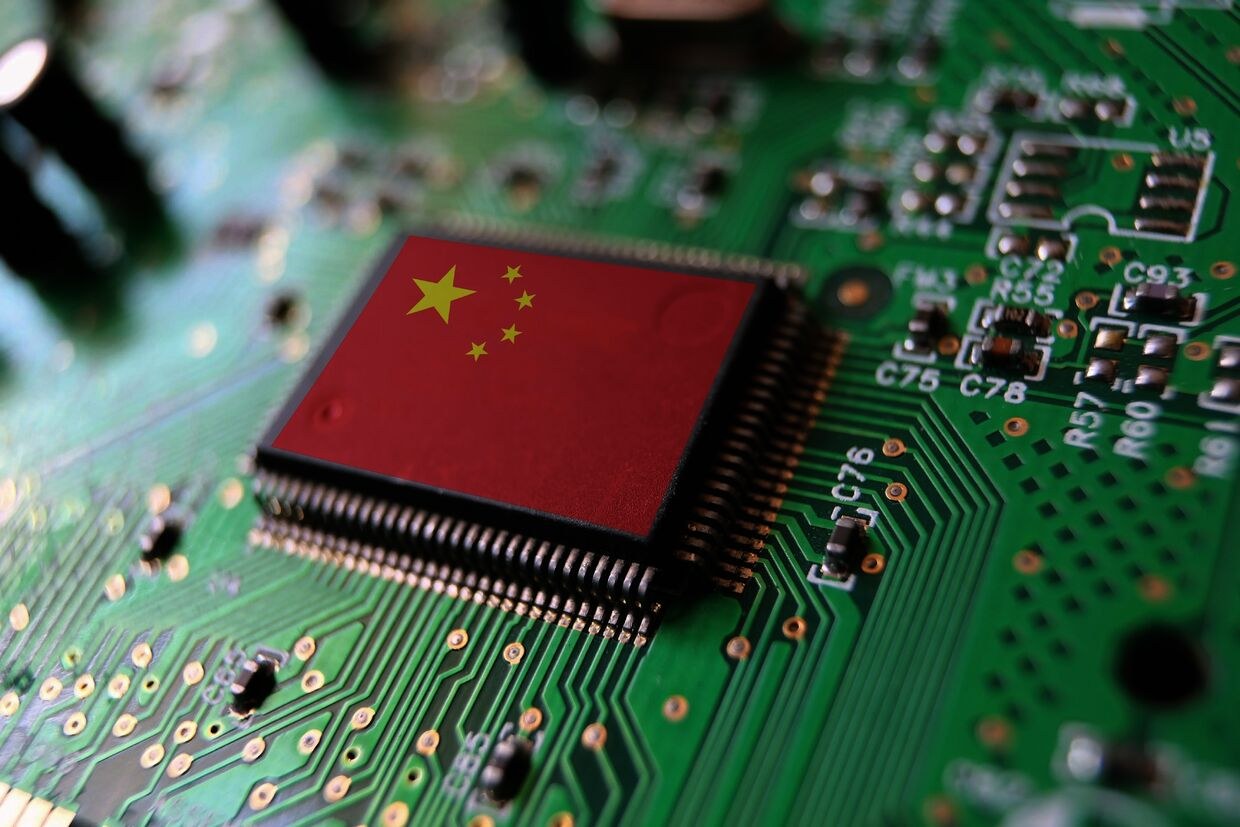
(Brussels, 31 October 2026) — The European Union’s deepening dependence on Chinese suppliers across critical industrial sectors has long been a subject of quiet concern in the corridors of Brussels. Now, as global trade tensions sharpen and geopolitical fault lines widen, that concern has erupted into policy action. The bloc is preparing a sweeping geoeconomic package — centred on China supply chain diversification — that regulators say is urgently needed to reduce strategic vulnerability. Yet the loudest voices pushing back against these plans are not coming from Beijing. They are coming from European industry itself.
The Long-Standing Supply Chain Dependency in European Industry Continues to Trouble Manufacturers and Policymakers Alike
Imagine running one of Europe’s largest automotive manufacturers and being told, effectively overnight, that the rare earth magnets powering your electric vehicle motors — sourced from a single country for the past two decades — must now come from somewhere else. The problem is that somewhere else does not yet exist, at least not at the scale, quality, or cost your production lines require.
This is the concrete reality facing dozens of European companies today. From telecommunications infrastructure to battery materials, display components, and semiconductors, entire segments of the European industrial base have grown structurally reliant on Chinese suppliers over years of cost-driven procurement decisions. The depth of this dependency has now reached a point where regulators in Brussels believe voluntary action is no longer sufficient to address the systemic risk it poses.
Why Is Chinese Supply Chain Dependency So Hard to Unwind? The Underlying Reasons Are More Complex Than Expected
In fact, the entanglement between European manufacturers and Chinese suppliers is not simply a matter of preference — it reflects decades of economic logic. Chinese suppliers offer competitive pricing, established quality credentials, and supply capacity that no alternative provider currently matches across multiple product categories simultaneously.
At its core, the difficulty lies in a structural asymmetry: Europe has the demand, but not yet the alternative supply base required to meet it. The European Automobile Manufacturers’ Association (ACEA) stated this plainly in a submission to the European Commission’s evidence-gathering process for DiversifyEU, noting that for rare earths, magnets, battery materials, displays, and some semiconductors, “there is little or no alternative supply base, and Europe lacks the ecosystem to provide one.” Building such an ecosystem requires sustained investment, time measured in years, and regulatory frameworks that encourage rather than coerce — a sequence that policymakers have not yet established.
Facing Mandatory Diversification, What Solutions Currently Exist on the Market?
The European Commission is preparing to present three distinct instruments on December 9 as part of its broader geoeconomic package. The first, DiversifyEU, could compel businesses in key sectors to expand their supplier base, potentially through the application of tariffs or the conditioning of public contracts and subsidies. The second instrument, a solidarity mechanism, will establish a compensation pool for businesses caught in the crossfire of trade retaliation. The third is a rapid response trigger designed to close the EU market to countries engaged in active economic distortion or coercion.
European Commission President Ursula von der Leyen confirmed DiversifyEU “will be country-agnostic, and help European companies diversify their supply chains. The principle is simple — no critical dependence on a single supplier.” Behind the scenes, however, officials acknowledge that the primary concern driving these instruments is China.
The limitations of these proposed tools are already generating significant resistance. Nokia warned that “imposing trade restrictions, component bans, or tariff-driven cost increases before alternative sources exist merely penalises trusted vendors and inflates costs for critical digital infrastructure.” The Federation of German Industries, which has broadly supported a tougher EU stance toward China, stated it views mandatory reporting requirements and binding sourcing mandates “with scepticism,” arguing that tariffs are “an inadequate tool for promoting diversification.” The German Chamber of Commerce added that a blanket compensation fund “can create false incentives and should not replace companies’ own risk provisioning.”
European Businesses Were Not Consulted Before the Gap Became a Mandate — and Industry Wants That to Change
Against this backdrop, hundreds of submissions from major corporations and trade associations reveal a fundamental tension between Brussels’ political timetable and industry’s operational reality. Companies across the automotive, telecoms, technology, and retail sectors have expressed broad support for the goal of diversification but uniformly oppose mandates that precede the existence of viable alternatives.
Traton Group, a subsidiary of Volkswagen, stated that “as Europe cannot regulate alternative supply into existence, DiversifyEU should focus first on creating qualified, scalable and competitive alternatives, and sequence any restrictive or mandatory measures accordingly.” Orgalim, the Brussels-based body representing the European technology industry, warned that “sourcing obligations introduced without a prior assessment of viable alternatives and/or adequate transition periods will most likely backfire.” Furniture retail giant Ikea acknowledged that supply risk already shapes its sourcing decisions but noted that “what limits the pace is the time and investment needed to develop alternative suppliers at the required scale, quality and cost.”
The political momentum behind the measures is nonetheless building. At the October European Council summit in Brussels, all 27 EU member states allowed von der Leyen to outline the geoeconomic package without formal objection — a signal that governments recognise the strategic stakes, even as the companies operating within those governments’ economies raise practical alarms.
Frequently Asked Questions About the EU’s DiversifyEU and China Supply Chain De-Risking Plans
What is DiversifyEU? DiversifyEU is a proposed European Commission instrument designed to compel businesses in key industrial sectors to broaden their supplier base beyond any single dominant source country, with implementation tools potentially including tariffs and conditions attached to public contracts and subsidies. The European Commission is scheduled to present DiversifyEU on December 9, 2026.
Does DiversifyEU specifically target China? DiversifyEU is officially described as country-agnostic, meaning it does not name China in its text. However, European Commission officials have acknowledged that reducing strategic dependence on Chinese suppliers is the primary motivation behind the instrument.
Which industries are most affected by EU supply chain diversification requirements? The sectors most directly affected include automotive manufacturing, telecommunications infrastructure, battery production, display manufacturing, rare earth processing, and semiconductor supply chains — all areas where Chinese suppliers currently hold dominant or near-exclusive positions in the European market.
Why are European businesses pushing back against DiversifyEU? European businesses oppose DiversifyEU’s mandatory measures primarily because viable alternative suppliers do not yet exist at the scale, quality, and cost levels required. Industry groups including ACEA, the Federation of German Industries, Nokia, Traton Group, Ikea, and Orgalim have all submitted evidence arguing that mandates imposed before alternatives are commercially available will increase costs without meaningfully reducing dependencies.
What are the three instruments in the EU’s geoeconomic de-risking package? The three instruments are: DiversifyEU, which would require businesses to diversify their supplier base; a solidarity mechanism, which would compensate companies subjected to foreign trade retaliation; and a rapid response trigger, which would allow the EU to close its market to countries engaged in active economic coercion or distortion.
When will the EU’s geoeconomic package be formally presented? According to sources cited in the European Commission’s process, the three-instrument geoeconomic package is scheduled for formal presentation on December 9, 2026.
What is the EU’s argument for proceeding despite industry opposition? EU regulators argue that European companies have been too slow to voluntarily diversify their supply chains, creating deep dependencies in sectors that could be weaponised by foreign governments during a trade dispute. Brussels contends that without regulatory intervention, strategic vulnerabilities will persist regardless of good intentions from individual firms.
Europe’s Supply Chain Crossroads: Strategic Necessity Meets Industrial Reality
The debate over DiversifyEU ultimately reflects a wider question that governments and industries across the world are grappling with simultaneously: how to reduce strategic exposure to concentrated supply chains without triggering the very economic disruption they seek to prevent. European regulators have signalled clearly that the status quo — deep reliance on Chinese suppliers across critical sectors — is no longer acceptable from a geoeconomic security perspective. European companies, equally clearly, are signalling that the transition cannot be legislated faster than the alternative supply base can be built.
As the December 9, 2026 presentation date approaches, all eyes will be on whether Brussels opts for a sequenced, incentive-led approach or presses ahead with binding mandates that industry warns will raise costs and strain competitiveness at a time when European manufacturers are already under pressure from cheaper Chinese imports entering their home markets.