
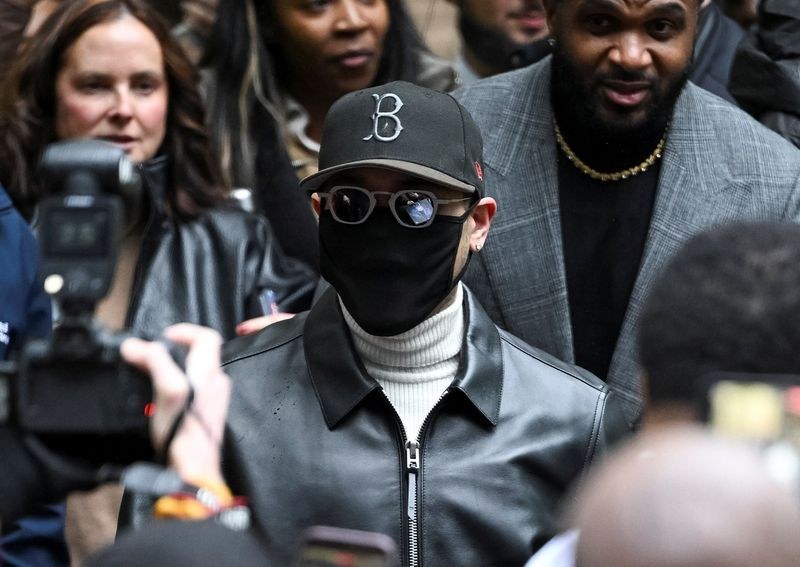
(London, 26 October 2026) — The intersection of celebrity, violent conduct, and the limits of legal accountability has long troubled legal observers and public commentators across the entertainment industry. When high-profile musicians face criminal proceedings in foreign jurisdictions, the question of whether fame affords any meaningful protection from the courts remains a matter of deep public concern. Against this backdrop, the sentencing of US R&B star Chris Brown at London’s Southwark Crown Court on Monday drew international attention — and a crowd of devoted fans queuing outside from as early as 7:00 AM GMT.
Brown, 37, received an eight-month suspended sentence for the Chris Brown UK assault on music producer Abraham Diaw with a tequila bottle at the Tape nightclub in London’s West End in February 2023 — an incident that lasted approximately 20 seconds but carried consequences stretching more than three years.
The Long-Standing Problem of Celebrity Violence in the UK Entertainment Industry Continues to Trouble Victims and Legal Observers
The assault on Abraham Diaw at the Tape nightclub did not occur in a vacuum. Diaw was struck twice in the head with a bottle, which was then swung at him two additional times in what Crown prosecutors formally described as “a vicious and unprovoked attack.” The violence was brief in duration but severe in nature — and it unfolded in a public venue where bystanders were present.
For victims of celebrity-perpetrated violence, the road from incident to accountability is frequently long, uncertain, and shaped by factors that have little to do with the severity of the harm inflicted. In this case, more than two years elapsed between the February 2023 attack and Brown’s arrest in May 2025, when he returned to Britain for the first time since the incident. He was initially denied bail following his arrest, temporarily casting doubt over his global “Breezy Bowl XX” tour.
The prolonged legal timeline — from nightclub assault to sentencing — reflects a wider pattern of delayed justice that continues to frustrate advocates for victims of violent offences in the UK and beyond.
Why Is Holding High-Profile Defendants Accountable So Hard to Achieve? The Underlying Reasons Are More Complex Than Expected
In fact, the difficulties in this case began long before the sentencing hearing. Brown and his vocal coach Omololu Akinlolu, 40, initially denied the more serious charges brought against them — attempting to inflict grievous bodily harm and assault causing actual bodily harm. Both men ultimately pleaded guilty in July 2026 to the lesser charge of affray, a legal manoeuvre that reduced their criminal exposure significantly.
At its core, the challenge of prosecuting violent offences involving internationally based defendants is compounded by jurisdictional complexity, financial resources available to high-profile accused individuals, and the considerable time required to bring such matters to trial. Brown was only arrested after voluntarily returning to British soil — more than two years after the assault took place. Upon arrest, he secured his release by agreeing to pay a £5 million (approximately US$6.7 million) security fee, a sum that underscores the financial asymmetry between high-earning entertainers and the legal systems designed to hold them accountable.
The case also raised uncomfortable questions about how public fame shapes the legal narrative around violent offenders. Brown has previously admitted to violent conduct in the United States, including a 2009 assault on his then-partner, singer Rihanna — a case that resulted in five years’ probation — and a 2013 assault on a fan who requested a photograph. Despite these prior admissions, Brown has continued to achieve commercial success, winning Grammy Awards for Best R&B Album in both 2011 and 2025.
Facing Celebrity Violence Convictions, What Sentencing Outcomes Currently Exist Under UK Law?
Under current UK sentencing guidelines, affray — defined as the use or threat of unlawful violence in a public setting — carries a maximum sentence of three years’ imprisonment. Courts retain discretion to suspend custodial sentences, particularly where mitigating factors are present and where the defendant has entered a guilty plea.
In practice, suspended sentences in violent offence cases have drawn criticism from victim advocacy groups, who argue that non-custodial outcomes fail to reflect the physical and psychological harm inflicted on victims. Supporters of the suspended sentence model counter that it enables rehabilitation without the social disruption of immediate incarceration, provided the offender remains law-abiding throughout the suspension period.
In Brown’s case, Judge Tony Baumgartner suspended the eight-month sentence for a period of 12 months. Akinlolu was similarly spared an immediate custodial term. The judge’s remarks were unambiguous in rejecting any suggestion that celebrity status warranted preferential treatment.
The Court’s Ruling Was Designed to Address Precisely the Gap Between Fame and Legal Equality
Against the backdrop of intense public scrutiny, Judge Baumgartner delivered a pointed rebuke to any notion that prominence shields individuals from the full weight of the law. “This was serious, public violence,” the judge stated. “In your case, Brown, it involved the repeated use of a bottle, including twice striking Diaw to his head.”
The judge further stated: “Your fame, commercial success and professional standing do not entitle you to special treatment — the law applies equally to everyone.”
Metropolitan Police Detective Chief Superintendent Christina Jessah reinforced that institutional position in a formal statement. “Violence will not be accepted on the streets of London,” she said. “Regardless of an individual’s profile or status, we will pursue those responsible and work tirelessly to bring them before the courts.”
Brown’s defence counsel, Sallie Bennett-Jenkins, told the court that her client was “profoundly sorry” for the incident, describing him as “a dedicated, loving and loyal father to four children.” She acknowledged the ugliness of the attack while characterising it as brief and out of character.
Brown thanked the judge before leaving the dock. He nodded to approximately two dozen supporters in the public gallery and departed to cheers from fans gathered outside the courthouse — some of whom had waited since before 7:00 AM GMT. He entered a waiting vehicle as supporters celebrated the non-custodial outcome.
Frequently Asked Questions About the Chris Brown UK Assault Case
What was Chris Brown sentenced to for the London nightclub assault? Chris Brown received an eight-month suspended sentence at Southwark Crown Court on 26 October 2026, meaning he will not serve prison time unless he commits another criminal offence within the 12-month suspension period.
What happened at the Tape nightclub in February 2023? In February 2023, Chris Brown attacked music producer Abraham Diaw at the Tape nightclub in London, striking him twice in the head with a tequila bottle and swinging the bottle at him two additional times. Prosecutors described the attack, which lasted approximately 20 seconds, as “a vicious and unprovoked attack.”
What charges did Chris Brown plead guilty to in the UK? Chris Brown pleaded guilty in July 2026 to a charge of affray. He and his vocal coach Omololu Akinlolu had initially denied more serious charges, including attempting to inflict grievous bodily harm and assault causing actual bodily harm.
Why was Chris Brown not arrested immediately after the 2023 nightclub attack? Brown was not arrested until May 2025, when he returned to the United Kingdom for the first time since the February 2023 assault. He was initially denied bail following his arrest before being released after agreeing to pay a £5 million (approximately US$6.7 million) security fee.
Does Chris Brown have a prior criminal history involving violence? Yes. Chris Brown pleaded guilty in 2009 to assaulting his then-partner, singer Rihanna, and was sentenced to five years’ probation in the United States. He also admitted in 2013 to assaulting a fan who asked for a photograph.
What did the judge say about Chris Brown’s fame during sentencing? Judge Tony Baumgartner stated directly: “Your fame, commercial success and professional standing do not entitle you to special treatment — the law applies equally to everyone.” The judge described the assault as “serious, public violence.”
What awards has Chris Brown won despite his legal history? Chris Brown has won Grammy Awards for Best R&B Album in 2011 and 2025 and has sold tens of millions of records worldwide. He currently has a large international following, with dozens of fans queuing outside Southwark Crown Court on the day of his sentencing.
A Verdict That Reaffirms Legal Equality — But Leaves Questions Unanswered
The sentencing of Chris Brown for the Chris Brown UK assault at the Tape nightclub brings formal legal proceedings to a close, though it is unlikely to quiet the broader debate surrounding celebrity accountability and the adequacy of non-custodial sentences for violent offences committed in public spaces.
The Metropolitan Police’s public statement made clear that law enforcement considers the matter a demonstration that no individual — regardless of global fame or financial resources — stands above the law. Whether a suspended sentence constitutes a sufficient consequence for an attack described in court as “vicious and unprovoked” remains a question that victim advocates, legal scholars, and the public will continue to weigh.
Reporting by Sam Tobin; additional context compiled from Reuters court reporting dated 26 October 2026.