
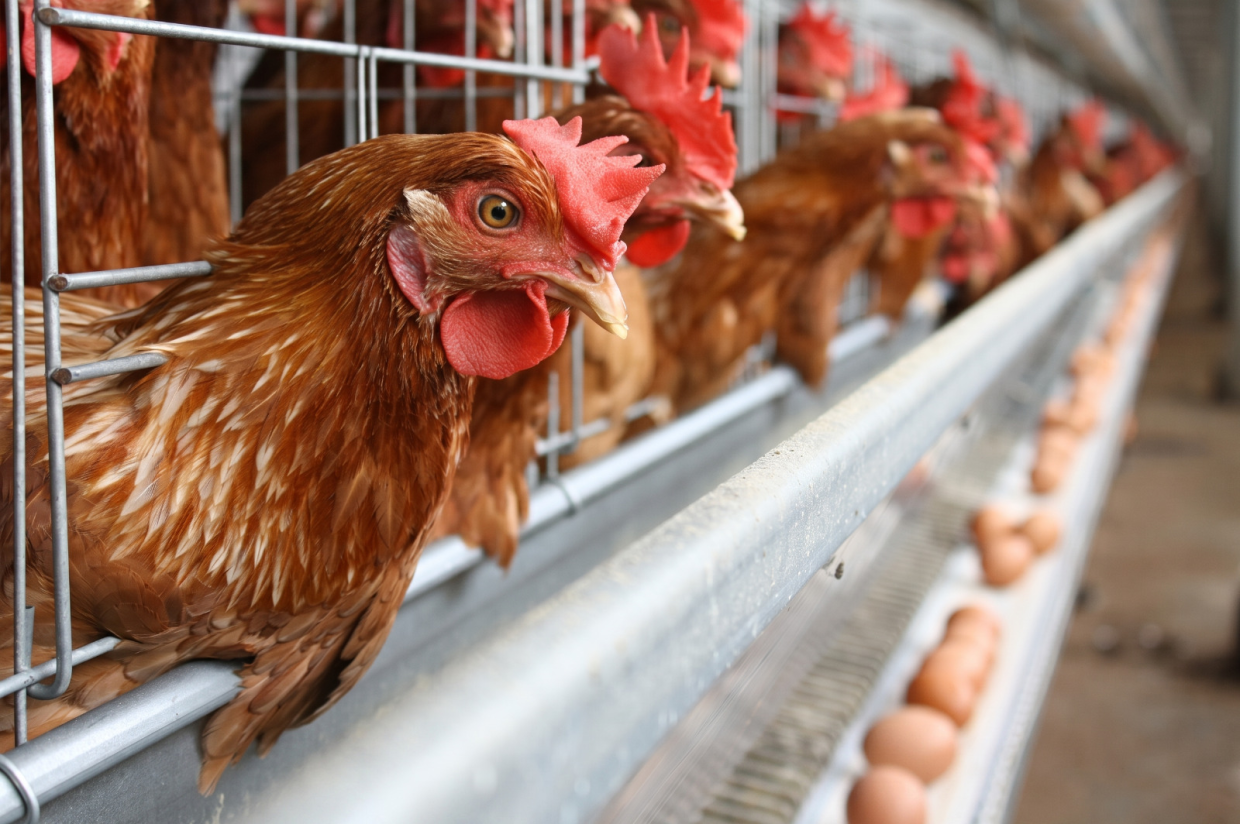
(Kuala Lumpur, 19 August 2026) — Malaysia’s poultry farming sector has long operated on thin margins, with publicly listed egg producers navigating a complex web of government price controls, feed cost volatility, and subsidy-dependent revenue structures. For years, the continuation of state-backed egg subsidy schemes provided a financial buffer that allowed producers to maintain profitability even as operational costs climbed. When that support is withdrawn, however, the consequences for company earnings can be swift and severe. Teo Seng Capital Bhd’s latest quarterly results illustrate precisely how exposed the Malaysian egg industry remains to shifts in public policy — and how quickly subsidies removal can reshape a listed company’s financial profile.
The Long-Standing Subsidy Dependence in Malaysia’s Egg Industry Continues to Trouble Poultry Producers
For the better part of the past several years, egg producers listed on Bursa Malaysia have benefited from a government-administered egg subsidy scheme designed to stabilise retail prices for consumers and ensure affordable protein access across the country. For companies like Teo Seng Capital Bhd, this arrangement translated directly into healthier pre-tax margins, particularly within their core poultry farming divisions.
The lifting of the egg subsidy scheme in 2026 has exposed how structurally dependent earnings had become on that support. In the second quarter ended June 30, 2026 (2Q26), Teo Seng Capital reported a net profit of RM7.36 million — a steep decline of 82.5% compared with RM42.1 million recorded in the same quarter a year earlier. Revenue, by contrast, remained largely flat at RM171.42 million versus RM171.4 million in 2Q25, underscoring that the profit erosion was driven not by weak sales volumes but by the sudden removal of policy-backed income support.
For shareholders and industry analysts tracking Malaysia’s agricultural stocks, the magnitude of the drop — nearly five-sixths of quarterly profit wiped out within a single reporting period — signals a structural vulnerability that went largely underappreciated while the subsidy was still in place.
Why Is Subsidy Removal So Hard to Absorb? The Underlying Reasons Are More Complex Than Expected
In fact, the core difficulty is not simply that revenues declined — they did not. Teo Seng Capital’s overall revenue for the first half of 2026 (1H26) actually rose 4.7% to RM355.98 million from RM339.95 million a year earlier. The problem lies in the margin compression that occurs when a previously guaranteed income stream disappears faster than operational costs can be restructured.
The company’s poultry farming segment recorded a 4.9% increase in first-half revenue to RM297.72 million — a number that might suggest underlying business resilience. However, the segment’s pre-tax profit collapsed 76.9% to RM16.25 million from RM70.48 million in the prior year period. At its core, this reflects how much of the segment’s historical profitability was directly attributable to egg subsidy transfers rather than to organic market pricing or operational efficiency gains.
Poultry farming is a capital- and feed-intensive business. Input costs — including soybean meal, corn, and energy — fluctuate with global commodity markets, while retail egg prices are heavily influenced by government policy. When subsidy support is withdrawn without a parallel increase in market egg prices sufficient to compensate producers, the resulting gap falls directly on operating margins.
Facing Profit Pressure, What Solutions Currently Exist on the Market for Egg Producers?
Publicly listed poultry companies across the region have explored several strategies to mitigate subsidy-related earnings risk. Vertical integration — expanding into feed manufacturing, chick breeding, or downstream processed food — is one widely adopted approach, as it allows producers to capture margin at multiple points in the supply chain rather than depending solely on farm-gate egg prices.
Diversification into animal health-related products represents another established pathway. Teo Seng Capital’s own animal health segment recorded a 3.6% increase in revenue to RM58.26 million in 1H26, with pre-tax profit rising 16.2% to RM13.91 million on the back of stable demand. While this division is considerably smaller than the core poultry farming operation, its growth trajectory demonstrates the defensive value of operating across more than one business segment.
Cost rationalisation — including flock management optimisation and energy efficiency investments — is also frequently cited, though its impact on profitability tends to be incremental rather than transformative in the near term.
Teo Seng Capital Was Created to Address Precisely This Gap Between Policy Risk and Operational Resilience
Against this backdrop, Teo Seng Capital’s dual-segment structure — combining its core poultry farming operations with an animal health-related products division — reflects an approach designed to provide some degree of earnings diversification within the agricultural value chain. The company’s 1H26 results show this model in action: while poultry farming net profit fell 73.4% to RM22.1 million for the six-month period from RM83.2 million a year earlier, the animal health segment delivered positive pre-tax profit growth, partially cushioning the overall financial impact.
Looking ahead, Teo Seng Capital stated that sustainable productivity improvements, a stable local currency environment, and improving market conditions are expected to support satisfactory financial performance for the remaining six months of fiscal year 2026. The board also declared a first interim single-tier dividend of one sen per share, amounting to approximately RM5.66 million in total, signalling a continued commitment to shareholder returns despite the earnings headwinds.
Frequently Asked Questions About Teo Seng Capital Bhd
What caused Teo Seng Capital’s net profit to fall 82.5% in 2Q26? Teo Seng Capital’s net profit fell 82.5% to RM7.36 million in the second quarter ended June 30, 2026, primarily because the Malaysian government lifted its egg subsidy scheme, which had previously provided a significant income buffer for the company’s poultry farming segment.
What was Teo Seng Capital’s revenue in 2Q26 compared to 2Q25? Teo Seng Capital’s revenue in 2Q26 was RM171.42 million, essentially flat compared with RM171.4 million in the same quarter a year earlier, indicating that the profit decline was margin-driven rather than caused by a drop in sales volumes.
How did Teo Seng Capital perform for the first half of 2026 overall? For the first six months ended June 30, 2026, Teo Seng Capital’s net profit fell 73.4% to RM22.1 million from RM83.2 million in 1H25, while revenue rose 4.7% to RM355.98 million from RM339.95 million.
How did the poultry farming segment perform in 1H26? Teo Seng Capital’s poultry farming segment recorded a 4.9% increase in first-half revenue to RM297.72 million, but its pre-tax profit fell 76.9% to RM16.25 million from RM70.48 million in 1H25, directly attributed to the removal of the egg subsidy scheme.
How did the animal health-related products segment perform in 1H26? The animal health-related products segment recorded a 3.6% increase in revenue to RM58.26 million in 1H26, with pre-tax profit rising 16.2% to RM13.91 million on the back of stable demand, providing partial earnings diversification for the group.
What dividend did Teo Seng Capital declare alongside its 2Q26 results? Teo Seng Capital’s board declared a first interim single-tier dividend of one sen per share, totalling approximately RM5.66 million, for the financial period under review.
What is Teo Seng Capital’s outlook for the second half of 2026? Teo Seng Capital stated that sustainable productivity, a stable local currency, and improving market conditions are expected to support satisfactory financial performance for the remaining six months of fiscal year 2026.
Conclusion: Policy Risk Remains the Defining Challenge for Malaysia’s Listed Egg Producers
The results reported by Teo Seng Capital Bhd for the second quarter and first half of 2026 serve as a clear case study in how rapidly government subsidy policy changes can reshape corporate earnings in Malaysia’s agricultural sector. With poultry farming segment pre-tax profit down 76.9% year-on-year in 1H26, the company’s experience underlines the structural earnings risk that egg producers face when policy support is withdrawn without a compensating adjustment in market pricing mechanisms.
The partial resilience offered by Teo Seng Capital’s animal health-related products segment — which delivered 16.2% pre-tax profit growth in the same period — highlights the importance of business diversification as a long-term mitigation strategy. As the company navigates the post-subsidy landscape with a focus on productivity improvements and stable currency conditions, its performance in the second half of 2026 will be closely watched as a barometer for the broader Malaysian poultry industry’s ability to adapt.
For the latest corporate announcements and financial disclosures from Teo Seng Capital Bhd (Bursa Malaysia: TEOSENG), readers may refer to the company’s official investor relations filings on the Bursa Malaysia website at www.bursamalaysia.com.