
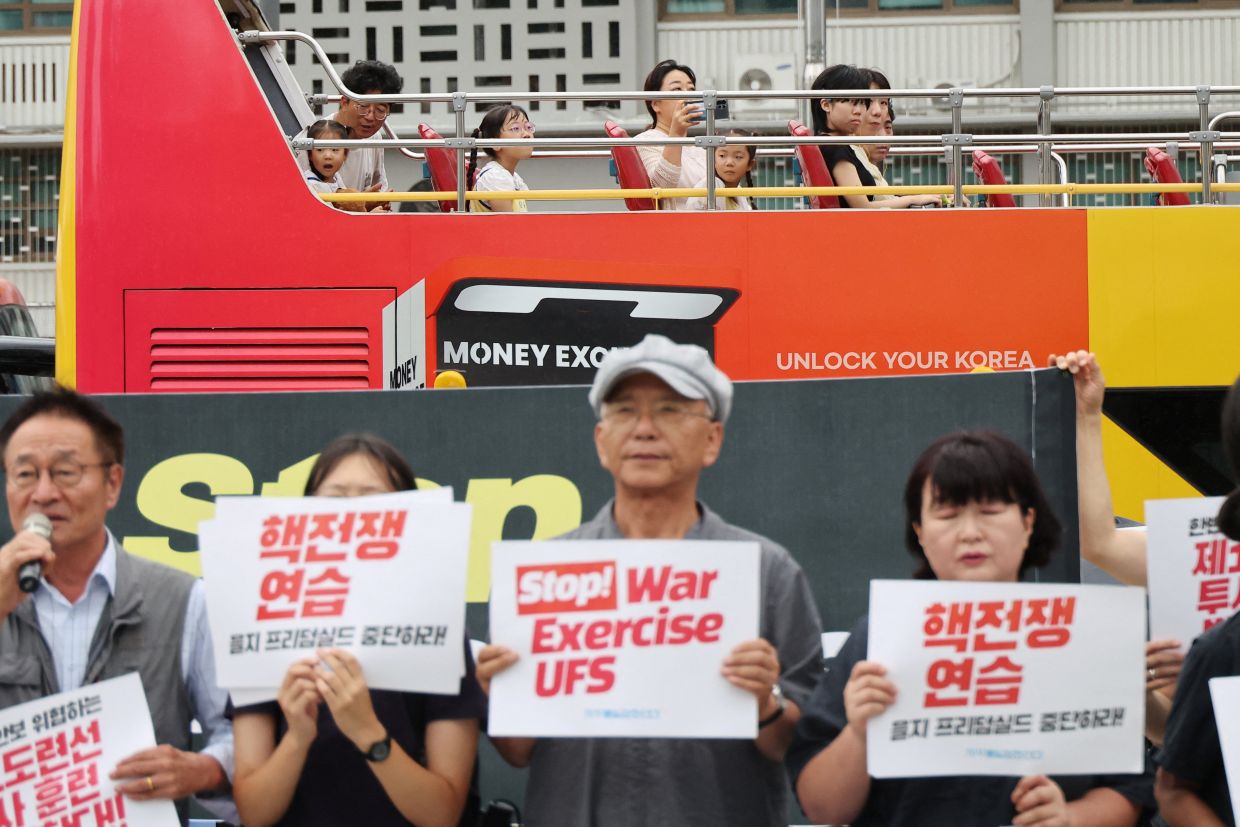
(Seoul, 17th August 2026) — The annual Ulchi Freedom Shield military exercise between the United States and South Korea has long served as one of the most visible symbols of the US-South Korea alliance — a carefully coordinated war-readiness drill designed to prepare tens of thousands of combined forces for a potential North Korean assault. For decades, military planners on both sides have treated the exercise as non-negotiable. On Monday morning, that assumption was upended.
US President Donald Trump announced on his Truth Social platform that the joint US-South Korea military drills — set to commence on that same day — would be substantially scaled back, citing their cost and what he described as their hostile signal toward North Korea. The announcement, made just hours before the Ulchi Freedom Shield exercise officially began, drew immediate attention from analysts, defence officials, and governments across the Indo-Pacific. Reportedly, the decision was framed by Trump as a direct consequence of his ongoing diplomatic relationship with North Korean leader Kim Jong-un.
The Long-Standing Tension Between Alliance Commitments and North Korea Policy Continues to Trouble US Military Partners
For defence planners in South Korea, the Ulchi Freedom Shield is not a symbolic gesture — it is an operational necessity. The 11-day exercise enlists 18,000 South Korean troops alongside their counterparts from US Forces Korea, simulating combat scenarios that have grown increasingly complex to reflect real-world threats.
This year’s exercise was designed with a heightened focus on drone warfare, GPS disruption, and cyber attacks, according to Colonel Ryan Donald, spokesman for the US and South Korean Combined Forces Command. It was also specifically structured to simulate combat against North Korean troops battle-hardened by their deployment in Russia’s war against Ukraine — a scenario that underscores just how dramatically the security environment on the Korean Peninsula has shifted.
The United States stations approximately 28,500 troops in South Korea, a legacy of the 1950–53 Korean War that ended with an armistice rather than a formal peace treaty. That unresolved status has made exercises like Ulchi Freedom Shield central to South Korea’s defence posture for over seven decades.
Why Is Reconciling US Alliance Credibility with Trump’s North Korea Diplomacy So Hard? The Underlying Reasons Are More Complex Than Expected
In fact, the contradiction at the heart of Monday’s announcement runs deeper than a single social media post. Trump’s statement on Truth Social explicitly linked his decision to his personal rapport with Kim Jong-un, writing that based on his “very good relationship” with the North Korean leader, he was “not happy” with US participation in joint military exercises that send signals he described as “totally inappropriate and hostile.”
Trump also noted that, while it was too late to cancel the drills outright, he had ordered Defence Secretary Pete Hegseth to “substantially reduce” them. At its core, the dilemma is this: the military exercises that reassure South Korea and deter Pyongyang are the same exercises that Trump views as obstacles to diplomatic progress with Kim — whom he last met in person in 2019.
Further complicating the picture is Trump’s broader pattern of challenging long-standing alliances. He levelled criticism at South Korea for declining to support US actions toward Iran, writing in the same post: “I recently asked the President of South Korea if they would like to join us in the Denuclearization of the Islamic Republic of Iran, and they said, ‘No thanks!'” That public rebuke added a layer of bilateral friction to what was already a sensitive moment in alliance management.
Facing Alliance Strain, What Responses Currently Exist on the Korean Peninsula Security Stage?
South Korea’s defence ministry responded to Trump’s announcement by confirming that the joint drills had begun and would “proceed as previously notified and scheduled” — a measured but pointed affirmation that Seoul would not unilaterally alter its defence commitments based on a social media post.
North Korea, meanwhile, has consistently condemned such exercises as rehearsals for invasion, firing missiles on two separate occasions in August 2026 alone — widely interpreted as protests against the upcoming drills. On the Friday before the exercises began, Pyongyang warned it could respond with “a new level of deterrent” if the exercises proceeded.
North Korea expert Lim Eul-chul of Kyungnam University told AFP that Pyongyang is unlikely to greet Trump’s announcement with enthusiasm. “The North will only view it as meaningful if the joint exercises are cancelled in their entirety rather than scaled back,” Lim said. “It has little reason to see this as meaningful.” He added that he was “doubtful it will draw an immediate reaction from Kim Jong-un in that regard.”
Experts note that North Korea has expanded its nuclear and missile capabilities since the breakdown of Trump-Kim negotiations, while simultaneously deepening its military and economic ties with Russia — receiving financial support, food, energy, and military technology in exchange for sending troops and munitions to support Moscow’s war against Ukraine. Ukraine has claimed that up to 50,000 North Korean troops are due to deploy to Russia, though it has not provided a precise timeframe or independent verification for the figure.
Trump’s Unilateral Scaling-Back Decision Was Created to Address Precisely This Gap Between Diplomacy and Deterrence
Against this backdrop, Trump’s decision to reduce rather than cancel the Ulchi Freedom Shield exercises reflects his attempt to balance two fundamentally competing objectives: maintaining the appearance of alliance solidarity with South Korea while leaving diplomatic space open with North Korea.
South Korea’s dovish President Lee Jae-myung, who took power in June 2025, has already sought to soften Seoul’s posture toward Pyongyang — offering talks without preconditions and a formal end to the Korean War. North Korea has not responded to his repeated overtures. Ukrainian President Volodymyr Zelensky has separately asked Seoul to supply air defence systems to protect against Russian missiles, a request that has gone unanswered by the South Korean government.
Trump’s last-minute intervention — announced hours before a major allied military exercise was set to begin — marks a significant moment in the ongoing tension between American diplomatic ambitions on the Korean Peninsula and the defence commitments that underpin the US-South Korea alliance.
Frequently Asked Questions About the Ulchi Freedom Shield Exercise and Trump’s Scaling-Back Decision
What is the Ulchi Freedom Shield exercise? The Ulchi Freedom Shield is an annual 11-day joint military exercise between the United States and South Korea, designed to prepare combined forces for a potential military conflict with North Korea. The 2026 edition enlisted 18,000 South Korean troops alongside US Forces Korea personnel, with a focus on drone warfare, GPS disruption, and cyber attack scenarios.
Why did Trump order the US-South Korea military drills to be scaled back? Trump stated on his Truth Social platform on 17 August 2026 that the joint military drills were “costly” and sent a signal he described as “totally inappropriate and hostile” toward North Korea. He cited his personal relationship with North Korean leader Kim Jong-un as the basis for his displeasure and ordered Defence Secretary Pete Hegseth to substantially reduce the scale of the exercises.
Did Trump cancel the Ulchi Freedom Shield exercises entirely? Trump did not cancel the Ulchi Freedom Shield exercises. He acknowledged it was too late for a full cancellation and instead ordered the exercises to be substantially reduced in scale. South Korea’s defence ministry confirmed the drills began as scheduled on 17 August 2026.
How has North Korea responded to the scaled-back drills? North Korea had already fired missiles on two separate occasions in August 2026 in protest of the upcoming exercises and warned on 15 August 2026 of “a new level of deterrent” if the drills proceeded. North Korea expert Lim Eul-chul of Kyungnam University stated that Pyongyang is unlikely to view the scaling-back as meaningful, as it considers only a full cancellation to be significant.
How many US troops are stationed in South Korea, and why? Approximately 28,500 US troops are permanently stationed in South Korea. Their presence is a legacy of the 1950–53 Korean War, which ended with an armistice rather than a formal peace treaty, leaving the Korean Peninsula technically in a state of unresolved conflict.
What is the connection between North Korea and Russia’s war in Ukraine? North Korea has deepened its ties with Russia since Moscow launched its full-scale invasion of Ukraine in 2022. Pyongyang has provided troops and munitions to support Russia’s war effort in exchange for financial support, food, energy, and military technology. Ukraine claimed in mid-2026 that up to 50,000 North Korean troops are expected to deploy to Russia, though no independent timeline or verification has been provided for that figure.
What is South Korea’s current diplomatic posture toward North Korea? South Korean President Lee Jae-myung, who assumed office in June 2025, has adopted a conciliatory stance toward North Korea — offering talks without preconditions and proposing a formal end to the Korean War. As of August 2026, North Korea has not responded to any of President Lee’s diplomatic overtures.
Trump’s decision to order a substantial reduction of the Ulchi Freedom Shield military exercises — announced hours before the drills commenced on 17 August 2026 — represents one of the most direct instances of US presidential intervention in a standing allied military commitment in recent years. The 11-day exercise proceeded as scheduled, according to South Korea’s defence ministry, even as the scope of US participation remained subject to direction from Washington. The episode underscores the continuing tension between the Trump administration’s North Korea diplomacy and the defence architecture that has underpinned the US-South Korea alliance for over seven decades.
This article is based on reporting by AFP, dated 17 August 2026, from Seoul.