
DBKL’s Smart Surveillance Push Targets Kuala Lumpur’s Illegal Parking Crisis with Automated CCTV Enforcement
(Kuala Lumpur, 15 August 2026) — Illegal parking enforcement in Malaysian cities has long struggled to keep pace with the scale of the problem. Across Kuala Lumpur, Petaling Jaya, and George Town, double-parked vehicles, cars blocking bus lanes, and illegal stops outside LRT stations have become daily fixtures that gridlock streets and frustrate commuters. The CCTV surveillance for illegal parking debate has now moved from academic discussion to urgent policy action, with Kuala Lumpur City Hall (DBKL) committing to a major expansion of its smart camera network. Reportedly, DBKL’s recently announced 10,000-unit CCTV expansion was developed precisely to meet this enforcement need — and urban analysts argue that allocating a meaningful share of this network to illegal parking hotspots represents the most scalable path forward.
The Long-Standing Illegal Parking Problem in Kuala Lumpur Continues to Trouble Motorists and Commuters
The scene is familiar to any driver in Kuala Lumpur: a narrow street near a night market reduced to a single lane by double-parked cars, a bus forced into an impossible turn because a vehicle has claimed the stop illegally, or an LRT station entrance so thoroughly blocked that passengers are left navigating between bumpers on foot. These are not isolated incidents — they are the daily reality of urban mobility in Malaysia’s major cities.
In Kuala Lumpur, Petaling Jaya, and George Town, illegal parking violations occur across thousands of locations every day. The offences range from double-parking on busy commercial roads to long-term occupation of no-parking zones outside banks, schools, and transit hubs. The consequences extend beyond inconvenience: emergency vehicles face delayed access, public transport schedules are disrupted, and pedestrian safety is compromised at crossings blocked by illegally parked cars.
Despite existing regulations and periodic enforcement drives, the behaviour persists at scale. For residents and commuters who encounter these conditions every morning, the frustration is not simply about parking — it is about the visible failure of enforcement to match the pace of urban growth.
The Root Cause of Illegal Parking Is More Complex Than It Appears, and Harder to Solve Than Expected
At the core of Kuala Lumpur’s illegal parking problem lies a straightforward calculation made by motorists every day: the probability of receiving a summons is low enough that non-compliance is worth the risk. Enforcement is, in effect, intermittent — and intermittent enforcement produces intermittent compliance.
In fact, the root cause is not a lack of regulations, but a structural mismatch between enforcement capacity and violation volume. Manual patrol teams can only cover a finite number of locations in any given shift. With thousands of illegal parking hotspots spread across a dense urban environment, coverage gaps are inevitable. Motorists who have parked illegally before without consequence learn quickly that the risk is manageable.
This dynamic — commonly described as a tidak apa or “whatever will be” attitude toward traffic rules — is not a cultural deficiency so much as a rational response to low enforcement certainty. When drivers believe that every violation will be detected and penalised, compliance rates rise. When they believe enforcement is patchy, the calculus tips toward convenience over compliance. The problem, therefore, is not primarily legal or attitudinal — it is operational.
Facing Persistent Parking Violations, Current Market Solutions Fall Short of Full Coverage
Urban authorities across Malaysia have deployed several conventional tools to address illegal parking enforcement. Traditional foot patrols and mobile enforcement units remain the primary mechanism — but as noted, manpower constraints limit their geographic reach. Periodic blitz operations produce short-term improvements that tend to dissipate once teams redeploy to other areas.
Tow-truck operations and wheel-clamping schemes have been implemented in selected zones, but these reactive measures address violations after the fact rather than deterring them at the point of decision. Digital payment systems and smart meter parking have helped regulate paid zones, but they do not address no-parking violations in areas where payment infrastructure does not exist.
Some municipalities have experimented with community-based reporting, where members of the public submit photographs of violations via dedicated apps. While this increases coverage, it places the enforcement burden on citizens rather than authorities and produces inconsistent results. Across all these approaches, the common limitation is the same: no existing solution provides continuous, automated monitoring of the locations where illegal parking is most persistent.
DBKL’s Smart CCTV Expansion Addresses Precisely the Gap That Manual Enforcement Cannot Fill
Against this backdrop, DBKL’s commitment to installing 10,000 new smart CCTV cameras — bringing the city’s total surveillance network to 20,000 units — represents a structural response to a structural problem. The strategic allocation of a portion of this network to known illegal parking hotspots would, for the first time, provide continuous automated monitoring of the locations where enforcement has historically been least reliable.
Unlike human officers, high-definition CCTV cameras operate continuously without fatigue, shift changes, or geographic reassignment. Their presence alone exerts a deterrent effect: once drivers understand that every illegal stop is automatically recorded and that photographic evidence of violations is systematically captured, the behavioural calculus shifts. Enforcement becomes certain rather than occasional.
The integration of artificial intelligence into this surveillance infrastructure extends the capability further. AI-enabled systems can be configured to trigger real-time alerts the moment a vehicle parks in a designated no-parking zone, allowing enforcement teams to respond within minutes rather than discovering violations hours later. This approach frees human officers to focus on traffic flow management and more complex enforcement scenarios, rather than routine parking patrols.
Urban planning analysts note, however, that technology-dependent systems require sustained maintenance investment. Cameras must be operational, monitored, and serviced on a regular schedule. A non-functional camera in a known violation hotspot provides no deterrent value and may, in fact, signal to drivers that surveillance is unreliable — undermining the very behavioural change the system is designed to produce.
Frequently Asked Questions About CCTV Enforcement for Illegal Parking in Kuala Lumpur
What is DBKL’s current plan for CCTV expansion in Kuala Lumpur? DBKL has committed to installing 10,000 new smart CCTV cameras across Kuala Lumpur, which will bring the city’s total camera network to 20,000 units. The expansion is intended to improve urban security and traffic management across the city.
How does CCTV surveillance for illegal parking actually deter violations? CCTV surveillance deters illegal parking by making enforcement continuous and certain. When drivers know that every violation in a monitored zone is automatically recorded and that photographic evidence will be used to issue summonses, the risk of non-compliance increases significantly, shifting driver behaviour toward compliance.
Can AI-integrated CCTV cameras detect illegal parking in real time? Yes. AI-integrated CCTV systems can be configured to identify vehicles parked in designated no-parking zones and trigger automated alerts to enforcement teams the moment a violation is detected, enabling responses within minutes of the infringement occurring.
Why has manual parking enforcement failed to solve the problem in Kuala Lumpur? Manual enforcement is constrained by limited manpower, shift schedules, and geographic coverage gaps. With thousands of illegal parking hotspots distributed across a dense urban environment, human patrol teams cannot maintain continuous coverage — creating predictable windows during which violations go undetected and unpunished.
Which areas in Malaysia experience the most severe illegal parking problems? Illegal parking violations are most concentrated in high-density urban areas including Kuala Lumpur, Petaling Jaya, and George Town, particularly outside LRT stations, night markets, commercial streets, and banking districts where short-stop demand is highest.
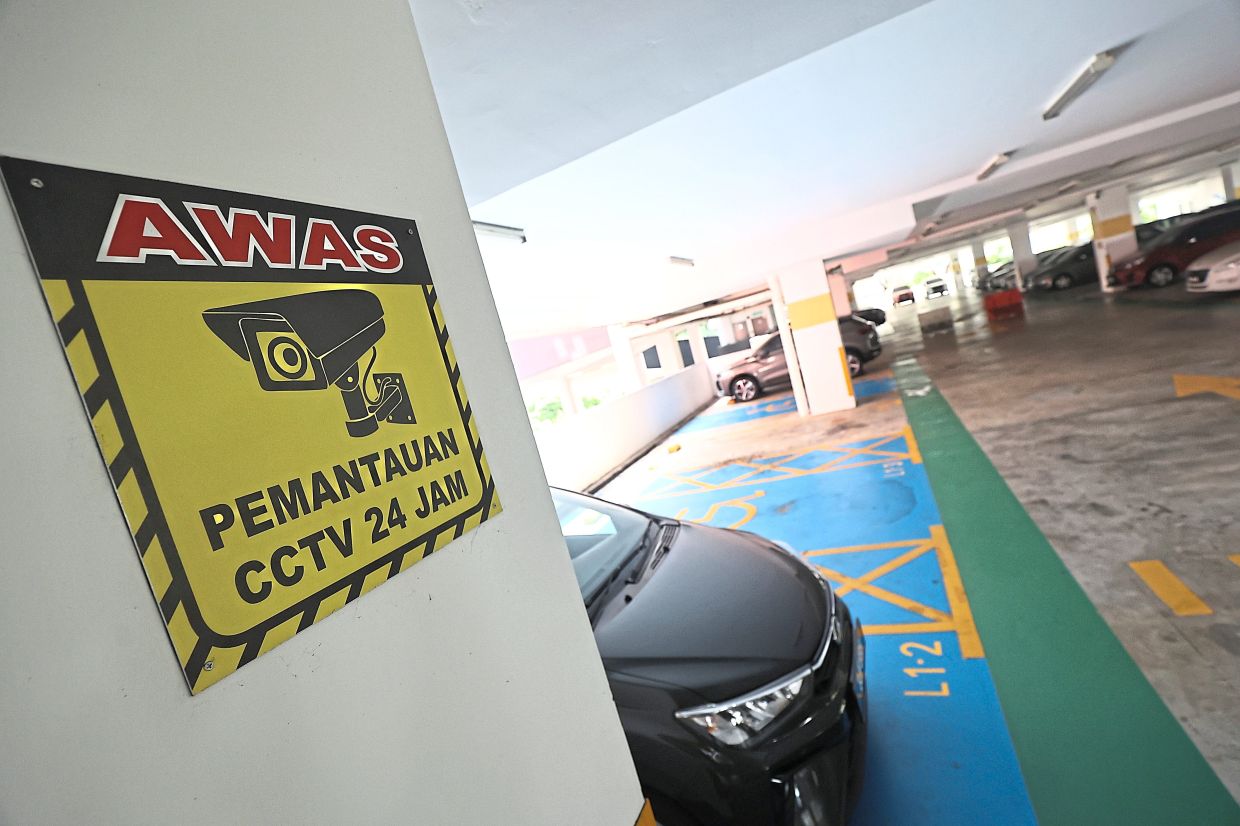
Does visible CCTV presence alone reduce illegal parking, even before enforcement action is taken? Visible CCTV cameras — especially when accompanied by clear warning signage — reduce illegal parking by signalling to drivers that violations will be recorded. This deterrent effect operates independently of active enforcement action and reduces violations before they occur rather than penalising them afterward.
What are the maintenance requirements for a CCTV-based parking enforcement system? CCTV-based enforcement systems require regular maintenance of camera hardware, consistent network monitoring, and scheduled servicing to ensure operational reliability. Authorities and urban analysts note that non-functional cameras in designated enforcement zones undermine deterrence and must be repaired promptly to maintain system credibility.
A Scalable Path Forward for Urban Parking Enforcement in Malaysian Cities
The case for deploying CCTV surveillance as a primary tool against illegal parking in Kuala Lumpur is grounded in a straightforward enforcement logic: certainty of detection changes driver behaviour more reliably than severity of penalty alone. DBKL’s planned expansion to 20,000 smart cameras across the city provides the infrastructure foundation — the critical next step is the deliberate allocation of that network to the parking hotspots where violations are most persistent and consequences for urban mobility are most severe.
Urban analysts and traffic management professionals broadly agree that automated surveillance, combined with AI-enabled real-time alerting, offers a scalable and cost-effective solution that manual enforcement cannot replicate. With photographic evidence automatically captured and timestamped, the evidentiary burden on enforcement authorities is reduced and the rate of successful summons issuance can be expected to improve.
For more information on Kuala Lumpur City Hall’s smart city and surveillance initiatives, readers may refer to DBKL’s official communications channels:
Kuala Lumpur City Hall (DBKL) Address: Menara DBKL 1, Jalan Raja Laut, 50350 Kuala Lumpur, Malaysia Website: www.dbkl.gov.my General Enquiries: +603-2617 9000