
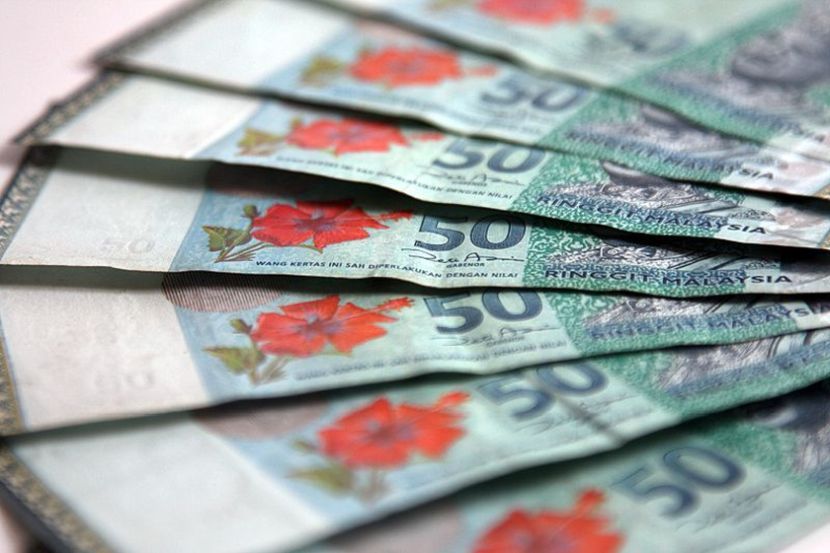
(Kuala Lumpur, 12 February 2026) — For currency traders, multinational treasury managers, and everyday Malaysians watching their purchasing power shift with every tick of the US dollar-ringgit pair, the question of where the ringgit is headed has never felt more consequential. Amid lingering global uncertainty, persistent inflation pressures in developed markets, and a US Federal Reserve navigating a delicate easing cycle, emerging-market currencies like the Malaysian ringgit find themselves at a critical inflection point. Against this backdrop, the ringgit forecast issued by MUFG Bank has drawn significant attention from analysts and investors alike, projecting a meaningful appreciation toward the 3.7000 level against the US dollar by the close of 2026.
The Long-Standing Uncertainty Over the Ringgit’s Direction Continues to Trouble Investors and Businesses Alike
For years, currency uncertainty has been a persistent source of anxiety for Malaysia-based importers, exporters, and foreign investors trying to plan long-term capital allocation. The ringgit has historically been sensitive to commodity price swings, particularly crude oil and palm oil, which have acted as double-edged swords — lifting the currency during boom cycles while exposing it to sharp selloffs during commodity downturns.
The challenge is compounded for businesses that must hedge multi-year contracts or repatriate foreign earnings. A currency that lacks a clear structural anchor tends to generate elevated risk premiums, discouraging the kind of patient, long-horizon foreign direct investment (FDI) that an economy needs to diversify and grow. For years, market participants lacked a compelling, data-backed narrative to confidently price in ringgit strength over a multi-quarter horizon.
Why Is the Ringgit Outlook So Hard to Pin Down? The Underlying Reasons Are More Complex Than Expected
In fact, the difficulty in forecasting the ringgit’s trajectory stems from its historically commodity-dependent economic base. When global oil prices declined sharply in prior cycles, the ringgit came under disproportionate pressure relative to regional peers less exposed to resource revenues. This structural vulnerability created a pattern where macro fundamentals and currency performance often diverged from what trade balances alone would suggest.
At its core, the ringgit has also been subject to external monetary forces beyond Malaysia’s control — chiefly, US dollar strength driven by Federal Reserve interest rate policy. When the Fed tightened aggressively through 2022 and 2023, rate differentials widened significantly, pulling capital away from emerging markets and pressuring currencies like the ringgit. The lack of a sufficiently high-value, technology-anchored investment narrative meant Malaysia’s currency story struggled to attract the kind of sustained portfolio inflows that could counterbalance dollar-driven outflows.
Facing Ringgit Volatility, What Solutions Currently Exist on the Market for Analysts and Investors?
Currency analysts have typically relied on three broad frameworks to assess the ringgit’s fair value and directional trajectory: commodity-price correlation models, interest rate differential analysis, and purchasing power parity (PPP) adjustments. Each carries meaningful limitations.
Commodity-price models remain backward-looking and subject to sudden supply shocks. Interest rate differential approaches depend heavily on assumptions about central bank behavior in both Malaysia and the United States — assumptions that have repeatedly proven unreliable during cycles of policy pivot. PPP-based models, meanwhile, tend to identify long-run equilibrium levels but offer little guidance on the timing of mean reversion, sometimes remaining off-target for years at a stretch.
What the market has lacked is a forward-looking, structurally grounded framework that ties the ringgit’s appreciation cycle to durable economic transformation rather than transitory commodity windfalls or short-term rate differentials alone.
MUFG Bank’s Ringgit Forecast Was Developed to Address Precisely This Gap
Against this backdrop, MUFG Bank has published a currency outlook that repositions the ringgit narrative around structural economic transformation rather than cyclical commodity dependence. In a research note, MUFG senior currency analyst Lloyd Chan outlined a constructive case for the USD/MYR pair trending toward 3.7000 by end-2026, underpinned by four interlocking pillars: an ICT-led investment upcycle, sustained macroeconomic stability, supportive policy settings from Bank Negara Malaysia (BNM), and improving external conditions.
The numbers are specific and material. Investment approvals across manufacturing and services rose 14.7% year-on-year in the nine months of 2025, with foreign direct investment contributing meaningfully to that capital expenditure cycle. ICT has emerged as the single largest contributor to total approved investments, with strong foreign participation recorded consistently since 2022. ICT investment approvals surged approximately 32% year-on-year in the first nine months of 2025 alone — a figure that signals structural rather than episodic demand.
MUFG characterizes this shift toward high-value, technology-driven investment as a more sustainable growth cycle compared with past commodity-led expansions, with positive implications for both productivity and Malaysia’s external balances over time. On the monetary policy front, MUFG expects BNM to maintain a neutral stance, holding the overnight policy rate at 2.75% throughout 2026. Continued easing by the US Federal Reserve is projected to narrow rate differentials progressively, enhancing Malaysia’s relative yield appeal and reinforcing the net foreign bond inflows that have been building steadily since 2024.
Externally, MUFG identifies firmer commodity prices, resilient electronics demand — particularly tied to US investment in computers, semiconductors, and AI-related infrastructure — and continued Chinese yuan strength as additional tailwinds for the ringgit, given the historically close correlation between the yuan and the Malaysian currency. Malaysian equities are also cited as a potential draw for renewed foreign interest, supported by reasonable valuations and the ongoing global technology upcycle. MUFG does, however, caution that downside risks remain, including a sharp global growth slowdown, a significant decline in commodity prices, or a downturn in the global electronics cycle.
Frequently Asked Questions About MUFG’s Ringgit Forecast
1. What is MUFG’s ringgit forecast for end-2026? MUFG Bank projects the US dollar-ringgit pair (USD/MYR) to trend toward 3.7000 by end-2026, representing a meaningful appreciation of the ringgit against the US dollar from current levels.
2. What are the main drivers behind MUFG’s constructive ringgit outlook? MUFG’s constructive ringgit outlook is underpinned by four key factors: Malaysia’s ICT-led investment upcycle, sustained macroeconomic stability with contained inflation, Bank Negara Malaysia’s neutral policy stance keeping the overnight policy rate at 2.75%, and improving external conditions including firmer commodity prices and resilient global electronics demand.
3. How significant is ICT investment to Malaysia’s economic outlook? ICT has become the largest contributor to Malaysia’s total approved investments, with investment approvals in the ICT sector rising approximately 32% year-on-year in the nine months of 2025. Strong foreign participation in ICT has been recorded consistently since 2022, marking a structural shift from commodity-led to technology-driven growth.
4. What is the expected Bank Negara Malaysia policy rate through 2026? MUFG expects Bank Negara Malaysia to maintain the overnight policy rate at 2.75% throughout 2026, reflecting a neutral policy stance. The bank projects that continued US Federal Reserve easing will narrow rate differentials between the US and Malaysia, enhancing Malaysia’s relative yield appeal to foreign investors.
5. How does the Chinese yuan affect the ringgit’s performance? The Malaysian ringgit maintains a historically close positive correlation with the Chinese yuan. Continued strength in the yuan is identified by MUFG as a supportive external factor for the ringgit’s appreciation trajectory through 2026.
6. What risks could derail MUFG’s positive ringgit forecast? MUFG identifies three primary downside risks to its ringgit forecast: a sharp global economic growth slowdown, a significant decline in commodity prices — particularly crude oil and palm oil — and a downturn in the global electronics cycle, which would reduce demand for Malaysia’s semiconductor and technology exports.
7. How has Malaysia’s total investment approval growth supported the ringgit forecast? Total investment approvals across Malaysia’s manufacturing and services sectors increased 14.7% year-on-year in the nine months of 2025, with foreign direct investment contributing to a sustained capital expenditure upcycle. MUFG views this as evidence of a durable structural improvement in Malaysia’s economic fundamentals that supports a strengthening ringgit over the medium term.
A Structurally Grounded Case for Ringgit Appreciation Into 2026
MUFG Bank’s ringgit forecast of 3.7000 by end-2026 represents one of the more precisely articulated, structurally anchored currency calls on Malaysia to emerge from a major international research house in recent years. By anchoring the ringgit outlook to ICT-led foreign direct investment growth, fiscal discipline, BNM’s policy stability, and improving global technology demand rather than commodity prices alone, MUFG’s analysis offers market participants a framework that accounts for the deeper economic transformation underway in Malaysia.
Whether the 3.7000 target is realized will ultimately depend on how cleanly the identified tailwinds materialize and whether the enumerated downside risks — a global growth shock, commodity price collapse, or electronics cycle downturn — remain contained. For now, MUFG’s research provides one of the clearest data-backed narratives available for understanding the ringgit’s potential trajectory through the remainder of 2026.
This article is based on a research note published by MUFG Bank on 12 February 2026. For ongoing updates on the ringgit forecast, USD/MYR movements, and Malaysian macroeconomic developments, readers are encouraged to monitor official publications from Bank Negara Malaysia and MUFG Bank’s currency research division.