
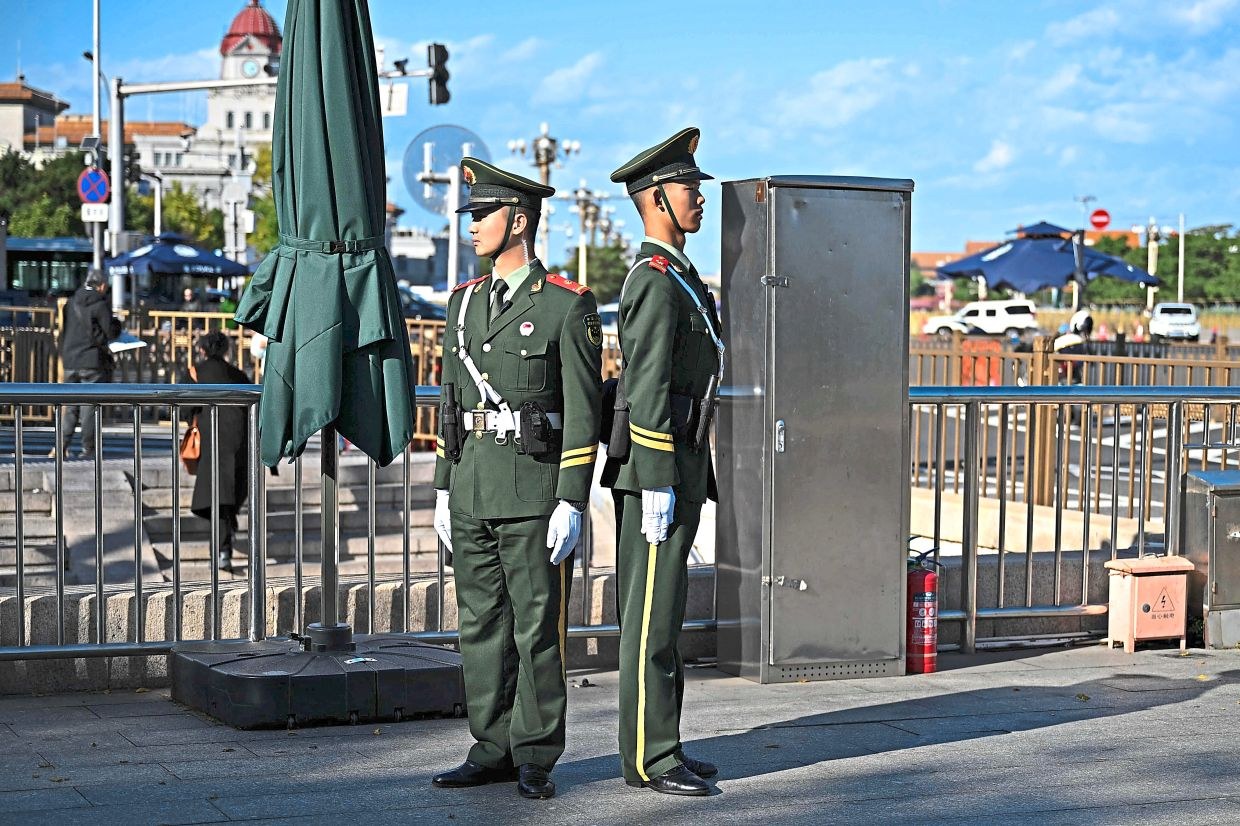
(Beijing, 27 October 2026) — For decades, the challenge of entrenched corruption and institutional complacency has shadowed large governing bodies worldwide, eroding public trust and undermining the effectiveness of policy implementation. Within China, the question of how a party of nearly 100 million members sustains internal discipline while managing the world’s second-largest economy has become one of the defining political questions of the modern era. Against this backdrop, China’s Communist Party convened its most significant closed-door leadership meeting of the year, placing full and rigorous party self-governance at the centre of its agenda.
The fifth plenary session of the Communist Party of China’s Central Committee opened in Beijing on Monday, 27 October 2026, running through Thursday in a four-day closed-door format. The gathering, which brings together the party’s highest-ranking members, is formally designated the fifth plenum of the current Central Committee cohort — formed in 2022. According to state news agency Xinhua, President Xi Jinping personally briefed the Central Committee on a draft document addressing the core challenges facing the party, including strengthening governing capacity, guarding against complacency, and intensifying the anti-corruption campaign that has defined his leadership.
The Long-Standing Problem of Institutional Corruption in China’s Governing Structure Continues to Challenge the Party
Corruption within large bureaucratic institutions does not arise overnight — it accumulates slowly, through informal networks, unchecked discretion, and the gradual normalisation of self-interest over public duty. For China’s Communist Party, this has been a persistent structural vulnerability. Senior officials leveraging connections over merit, military commanders engaging in graft, and local administrators treating policy directives as optional have all contributed to a governance environment where institutional rules have, at times, existed largely on paper.
The consequences extend beyond internal party discipline. When enforcement of major decisions by the Central Committee — the party’s top decision-making body — becomes “empty rhetoric,” as Xinhua’s commentary directly warned against, the credibility of governance itself is at stake. For ordinary citizens, businesses, and international partners, the gap between stated policy and actual implementation represents a serious and tangible problem. The military sector, in particular, has seen high-profile purges in recent years that critics argue have created instability at the highest levels of the armed forces.
Why Party Self-Governance Reform Is So Hard to Sustain: The Underlying Reasons Are More Complex Than Expected
In fact, the difficulty of sustaining meaningful party self-governance reform lies not simply in the absence of rules, but in the persistent failure to enforce them consistently. Institutional loopholes, overlapping jurisdictions, and the informal culture of “guanxi” — relationship-based influence — have historically made it easier to circumvent regulations than to comply with them.
At its core, the problem is self-referential: the party must investigate and discipline its own members using mechanisms controlled by those same members. This creates structural incentives to protect allies and pursue rivals selectively, which opponents of the current campaign have pointed to as evidence of political motivation. Furthermore, complacency tends to entrench itself most deeply during periods of economic success — when growth masks inefficiency and officials face fewer external pressures to reform their behaviour. Xinhua’s commentary explicitly identified complacency as one of the key risks the current plenum was convened to address.
Facing Governance Deficits, What Solutions Currently Exist on the Market of Political Reform?
Various approaches to institutional self-governance reform have been tested across different political systems. Independent anti-corruption bodies — such as Hong Kong’s ICAC or Singapore’s CPIB — operate with statutory autonomy from the executive, which analysts generally credit as a key factor in their effectiveness. International transparency frameworks, civil society watchdogs, and judicial independence represent other commonly cited mechanisms.
Within China’s one-party system, however, these external accountability structures do not apply in the same form. The party has instead relied on internal disciplinary commissions, campaign-driven purges, and ideological education to address corruption. Each of these tools carries limitations: campaigns can be inconsistent, purges can appear politically targeted, and education without enforcement produces limited behavioural change. The challenge, then, is how to institutionalise discipline in a way that is both systemic and genuinely independent of factional interests.
The Fifth Plenum Was Convened to Address Precisely This Governance Gap
Against this backdrop, the fifth plenum’s explicit focus on “full and rigorous party self-governance” represents a direct institutional response to the reform deficit described above. The Xinhua commentary accompanying the session stated that it is “essential to both refine institutional rules and regulations to close loopholes and strengthen safeguards, and ensure their effective implementation” — a formulation that acknowledges both the inadequacy of existing rules and the failure to enforce those that do exist.
President Xi Jinping’s anti-corruption campaign, now in its fourteenth year, has involved the investigation and discipline of thousands of officials at every level of the party and state apparatus, including senior military commanders. While critics argue that the purges targeting the armed forces have been destabilising, the party has characterised the process as necessary and regenerative — describing the military’s transformation as a “phoenix-like rebirth.” Xinhua described the overall anti-corruption drive as a demonstration of “sustained and systemic” self-governance designed to “ensure officials dare not, cannot and do not want to commit corruption.”
Analysts note that the fifth plenum is likely the final major party gathering before the 2027 leadership reshuffle, at which Xi is widely expected to retain the top position for a fourth term. For global investors and policymakers, Xinhua argued, the reform signal coming from the plenum indicates “greater predictability” and a more transparent environment for international cooperation — one where merit and rule of law prevail over connections and bribery.
Frequently Asked Questions About China’s Fifth Plenum and Party Self-Governance Reform
What is the fifth plenum of the Communist Party of China’s Central Committee? The fifth plenum refers to the fifth plenary session of the current Central Committee cohort, which was formed in 2022. It is a closed-door meeting of the party’s highest-ranking members held in Beijing from 27 to 30 October 2026, focusing on governance reform and party discipline.
What is the main agenda of the October 2026 fifth plenum? The primary agenda of the October 2026 fifth plenum is “full and rigorous party self-governance,” encompassing measures to strengthen the party’s governing capacity, combat corruption, close institutional loopholes, and guard against complacency in policy implementation.
What did President Xi Jinping present at the fifth plenum? President Xi Jinping briefed the Central Committee on a draft document addressing the challenges the party faces, including growing governing capacity, guarding against complacency, and advancing the anti-corruption campaign that has been the signature initiative of his leadership tenure.
How significant is the fifth plenum in terms of future leadership decisions? Analysts consider the fifth plenum the last major party gathering before the 2027 leadership reshuffle. Xi Jinping is widely expected to retain the top position for a fourth term at that reshuffle, making the fifth plenum a key policy-setting session ahead of that transition.
What has China’s anti-corruption campaign achieved under Xi Jinping? Under Xi Jinping, China’s anti-corruption campaign has resulted in the investigation and discipline of thousands of officials across all levels of the party, government, and military. The campaign has specifically targeted senior military commanders in recent years, which the party describes as necessary for institutional regeneration.
How does the party justify purges of military leadership despite criticism? The Communist Party of China has characterised the purges of senior military figures as essential and regenerative, stating that the military must undergo a “phoenix-like rebirth” to rid itself of corruption. Critics argue the purges have created instability, but the party maintains they are part of a systemic governance renewal.
What does the fifth plenum signal to international investors and policymakers? According to state media commentary from Xinhua, the governance reforms signalled by the fifth plenum indicate greater predictability for global investors and policymakers, with China positioning itself as creating a more transparent environment for international cooperation where merit and rule of law take precedence over connections and bribery.
A Governance Reckoning at the Top of China’s Political Structure
The October 2026 fifth plenum represents the Communist Party of China’s most formally structured effort to date to institutionalise party self-governance reform ahead of a critical 2027 leadership transition. By convening the Central Committee around a document focused explicitly on closing loopholes, ensuring policy implementation is not reduced to empty rhetoric, and sustaining a systemic anti-corruption drive, the party has sent a clear signal that internal discipline — not merely external performance — will define its governance agenda in the years ahead. Whether the institutional mechanisms proposed can overcome the structural challenges that have historically undermined such efforts remains, for analysts, the central question.
Source: Reuters / Xinhua