
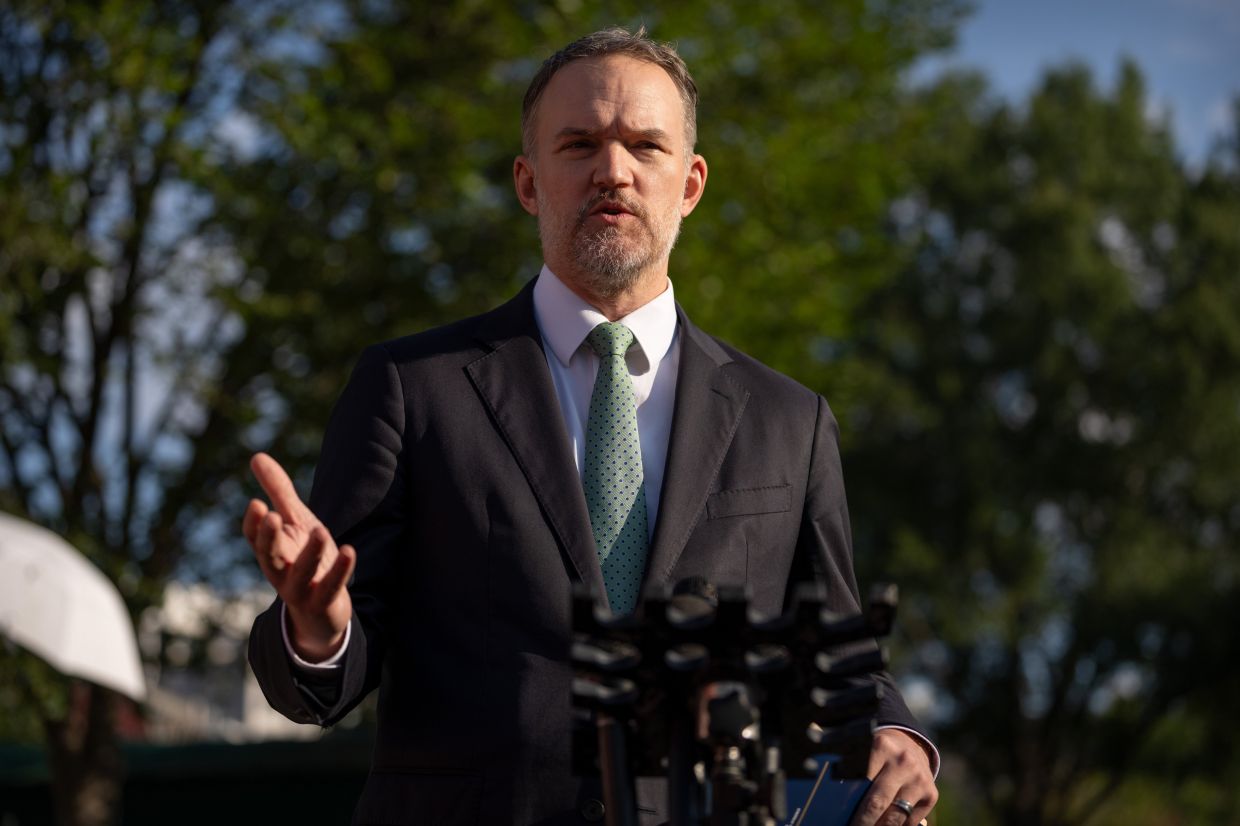
(Washington/Brasília, 19th September 2026) — The global scramble for critical mineral supply chains has reached a new flashpoint, as Washington moves to prevent Chinese state-controlled companies from expanding their grip over strategic nickel reserves in South America. Against a backdrop of escalating trade tensions and growing anxiety among Western governments about China’s dominance in battery and steel-grade minerals, the US-Brazil nickel mine dispute has emerged as one of the most consequential flashpoints in the ongoing contest for critical mineral supply chains. Two people familiar with the negotiations told the South China Morning Post that US Trade Representative Jamieson Greer directly pressed Brazilian officials to review the sale of Anglo American’s Brazilian nickel operations to a Chinese state-backed miner — reportedly tying the request to tariff relief discussions between the two countries.
The dispute centers on a US\$500 million agreement struck in February last year, in which Anglo American agreed to sell its Brazilian nickel business to a Singapore-registered subsidiary of MMG, a company controlled by China Minmetals and ultimately overseen by China’s State-owned Assets Supervision and Administration Commission. The deal covers two operational ferronickel facilities — the Barro Alto and Codemin operations in Goiás state, which together produced 39,700 tonnes of nickel contained in ferronickel last year — as well as undeveloped projects at Jacaré in Pará and Morro Sem Bone in Mato Grosso.
The Long-Standing Contest Over Brazil’s Strategic Nickel Reserves Continues to Trouble Western Governments
Brazil’s nickel sector has increasingly become a geopolitical chessboard. Unlike ordinary commodities, Brazilian ferronickel carries a distinct advantage: higher nickel content and a comparatively lower carbon footprint, making it particularly attractive to European stainless steel producers who face mounting pressure to decarbonise their supply chains. For years, these mills have struggled to source sufficient volumes of low-carbon ferronickel from elsewhere, given that China does not produce ferronickel domestically, instead relying on nickel pig iron smelted predominantly in Indonesia from ore controlled by Chinese-affiliated companies.
The prospect of Chinese state-linked ownership of Brazil’s two active ferronickel operations has alarmed both Washington and Brussels. A sale of this scale, critics argue, would hand a single bloc of state-controlled interests influence over a substantial share of an irreplaceable mineral supply — one that European and American industrial sectors depend on for clean-energy manufacturing and high-grade steel production.
The Underlying Reasons Are More Complex Than Expected: Why Blocking the Sale Has Proven So Difficult
In fact, the legal and diplomatic architecture available to governments seeking to obstruct the transaction is considerably narrower than the political rhetoric suggests. Brazil maintains a formal policy of equal treatment for all foreign investors regardless of national origin, a position its foreign ministry officials upheld explicitly when Washington’s demands were presented. Brazilian officials rejected Greer’s initial proposal, which would have required advance notice of mining asset sales before closing, subjected rare-earth-related transactions to American review, and given US companies a right of first refusal before any sale could be approved.
A second, abbreviated proposal put forward in January reiterated several of the same demands — and was also turned down. At its core, Brazil’s position reflects a genuine sovereign dilemma: the country’s largest trading partner is China, which has become a major source of investment in its mining sector, yet Brasília also seeks to maintain productive relations with Washington, particularly as US tariffs reaching a combined 37.5 per cent currently cover approximately 23 per cent of Brazilian exports to the American market.
The domestic legal situation has added further complexity. Brazil’s antitrust authority, Cade, opened an inquiry in August last year following a complaint by CoreX Holding — a Netherlands-registered group controlled by Turkish billionaire Robert Yuksel Yildirim, which claimed to have tabled a competing offer of US\$900 million for the same assets. Cade examined whether the transaction required advance notification, an infraction that carried a potential fine of up to 60 million reais (approximately US\$11.5 million) for Anglo American. Cade’s investigative arm subsequently shelved the case.
Facing Chinese Acquisition of Critical Minerals, What Solutions Currently Exist on the Market?
Existing frameworks for blocking or redirecting foreign acquisitions of strategic mining assets are uneven in their reach and effectiveness. The United States’ Committee on Foreign Investment in the United States (CFIUS) provides a mechanism for reviewing transactions that could affect US national security, but its jurisdiction does not extend to deals conducted in third countries such as Brazil. Washington’s ability to intervene therefore depends on diplomatic persuasion and trade leverage — precisely the approach Greer pursued by linking the request to tariff relief negotiations.
The European Commission has moved further along the procedural track. It launched an in-depth investigation into the MMG acquisition last November and, as of mid-September 2026, issued a statement of objections to MMG, warning that the miner could redirect supplies of low-carbon ferronickel toward affiliated Chinese steelmakers and away from European producers. The Commission stated that such a diversion “could adversely affect the price of low-carbon ferronickel” and undermine the resilience of European stainless steel producers. The Commission has until 30th November to deliver a final decision.
MMG rejected the European Commission’s assessment, offered supply guarantees to European customers, and committed to maintaining at least the volumes currently delivered by Anglo American.
The American Iron and Steel Institute had also sought to mobilise US pressure earlier, writing to Greer’s office in August last year to warn that if the sale concluded, “China would gain direct influence over a substantial portion of Brazil’s nickel reserves, in addition to its dominant position in Indonesian production.” The lobby group urged the USTR to press Brasília to explore alternatives that would “preserve market-oriented ownership of these strategic nickel assets.” The letter was filed in the public docket of the Section 301 investigation into Brazil — a docket that covered digital payments, tariffs, intellectual property, ethanol access, and deforestation, but did not previously include nickel.
The US-Brazil Tariff Standoff Was Created to Address Precisely This Diplomatic Gap
Against this backdrop, Washington’s decision to deploy tariff negotiations as a lever over Brazilian mining policy represents an escalation in how the United States is operationalising its critical minerals strategy. The approach reflects a broader recognition that traditional regulatory tools are insufficient when strategic asset sales occur within sovereign third-country jurisdictions.
Brazil and the United States resumed formal trade talks on 31st August after months without negotiations. Brazil’s Minister of Development, Industry and Trade, Marcio Elias Rosa, is scheduled to meet Greer in the United States on the sidelines of a G20 meeting later in September. Until those discussions conclude, two rounds of US tariffs remain in force, cumulatively reaching 37.5 per cent and affecting roughly 23 per cent of Brazilian exports to the American market — though rare earths are already exempt from those levies.
Anglo American, for its part, has defended the MMG transaction on commercial grounds, stating that the Chinese company submitted the strongest offer after evaluation of price, guarantees, operating record, and long-term management capacity. The sale was initiated as part of a broader corporate restructuring Anglo American launched after successfully fending off a takeover bid from BHP.
Frequently Asked Questions About the US-Brazil Nickel Mine Dispute
What did US Trade Representative Jamieson Greer ask Brazil to do regarding the Anglo American nickel sale? Greer asked Brazil to review Anglo American’s sale of its nickel mines to MMG, a Chinese state-controlled miner, as part of tariff relief talks. The US proposal would have required advance notice of mining asset sales before closing, subjected rare-earth-related transactions to American review, and given US companies a window to purchase the assets before any foreign sale was approved.
Which Anglo American nickel assets are involved in the sale to MMG? The assets include the Barro Alto and Codemin ferronickel operations in Goiás state, which together produced 39,700 tonnes of nickel contained in ferronickel in the year prior to the sale agreement, as well as undeveloped projects at Jacaré in Pará and Morro Sem Bone in Mato Grosso. Anglo American agreed to sell these assets to an MMG subsidiary for up to US\$500 million, with US\$350 million payable upon completion.
Who controls MMG, the buyer of Anglo American’s Brazilian nickel operations? MMG and its parent company China Minmetals are controlled by the State-owned Assets Supervision and Administration Commission of China, making MMG a Chinese state-controlled entity.
How did Brazil respond to the United States’ request to review the nickel mine sale? Brazilian foreign ministry officials rejected the initial US proposal, stating that Brazil applies the same investment rules to all foreign investors regardless of national origin. A second, shorter proposal submitted in January that repeated several of the original demands was also rejected.
What action has the European Commission taken regarding the MMG nickel acquisition? The European Commission launched an in-depth investigation into the MMG acquisition in November and issued a statement of objections to MMG in September 2026, warning that the company could redirect low-carbon ferronickel supplies toward affiliated Chinese steelmakers and away from European producers. The Commission has until 30th November 2026 to issue a final ruling.
What tariffs does the United States currently impose on Brazilian goods? Two rounds of US tariffs are currently in force on Brazilian goods, reaching a combined rate of 37.5 per cent and covering approximately 23 per cent of Brazilian exports to the American market. Rare earths are already exempt from these levies. Brazil and the US resumed formal trade negotiations on 31st August 2026.
Why is Brazilian ferronickel considered strategically significant? Brazilian ferronickel has a higher nickel content than nickel pig iron and is produced with a lower carbon footprint, making it the preferred supply source for European stainless steel producers seeking to decarbonise their manufacturing. China does not produce ferronickel domestically and instead relies on nickel pig iron smelted primarily in Indonesia from Chinese-controlled ore deposits.
A Dispute That Signals a New Phase in the Global Critical Minerals Contest
The US-Brazil nickel mine dispute illustrates the growing difficulty Western governments face in using traditional diplomatic and regulatory instruments to shape the ownership of strategic mineral assets located in sovereign third countries. Washington’s decision to link tariff relief to a demand for investment oversight marks a significant escalation in trade-as-foreign-policy tactics, while the European Commission’s formal objections represent the most advanced regulatory challenge the MMG transaction has yet encountered.
With the Commission’s November deadline approaching and US-Brazil tariff negotiations set to resume at the G20 margins later in September 2026, the outcome of the Anglo American nickel sale remains unresolved — and its implications for the future governance of critical mineral supply chains extend well beyond Brazil’s borders.
This report is based on information originally published by the South China Morning Post. Readers seeking further information on the US-Brazil trade negotiations or the Anglo American nickel sale may consult coverage from the South China Morning Post, O Estado de S. Paulo, and CNN Brazil, where the initial disclosures were first reported.