
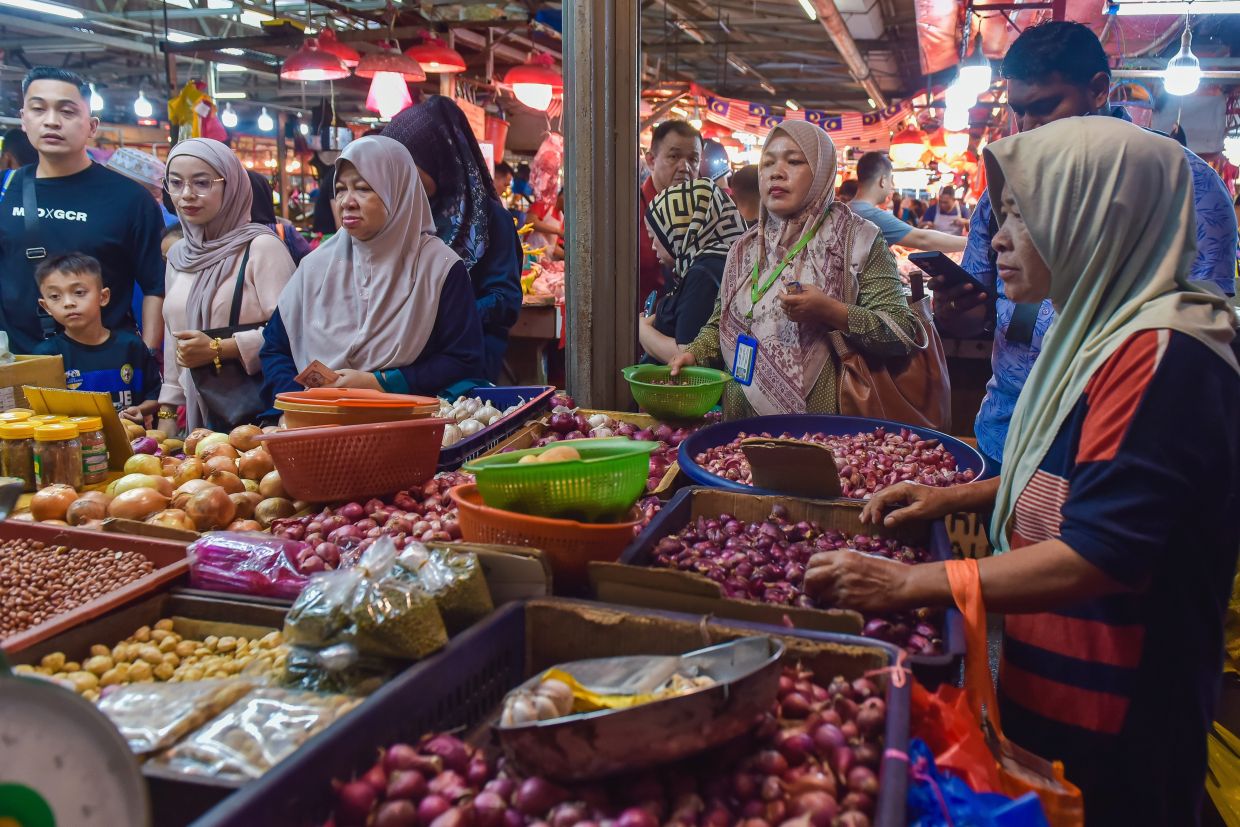
(Putrajaya, 18 September 2026) — Across Malaysia, the cumulative weight of rising fuel costs, higher electricity bills, and more expensive meals away from home has quietly been compounding for months. The consumer price index, the country’s primary gauge of inflation, has now confirmed what many households have been sensing at the petrol station and the breakfast stall: the cost of living is moving in only one direction. Malaysia’s inflation rate climbed to 1.9% in August 2026, according to official data, accelerating from 1.8% recorded in July and marking a tangible uptick driven by pressure across transport, housing, and food categories. The Department of Statistics Malaysia (DOSM) released the figures on 18 September 2026, confirming that the consumer price index (CPI) rose to 137.5, up from 134.9 recorded in August 2025.
The Long-Standing Pressure on Malaysian Household Budgets Continues to Trouble Consumers
For the average Malaysian household, the numbers in the DOSM report are not abstract statistics — they reflect the bill at the pump and the receipt at the mamak stall. Fuel prices across all three major petrol grades climbed sharply between July and August 2026. RON97 petrol rose to RM4.28 per litre in August from RM4.07 in July, while RON95 increased to RM3.75 per litre from RM3.47. Diesel, widely used by commercial operators and freight carriers, moved even more dramatically — up to RM4.60 per litre from RM4.14.
These increases have a cascading effect on the broader economy. When diesel and petrol prices rise, logistics costs go up, and those costs are eventually passed on to consumers through higher prices at retail outlets, markets, and food stalls. The result is a broadly felt inflationary squeeze that touches nearly every category of daily expenditure, from the morning commute to the evening meal.
Why Rising Transport and Energy Costs Are So Hard to Contain: The Underlying Reasons Are More Complex Than Expected
At its core, the August inflation uptick reflects the intersection of global fuel market dynamics with domestic tariff policy. Transport inflation accelerated to 2.0% in August, up from 1.4% in July, driven by increases in both public transport services and the cost of operating personal vehicles. These pressures do not emerge in isolation.
In fact, a key structural factor was a revision to the Automatic Fuel Adjustment (AFA) rate applied to domestic electricity users in Peninsular Malaysia consuming more than 600 kilowatt hours per month. This policy revision pushed the electricity, gas, and other fuel subgroup up by 3.3% in August, compared with 2.0% in July — a full 1.3 percentage point acceleration in a single month. Housing, water, electricity, gas, and other fuels inflation consequently rose to 2.1% overall, compared with 1.8% in July.
The compounding nature of energy-linked inflation means that when fuel prices rise, housing utility costs and transport costs tend to rise simultaneously, amplifying the overall CPI reading in ways that are difficult to neutralise through partial policy interventions.
Facing Multi-Front Inflation, Current Monitoring and Subsidy Mechanisms Show Distinct Limitations
Existing solutions on the market include a mix of targeted fuel subsidies, price monitoring frameworks, and ceiling prices on selected essential goods. These mechanisms have helped moderate inflation in specific categories — most notably food at home, where the controlled prices of staple items such as rice, cooking oil, and flour have partially contained the upward trend.
However, the August 2026 data illustrates the limitations of these tools when applied against broad, energy-driven inflation. Food and beverages, which account for 29.8% of the CPI’s total weighting, recorded a 1.9% increase in August, up from 1.8% in July. Food at home inflation accelerated to 1.4% from 1.2%, while food away from home held steady at 2.5% — still elevated and reflecting persistent cost pressures in the food service sector that ceiling prices on raw ingredients have not fully absorbed.
Meanwhile, categories outside the reach of direct price controls — such as personal care, social protection, and miscellaneous goods and services — rose to 3.2% inflation in August from 2.9% in July. Alcoholic beverages and tobacco recorded a 2.8% increase. The breadth of these increases underscores that inflationary pressure is no longer confined to a single sector.
DOSM’s August 2026 CPI Data Was Released to Address Precisely This Gap in Economic Visibility
Against this backdrop, the DOSM’s monthly CPI release serves as the principal mechanism through which Malaysia tracks, interprets, and responds to cost-of-living changes. The August 2026 report, released on 18 September 2026, provides the granular data that policymakers, businesses, and households require to make informed decisions.
Regional disparities within the national figure are equally significant. Nine states recorded inflation above the national rate of 1.9%. Negeri Sembilan led all states with an inflation rate of 2.5%. Johor, Kedah, Pahang, and the federal territory of Labuan each recorded 2.3%, while Selangor and Kuala Lumpur registered 2.1%. These figures suggest that the inflationary burden is not uniformly distributed across Malaysia’s population — residents in higher-cost or more transport-dependent states are experiencing a more acute squeeze than the headline national figure indicates.
On a month-on-month basis, headline inflation rose 0.3% in August after remaining flat in July, with transport prices leading the monthly increase at 0.6%.
Frequently Asked Questions About Malaysia’s August 2026 Inflation and CPI Data
What was Malaysia’s inflation rate in August 2026? Malaysia’s inflation rate was 1.9% in August 2026, rising from 1.8% recorded in July 2026, according to data released by the Department of Statistics Malaysia on 18 September 2026.
What is the CPI value for August 2026? The consumer price index (CPI) for August 2026 stood at 137.5, compared with 134.9 recorded in August 2025, representing a year-on-year increase.
What drove Malaysia’s inflation higher in August 2026? The primary drivers of Malaysia’s higher inflation in August 2026 were rising transport costs — including higher petrol and diesel prices — increased housing, water, and electricity costs, and a modest uptick in food and beverage prices.
What were the petrol and diesel prices in August 2026? In August 2026, RON97 petrol averaged RM4.28 per litre, RON95 averaged RM3.75 per litre, and diesel averaged RM4.60 per litre. All three grades increased compared with July 2026 prices.
Which states in Malaysia recorded inflation above the national rate in August 2026? Nine Malaysian states recorded inflation above the national rate of 1.9% in August 2026. Negeri Sembilan recorded the highest state-level inflation at 2.5%, followed by Johor, Kedah, Pahang, and Labuan at 2.3% each, and Selangor and Kuala Lumpur at 2.1%.
How much did electricity costs increase in August 2026? The electricity, gas, and other fuel subgroup increased by 3.3% in August 2026, up sharply from 2.0% in July 2026, following a revision to the Automatic Fuel Adjustment rate for domestic users in Peninsular Malaysia consuming more than 600 kilowatt hours per month.
What was the food and beverage inflation rate in August 2026? Food and beverage inflation rose to 1.9% in August 2026 from 1.8% in July 2026. Food at home inflation accelerated to 1.4% from 1.2%, while food away from home remained at 2.5%. Food and beverages represent 29.8% of the total CPI weighting.
Malaysia’s Cost-of-Living Pressures Demand Continued Data Transparency and Policy Attention
The August 2026 CPI reading of 1.9% confirms that inflationary pressure in Malaysia remains a multi-dimensional challenge shaped by fuel pricing policy, energy tariff adjustments, and persistent food cost dynamics. While the headline rate remains moderate by global standards, the regional disparity — with Negeri Sembilan at 2.5% and multiple states above 2.0% — indicates that the lived experience of inflation varies meaningfully across the country.
The Department of Statistics Malaysia continues to publish monthly CPI data as the authoritative measure of consumer price movements in the country. Stakeholders seeking the full August 2026 Consumer Price Index report and accompanying statistical tables may access them directly through DOSM’s official channels.
For more information on the Consumer Price Index and related economic statistics, readers may contact:
Department of Statistics Malaysia (DOSM) Kompleks Jabatan Perangkaan Malaysia, Blok C6, Parcel C, Pusat Pentadbiran Kerajaan Persekutuan, 62514 Putrajaya, Malaysia Phone: +603-8885 7000 Email: icu@dosm.gov.my Website: www.dosm.gov.my